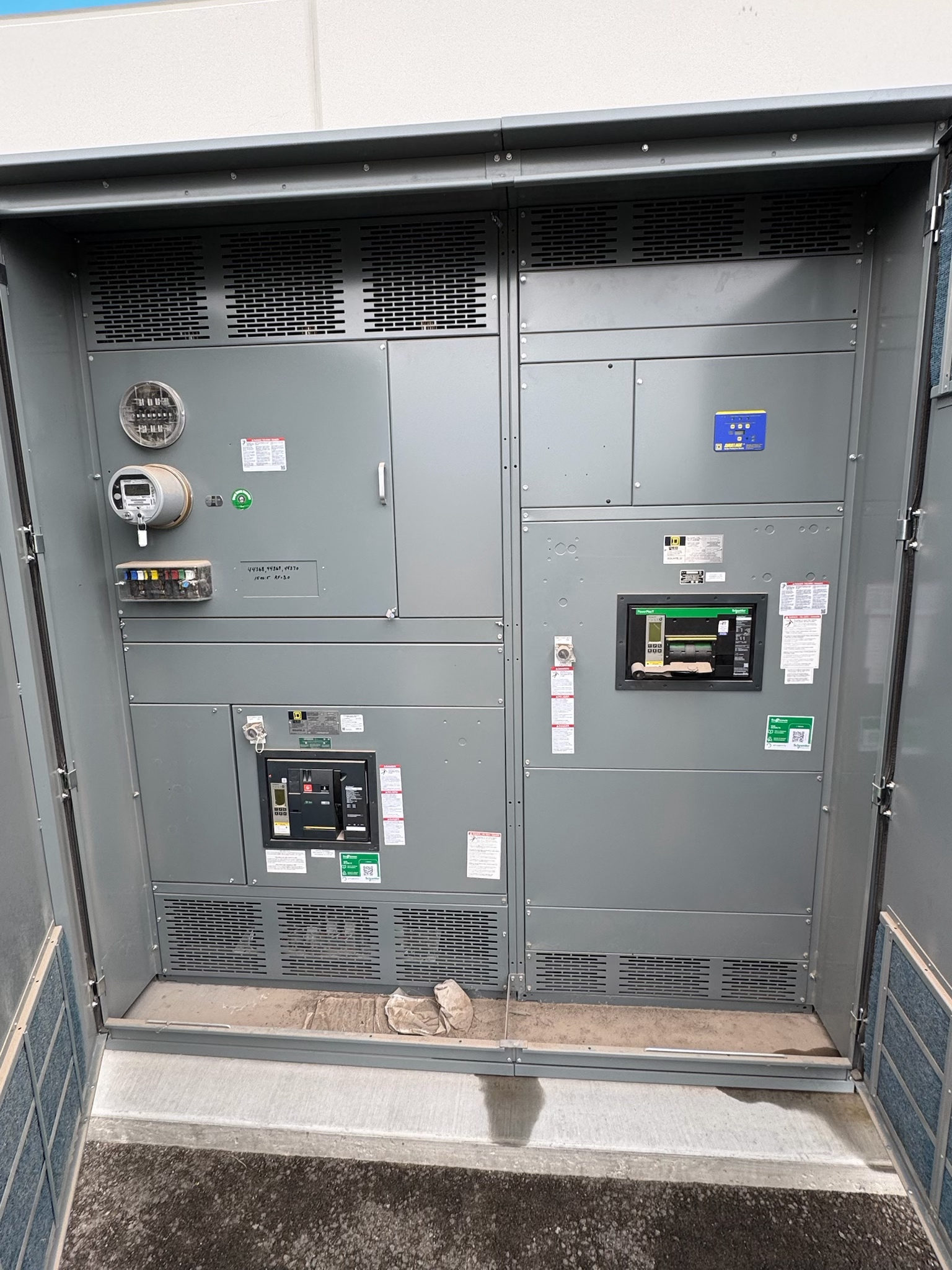
SCADA definition for switchgear projects
SCADA means supervisory control and data acquisition. It is a system for gathering information from equipment and presenting it to operators, with supervisory functions that may include remote commands. In a power distribution project, SCADA can provide visibility into selected switchgear conditions, measurements, and device states. The term describes the wider control and monitoring system, not a particular switchgear feature or a guarantee that equipment can be remotely operated.
For a new switchgear order, the practical question is how the equipment will exchange information with the owner’s SCADA architecture. That depends on the specified devices, communication interfaces, control philosophy, and site requirements. A clear scope distinguishes equipment supplied with the switchgear from external controls, network infrastructure, programming, and system integration assigned elsewhere.
What information can be exchanged
Depending on the selected components and design, switchgear interfaces may provide status points, alarms, and electrical measurements. Examples to evaluate include breaker position, trip indication, bus or feeder measurements, and device health. These are possibilities for project review, not standard points present in every assembly. The required list should identify each signal, its source, the intended recipient, and whether it is for monitoring, alarming, or a defined control function.
Remote control requires particular care. A communication link alone does not establish that a breaker can be operated remotely, that the operation is permitted, or that required interlocks are satisfied. The control narrative must define allowed commands, local-versus-remote selection, permissives, and the operator’s indication of command results. Qualified electrical and controls professionals should review the design and applicable safety requirements.
Inputs for selecting interfaces
Start with the SCADA system owner’s interface requirements: preferred protocol, network arrangement, point naming conventions, data formats, and any gateway or controller expectations. Confirm which party supplies network hardware, communication modules, configuration, and integration. Compatibility must be checked across the actual devices and software versions; a protocol name by itself does not establish interoperability or the required functions.
The electrical specification should also identify the switchgear arrangement and the devices whose data is needed. Provide a preliminary point list, one-line diagram, control schematics if available, and a description of operating priorities. Confirm the intended measurements, units, accuracy needs, alarm thresholds, and whether data must be time-stamped or retained in another system. These inputs help define a practical interface without assuming unverified product capabilities.
Design choices and scope boundaries
Projects may use direct device communications, a gateway, hardwired signals, or a combination. The best fit depends on the specified protective and metering devices, system architecture, required data, network rules, and maintainability goals. Discuss how loss of communications should affect monitoring and any permitted supervisory function. Define whether local controls remain usable and how operators recognize stale, invalid, or unavailable data.
Document responsibility boundaries before procurement. A switchgear supplier may define and furnish specified equipment interfaces, while the SCADA integrator may own network configuration, database mapping, graphics, and site-level logic; actual scope varies by contract. State required interface terminals, protocol documentation, point schedules, and any factory configuration deliverables. Do not treat an interface as a substitute for protection functions or assume a listing or standard applies without design-specific confirmation.
Coordination and verification
Review the point list and communications plan with the switchgear designer, controls integrator, owner, and other responsible project professionals before drawings are finalized. Resolve naming, addressing, signal scaling, alarm behavior, and command permissions early. Changes made after equipment design can affect wiring, device selection, documentation, and schedule, so identify approval milestones and the process for handling revisions.
Testing should match the agreed scope. Factory checks may verify specified wiring, device indications, and interface behavior where included; system-level communication and graphics may require separate integration testing. Define test procedures, simulated conditions, acceptance records, and who supplies test equipment or network access. Site testing and any installation or commissioning services must be separately confirmed rather than presumed. Testing plans must not encourage unsafe work on energized equipment.
Procurement steps for new switchgear
When requesting a proposal, provide the project location, required equipment configuration, preliminary drawings, available SCADA requirements, target submittal dates, and the party responsible for integration. Identify unresolved inputs explicitly and ask which interface features, documentation, and testing are included in the quoted scope. Lead time depends on project requirements and design review; confirm schedule assumptions as the specification develops rather than relying on a general promise.
A useful next step is a short interface review before release: compare the point list with proposed devices, confirm protocol and connection details, assign each deliverable, and record open decisions. The manufacturer builds new switchgear in the USA using all-American components, offers custom assemblies to specification, and can ship nationwide. UL 891 applies to suitable switchboard assemblies only; confirm applicable standards and any requested listing for the actual design with qualified professionals and relevant authorities.
Project specification checklist
Use this checklist to organize the details for a project-specific review. Final ratings, applicable standards and equipment selections depend on the approved design.
| Item | What to confirm |
|---|---|
| SCADA point list | Confirm required statuses, alarms, measurements, command points, signal sources, and responsible system destinations. |
| Communications | Specify protocol, network topology, device compatibility, addressing, gateway needs, and ownership of configuration. |
| Control philosophy | Define permitted remote commands, local and remote selection, permissives, interlocks, and loss-of-communications behavior. |
| Scope and deliverables | Assign responsibility for interface hardware, wiring, programming, point mapping, drawings, and integration. |
| Verification plan | Agree on applicable factory checks, system integration tests, acceptance criteria, records, and site-test responsibility. |