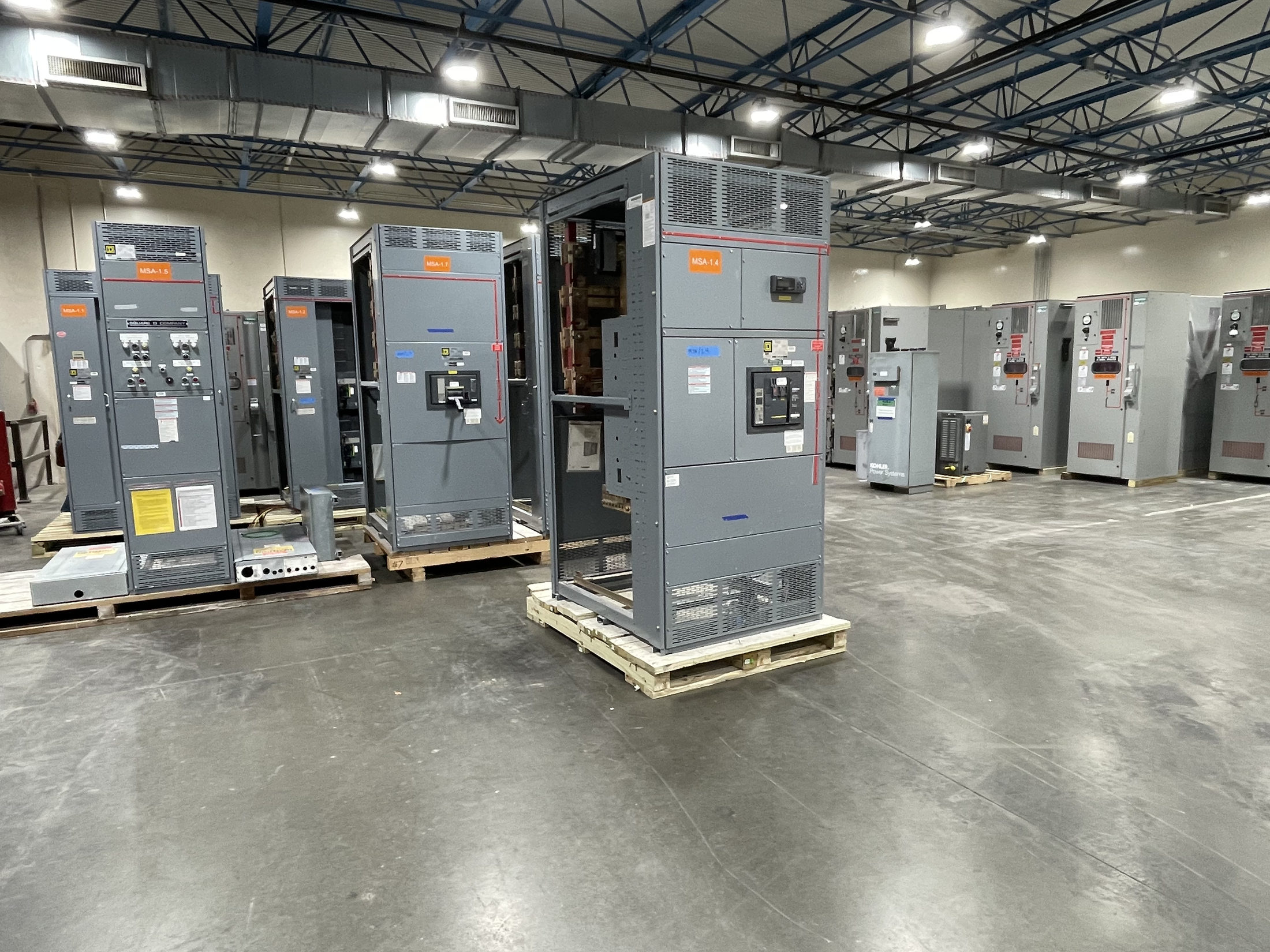
Start a Useful Switchgear Conversation
Contacting the switchgear team is a practical first step when planning new equipment, replacing an existing lineup, or clarifying requirements for a facility project. Share the project’s purpose and current stage so the discussion can focus on relevant equipment and decisions rather than assumptions. The manufacturer builds new switchgear in the USA using all-American components, and can develop custom assemblies to specification for projects in Central Texas and elsewhere. A request for information does not establish a design or rating; equipment selection requires review of project documents and applicable requirements by qualified electrical professionals.
Describe the Application and Site
Explain what the equipment will serve, such as a new facility, an expansion, or a planned replacement, and identify the intended role in the electrical distribution system. Note whether the project is at concept, design, procurement, or construction stage, and indicate the expected decision schedule if known. For a Central Texas site, include the project location at the level needed to discuss shipment and coordination, without assuming a local office or factory. Site conditions, access constraints, and the planned installation environment can influence design and logistics, so flag known constraints and unresolved questions for follow-up.
Share Electrical Requirements and Documents
The most helpful starting information is the available one-line diagram, equipment schedule, written specification, and relevant drawings. Identify the system voltage, required current capacity, available fault-current information, and protective-device or metering needs only when these are established in project documents. These values must be checked for the actual application; no rating should be treated as suitable based on a brief inquiry alone. If documents are preliminary, label them accordingly and describe which details remain open. Qualified electrical professionals should verify system data and design assumptions before equipment is specified or ordered.
Clarify the Equipment Type and Design Choices
Describe the equipment being considered and how it must interface with the rest of the system. A project may call for a switchboard or another switchgear assembly, and the appropriate design depends on the application, system characteristics, and governing requirements. Discuss desired arrangement, incoming and outgoing connections, protective functions, metering, control needs, and space limitations where known. Custom assemblies can be developed to project specifications, but details such as construction, enclosure, and ratings require technical review. UL 891 may apply to suitable switchboard assemblies; it does not automatically apply to every product or to medium- or high-voltage switchgear.
Plan Review, Testing, and Coordination
Ask how the proposed scope will be reviewed against the project specification, drawings, and interfaces with other equipment. Confirm which documents the team needs to evaluate the design and what technical questions remain for the engineer of record or other responsible professionals. Testing and inspection expectations should be identified in the project requirements and coordinated among the parties responsible for the equipment and installation. Applicable standards, listing requirements, and acceptance procedures depend on the design and project; do not assume a particular certification or test scope from the equipment category alone. Final requirements should be confirmed before procurement.
Discuss Procurement and Shipment Timing
When requesting a budgetary or procurement discussion, provide the desired scope, current specification status, anticipated order timing, and any known coordination milestones. Lead times depend on project requirements and design, so share schedule priorities early and ask what information is needed to assess timing; no delivery date should be assumed before project review. The manufacturer can ship nationwide, and customers in Central Texas can raise site access, receiving, unloading, and delivery coordination needs as part of planning. Identify who will receive shipment and whether the project has specific documentation or packaging requirements.
Prepare Your Next Step
Before contacting the team, gather the latest project documents, mark unresolved values or scope decisions, and identify the person responsible for technical review. Include a concise description of the application, project location, equipment type under consideration, schedule context, and the best way to continue the discussion through the company’s published contact channels. If a formal specification is not ready, say so and ask what preliminary information would help determine the next review step. This gives the team a clear basis for discussing new switchgear while keeping design, ratings, compliance, and procurement decisions tied to verified project requirements.
Project specification checklist
Use this checklist to organize the details for a project-specific review. Final ratings, applicable standards and equipment selections depend on the approved design.
| Item | What to confirm |
|---|---|
| Application | Confirm the equipment’s role, served loads, and whether the project is new construction, expansion, or replacement. |
| Electrical data | Provide verified system data and identify values that remain subject to engineering review. |
| Documents | Share current one-lines, specifications, schedules, and drawings; mark preliminary or incomplete information. |
| Design and compliance | Confirm equipment type, interfaces, applicable standards, and any project-specific listing or testing requirements. |
| Schedule and logistics | State procurement milestones, Central Texas or other delivery location, receiving constraints, and timing priorities. |