Start with the Brenham facility and its electrical need
A Brenham-area switchgear inquiry is most useful when it begins with the facility’s purpose and the change prompting the project. Describe whether the equipment will serve a new building, replace an existing assembly, support a process expansion, or connect to a revised electrical distribution plan. Identify the intended location within the facility, the loads served, and any operating constraints that affect shutdowns or phasing. These details help distinguish a switchboard or low-voltage distribution need from a medium-voltage application; the terms are not interchangeable, and the equipment class must fit the system.
Share project timing, the current design stage, and whether drawings or a written specification are available. If equipment will interface with existing gear, note the manufacturer and model information if known, along with photographs or nameplate data collected safely by qualified personnel. For Brenham customers coordinating from Central Texas, clear documentation at the outset can reduce uncertainty in scope and shipping coordination without assuming a local office, inventory, or site service.
Define the system before discussing ratings
For new switchgear, provide the nominal system voltage, phase and frequency, available source information, and the intended arrangement of incoming and outgoing circuits. Identify the loads and any transformers, generators, utility interfaces, or other equipment that affect the design. Do not infer an acceptable ampacity or interrupting capability from the existing installation alone. The required continuous-current and short-circuit duties depend on the system study, operating conditions, equipment configuration, and applicable standards; qualified electrical professionals should establish and verify those requirements.
For medium-voltage inquiries, state the system voltage and grounding arrangement, the source and load connections, and the equipment’s intended role in the distribution system. Share the available fault-duty information and its basis, such as a current study or utility data, rather than guessing. These inputs allow the design team to review the proposed application and identify missing information before preparing a scope. Final equipment ratings and suitability require project-specific engineering review and confirmation by relevant authorities.
Medium-voltage protection, duty, and cable interfaces
Medium-voltage equipment selection depends on more than a voltage label. Describe the protection functions required, the devices that must coordinate with upstream and downstream protection, and whether the project has a one-line diagram or coordination study. Note expected switching or operating practices and any requirements for metering, control power, alarms, or communications. The design team needs the intended protection scheme and fault conditions to evaluate equipment and component choices; no particular interrupting or withstand rating should be assumed without a documented engineering basis.
Cable details are equally important. Provide conductor material and size, number of conductors per phase, insulation and termination information, cable entry direction, and available bending or termination space when known. Clarify whether cables enter from above or below and identify interface constraints at connected equipment. These details help determine compartment and termination arrangements, but they must be checked against the final cable design and equipment configuration. The applicable standards and any listing depend on the specific assembly and application.
Choose an assembly that fits the site and operating plan
The project specification should describe environmental and installation conditions, including indoor or outdoor placement, available footprint, access for maintenance, and any enclosure requirements. Confirm these choices with the facility’s design professionals; enclosure type and environmental suitability are not universal. For a replacement, record existing dimensions, conduit or bus connections, and clearances, then compare them with the proposed layout. A new assembly may require interface changes, so identify what adjacent equipment and conductors will remain and who is responsible for verifying compatibility.
Also explain how the facility expects to operate and maintain the system. Required isolation points, metering, control interfaces, interlocks, and provisions for future circuits can affect the design. State which options are mandatory and which are preferences, and identify the drawings, submittals, and other documentation needed for review. UL 891 applies to suitable switchboard assemblies, not automatically to medium-voltage equipment or every switchgear product. The applicable standards and conformity requirements must be determined for the specific design and project.
Coordinate design review, testing, and delivery
Before an order is finalized, align the equipment scope with the one-line diagram, load and fault studies, protection requirements, cable schedule, and site layout. Resolve open questions about interfaces, control wiring, metering, and responsibilities for connected systems. Qualified electrical professionals should review the design, and relevant authorities must determine applicable project requirements. Testing and inspection scope should be stated in the specification and confirmed for the particular assembly; do not assume a test, certification, or approval that has not been specified and verified.
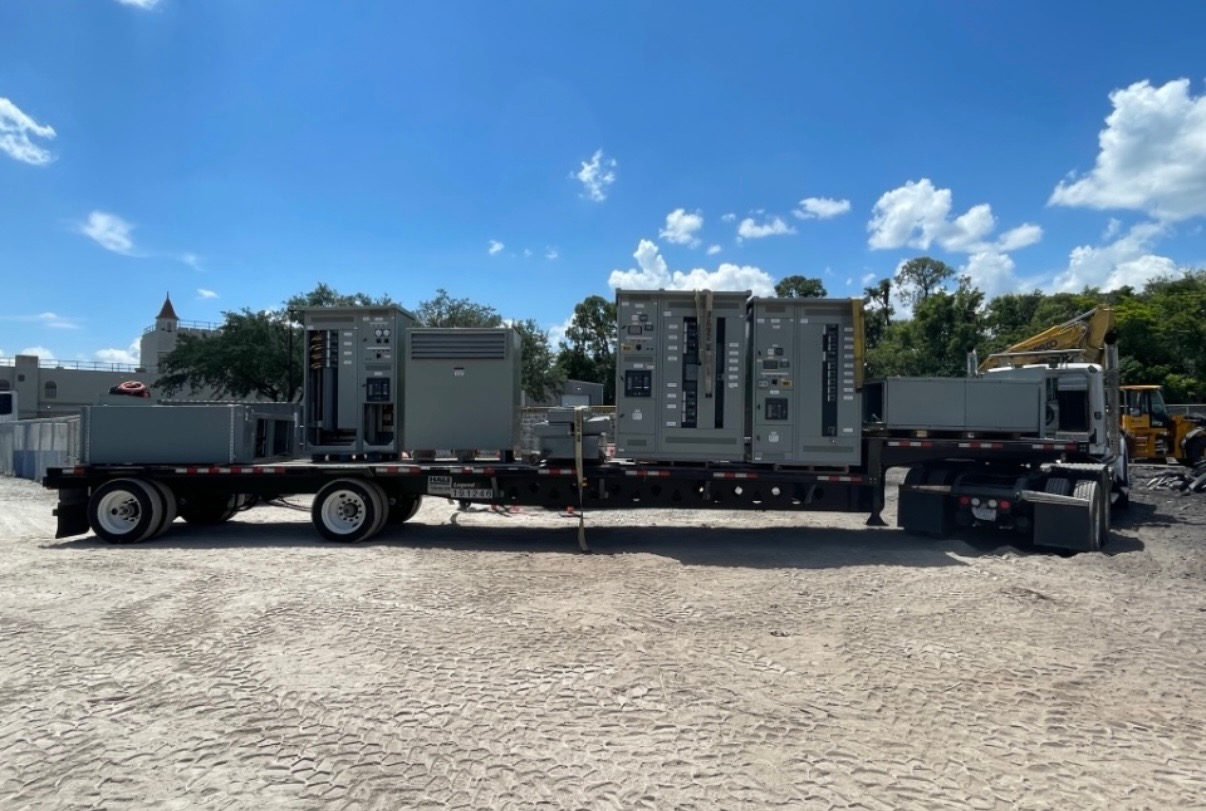
For a Brenham project, discuss the destination, receiving arrangements, access constraints, preferred delivery window, and any site rules that could affect shipment coordination. The manufacturer builds in the USA using all-American components, can provide custom assemblies to specification, and can ship nationwide. Lead time depends on the project and finalized scope, so request a project-specific schedule rather than relying on a general estimate. Confirm how drawing review, approved submittals, production release, and shipping milestones will be handled before committing to dates.
Prepare a complete inquiry for a useful quote
A practical quote request can include the project location in Brenham, the equipment application, voltage class, system arrangement, required circuit count, and known duty information. Attach a one-line diagram, relevant schedules, specification, and existing-equipment records where available. For medium-voltage work, include protection intent, available fault data, cable and termination details, and any control or metering requirements. Mark unknowns clearly instead of filling gaps with assumed ratings. A concise list of required options and acceptable alternatives helps distinguish essential design requirements from preferences.
Ask the manufacturer to identify what is included in the proposed scope, what engineering information remains outstanding, which project standards or assembly requirements apply, and what assumptions affect the quote and schedule. Confirm drawing and submittal expectations, shipment destination, and receiving constraints. Before procurement, have the responsible electrical professionals verify that the selected equipment and interfaces suit the system, and coordinate approvals with relevant authorities. This gives Brenham-area teams a concrete basis for comparing proposals and advancing design without presuming local inventory or installation service.
Project specification checklist
Use this checklist to organize the details for a project-specific review. Final ratings, applicable standards and equipment selections depend on the approved design.
| Item | What to confirm |
|---|---|
| Application and system | Confirm the equipment function, nominal voltage, phase, frequency, source arrangement, and connected loads. |
| Electrical duty | Provide documented continuous-current and fault-duty requirements from the responsible project engineering review. |
| Protection and controls | Identify protection functions, coordination basis, metering, control power, interlocks, and communications needs. |
| Cable and interfaces | Confirm conductor and termination details, cable entry direction, connection space, and adjacent equipment interfaces. |
| Installation and enclosure | Specify indoor or outdoor placement, environmental conditions, footprint, access, and project-appropriate enclosure requirements. |
| Submittals and logistics | List required drawings, testing scope, approvals, Brenham delivery constraints, receiving arrangements, and schedule assumptions. |