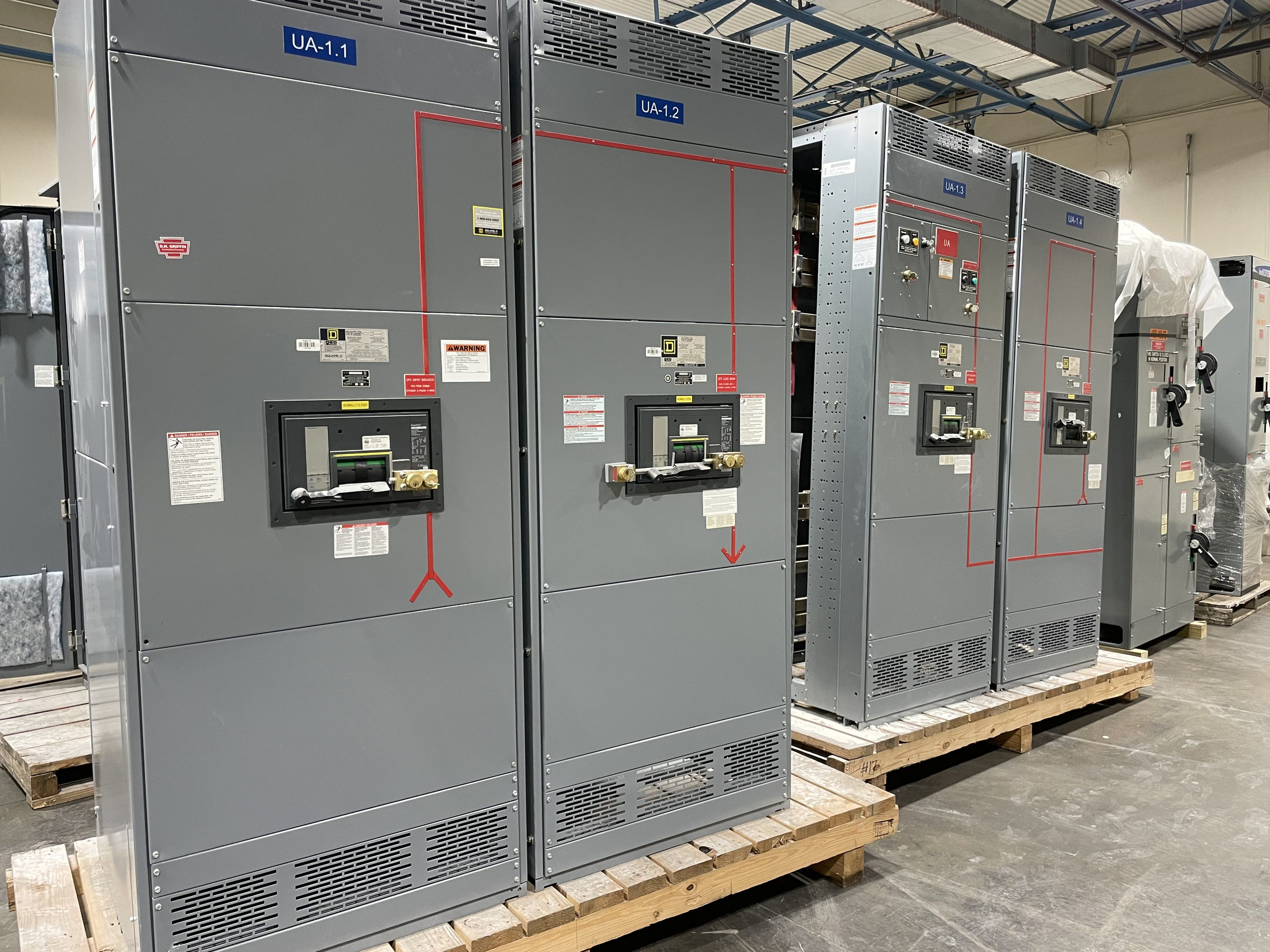
Start With the Electrical Application
Switchgear engineering begins with what the electrical system must do, not with a catalog rating. For a new facility, expansion, or replacement project, identify the source of power, the equipment being served, operating priorities, and the consequences of an interruption. Clarify whether the assembly must distribute power, isolate sections, support alternate sources, or accommodate future changes. These goals shape the equipment arrangement and the information needed for design.
For Central Texas projects, early coordination among the owner, electrical engineer, contractor, and equipment manufacturer helps establish who will provide each design input and when. Gather one-line diagrams, load schedules, project specifications, and relevant site constraints. If information is preliminary, mark assumptions clearly; unresolved assumptions can affect the configuration, protection approach, interfaces, and procurement schedule.
Establish System Ratings From Project Data
Voltage, continuous current, and short-circuit withstand or interrupting requirements must be selected for the actual system and application. Confirm system grounding, available fault-current information, source characteristics, and the protective-device coordination basis with the responsible electrical professional. Ratings are not interchangeable, and a value appropriate for one lineup or location may not be acceptable elsewhere. The design team should document the source and status of each rating rather than rely on an unverified estimate.
Also define the environmental and installation conditions that affect the assembly, such as indoor or outdoor placement, ambient conditions, access, and exposure concerns. The required enclosure construction and applicable standards depend on the equipment design and project conditions. Review these items against project specifications and relevant authority requirements before design details are finalized.
Define the Lineup and Connection Interfaces
A useful engineering package describes how the switchgear connects to the rest of the electrical system. Confirm incoming and outgoing cable or bus arrangements, conductor entry direction, termination space, circuit count, and the destinations each circuit serves. Identify required metering, control power, communications, and auxiliary contacts, including which party supplies and verifies associated devices or signals. These interface details help prevent mismatches between the new assembly and adjacent equipment.
Physical constraints matter just as much as the one-line diagram. Provide available room dimensions, access routes, service clearances, structural or anchoring requirements, and the intended lineup orientation. Confirm these conditions from project documents and site coordination rather than assuming a standard arrangement will fit. Custom assemblies can be developed to specification, but the feasibility of specific dimensions and features must be reviewed for the application.
Coordinate Protection and Operational Requirements
Protection choices should follow a documented system study and the project's operating philosophy. Identify the protective functions, device types, settings responsibility, and coordination boundaries expected by the engineer of record. Where multiple sources, ties, or transfer schemes are involved, describe normal and alternate operating states and any interlocking or control requirements. Do not treat a proposed device or setting as final until qualified electrical professionals verify it against system data and applicable requirements.
Ask how the equipment will be operated and maintained, and specify the indication, metering, and access features needed to support those tasks. Emergency procedures, lockout practices, and maintenance planning belong with the site's qualified personnel and approved procedures; engineering documents should make equipment functions and interfaces clear without encouraging work on energized equipment.
Specify Construction and Applicable Standards
Project specifications should distinguish required functions from preferred construction details. They may address bus arrangement, barriers, wiring, labeling, finish, instrumentation, and provisions for future circuits, but each choice should be checked for compatibility with the design and available space. State which requirements are mandatory and identify any approved alternatives or deviations that require review. This makes design review more efficient and gives the manufacturer a clear basis for proposing a new assembly.
Applicable standards depend on equipment type, design, and intended use. UL 891 applies to suitable switchboard assemblies; it should not be assumed to apply to every switchgear product or to medium- or high-voltage equipment. Confirm the requested standard and any listing expectations for the specific assembly during specification review. A standard or certification should be represented only when it applies to the proposed design and has been verified.
Plan Design Review, Testing, and Procurement
Before release, reconcile the one-line diagram, equipment schedule, control schematics, physical arrangement, and interface responsibilities. Resolve conflicts in circuit names, device data, connection locations, and project requirements through a documented review. Define what inspections, routine tests, or project-specific checks are required, who witnesses them, and what records are expected. Testing scope depends on the design and contract; do not assume a particular test, certification, or acceptance process without agreement.
Procurement timing depends on the completeness of engineering inputs, approved submittals, selected components, and project-specific design. The manufacturer builds in the USA using all-American components and can ship nationwide; lead times are determined by project. For Central Texas coordination, align submittal milestones, shipping access, receiving arrangements, and the planned installation sequence with the project team.
Prepare a Complete Engineering Request
A practical request for new switchgear includes the latest one-line diagram, load and circuit schedules, system study data, project specification, site and access information, and a clear list of required interfaces. Add the operating sequence, protection and metering expectations, applicable standards, and any constraints on dimensions or future expansion. Identify which documents are approved, preliminary, or still in development, and name the project roles responsible for resolving open technical questions.
Next, ask for a design review against those documents and a clear record of assumptions, exceptions, and information still needed. Have the engineer of record and other qualified project professionals verify ratings, protection, and code or authority requirements before the design is released. This approach gives procurement a defined technical basis, supports more useful submittal review, and helps the project team address changes before they affect equipment configuration or coordination.
Project specification checklist
Use this checklist to organize the details for a project-specific review. Final ratings, applicable standards and equipment selections depend on the approved design.
| Item | What to confirm |
|---|---|
| System data | Confirm voltage, grounding, source information, and documented fault-current requirements with the responsible electrical professional. |
| Loads and circuits | Provide load schedules, circuit destinations, required circuit count, and any planned future provisions. |
| Protection and controls | Document operating states, protection functions, settings responsibility, metering, signals, and interface ownership. |
| Physical installation | Verify location conditions, dimensions, access route, conductor entry, connection space, and installation constraints. |
| Standards and verification | Identify applicable standards, any listing expectations for the specific assembly, and agreed inspection or testing scope. |
| Procurement coordination | Confirm submittal milestones, open design inputs, receiving logistics, shipping coordination, and project-dependent lead time. |