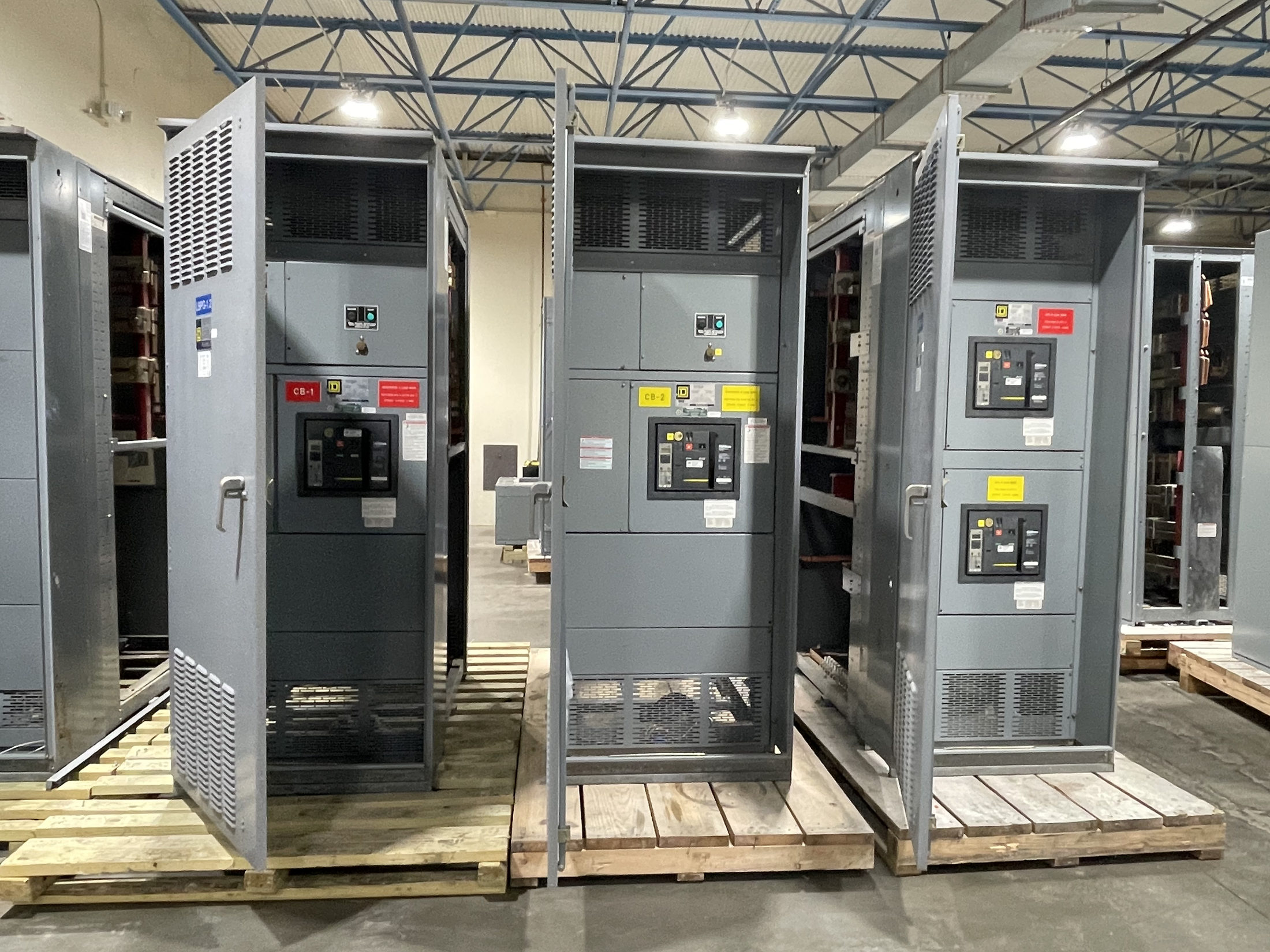
Future Sources Can Change Present Fault Duty
A switchgear rating selected for the sources connected today may not be sufficient for the system planned tomorrow. Adding a utility feed, generator, energy storage system, or another source can increase available short-circuit current at one or more buses. The change depends on each source’s characteristics and how it connects, so simply adding nameplate capacities does not establish the fault duty. For facilities planning phased expansion, the question is whether new switchgear will remain suitable under defined future operating configurations—not whether a future addition is merely possible.
Treat the fault rating for future sources as a design input from the outset. The owner, electrical engineer, and equipment manufacturer need a common basis for identifying which sources are included, where they connect, and when they may operate together. That basis supports a documented evaluation of new switchgear without implying that any particular rating or future configuration is acceptable before engineering review.
Define the Sources and Operating Cases
Begin with a one-line diagram that distinguishes existing sources from planned additions and shows transformers, bus sections, ties, and connection points. Gather source data appropriate to each item, such as utility fault-current information at the service point, transformer impedance and connections, and generator or inverter manufacturer data. Confirm whether each source is firm, proposed, or only a long-range possibility; uncertainty should be recorded rather than quietly treated as a fixed value.
List credible operating arrangements, including normal and alternate feeds, open or closed bus ties, and whether sources can run in parallel. A source that is isolated in one mode may contribute to duty in another. Ask the engineer to identify the cases requiring evaluation and the assumptions used for each. This system-level picture prevents a rating decision based only on one convenient operating snapshot.
Select Ratings Against the Evaluated Duty
Short-circuit and fault ratings are not interchangeable shorthand. The applicable equipment rating and its meaning depend on equipment type, system voltage, construction, and the governing design requirements. Selection should compare calculated fault duty at the relevant equipment location with the ratings applicable to the proposed assembly and its components. The engineer must also consider the specific fault-current contributions and system conditions required by the project; a future-source allowance is not a substitute for a documented study.
Some projects choose equipment around a defined future configuration, while others establish a present design basis and a formal trigger for reassessment before later sources connect. The appropriate choice depends on project plans, uncertainty, space and interface constraints, and the consequences of replacement or modification. Do not assume a higher rating can be selected without checking the complete assembly and design. Applicable standards and any UL 891 suitability must be confirmed for the particular product and application.
Resolve Interfaces and Coordination Choices
Future additions affect more than the switchgear bus. Confirm the intended connection point, feeder and transformer arrangement, protective-device locations, grounding approach, and any controls or interlocks needed to prevent unintended parallel operation. Identify who supplies and approves source data, who maintains the one-line diagram, and who evaluates revised operating modes. These interfaces matter because a changed tie arrangement or source location can alter the fault-current path even when the equipment lineup itself appears unchanged.
Protection coordination and equipment duty should be reviewed together by qualified electrical professionals. Protective-device settings and clearing times influence system behavior, but they do not erase the need to verify equipment ratings against calculated duty. Where a future source is not fully specified, document the missing inputs, design boundary, and approval point before connection. The relevant authorities and project team must review the final design; no generic setting or rating can resolve every installation.
Carry Assumptions Through Procurement and Testing
Procurement documents should state the present and planned sources, operating cases evaluated, fault-duty basis, applicable equipment type, and any constraints on parallel operation. Include the latest one-line diagram and identify unresolved source data as explicit assumptions. Ask the manufacturer to review the specified assembly against those project requirements before release. For a custom new switchgear assembly, clear inputs help align configuration and interfaces; they do not establish an unverified capability, listing, or lead time.
Testing and commissioning plans should match the final design and applicable requirements. Factory checks can verify assembly features within their defined scope, while field procedures and any system studies are determined by the project team. If source details, protective devices, or tie logic change during construction, route revisions for engineering review and update documents accordingly. Do not energize or connect an additional source until qualified personnel and relevant authorities have addressed the changed system conditions.
Use a Change Gate Before Adding a Source
Before committing to a future utility feed, generator, or storage connection, compare the proposed design with the assumptions used to procure the switchgear. Obtain updated source characteristics, the proposed connection and operating modes, and revised system information from the responsible engineer. Then have qualified professionals assess whether the existing equipment remains suitable, whether protection or operating restrictions need revision, or whether equipment changes are required. A new source should not be treated as a routine tie-in merely because spare space or a connection point was anticipated.
For a project in Austin or elsewhere in Central Texas, coordinate source-data requests, drawing revisions, review responsibilities, and delivery milestones with the engineer, owner, utility where relevant, and equipment supplier. A practical next step is to issue a written design-basis checklist with named owners for each missing input and a decision date before equipment release. US-built assemblies using all-American components can be specified for custom requirements, with nationwide shipping; project review determines configuration and lead time.
Project specification checklist
Use this checklist to organize the details for a project-specific review. Final ratings, applicable standards and equipment selections depend on the approved design.
| Item | What to confirm |
|---|---|
| Source inventory | Confirm existing and planned utility, transformer, generator, storage, and other source data, including the status and reliability of each input. |
| Operating configurations | Document normal and alternate feeds, tie positions, source paralleling, and the credible cases that require fault-duty evaluation. |
| Fault-duty basis | Have qualified professionals establish calculated duty at relevant equipment locations and identify the ratings and standards applicable to the proposed assembly. |
| Interfaces and protection | Confirm connection points, grounding, protective devices, controls, interlocks, and responsibilities for reviewing coordination and revised system data. |
| Future-change gate | Record assumptions, restrictions, required reassessment, approval responsibilities, and the point at which a proposed source addition must be reviewed. |