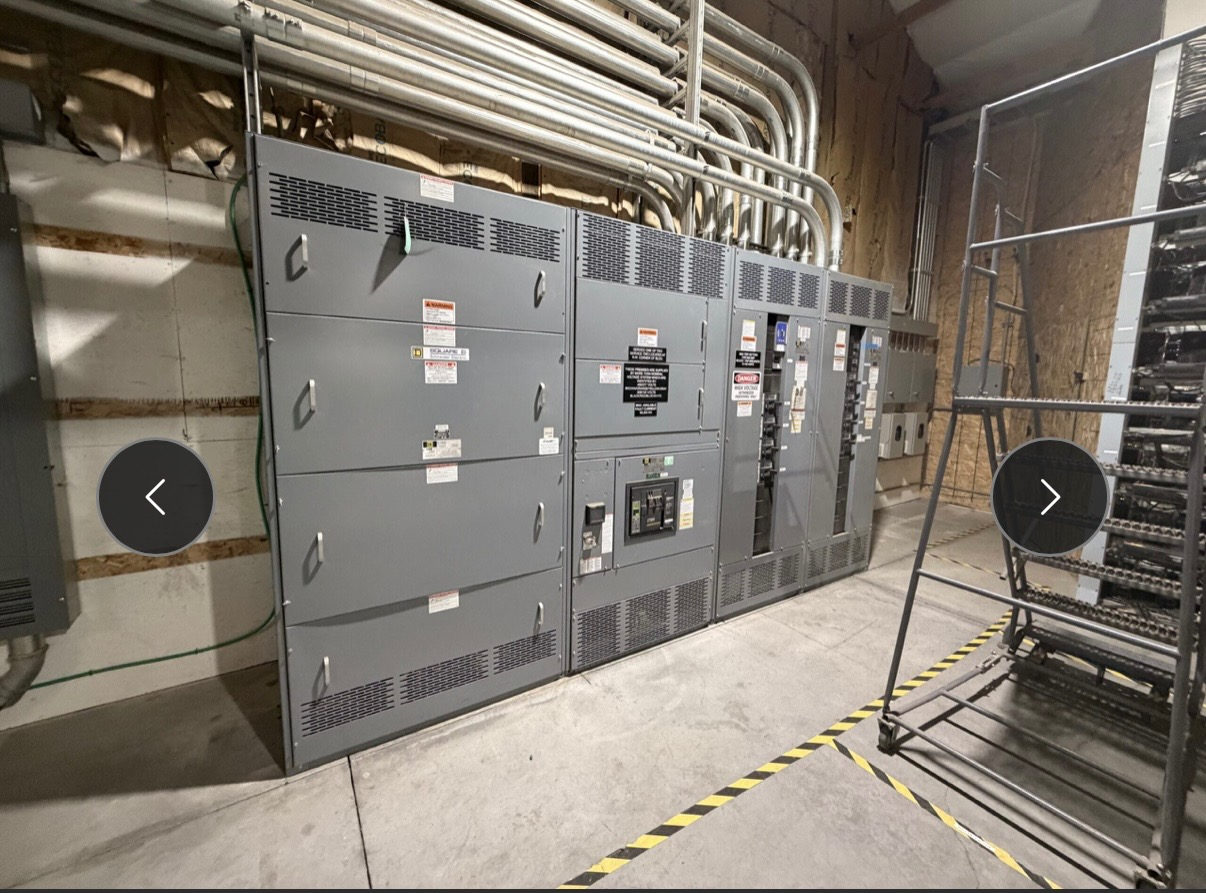
Verify the rating for the complete assembly
A short-circuit current rating describes an assembly’s ability to withstand or interrupt fault current under defined conditions. For new switchgear, the number on a component or a preliminary drawing does not by itself establish the rating of the specified assembly. Confirm the rating against the equipment configuration being furnished, including its protective devices, bus arrangement, connections and any options that affect the evaluated design. The applicable rating and terminology depend on equipment type and project requirements; do not treat a value as transferable between switchboards, switchgear or individual components.
Start with the project’s fault-current study or other approved source of available fault current at the equipment terminals. Compare that information with the proposed assembly documentation and the project specification. The review should establish what value is required, where it applies, and the conditions or duration associated with it. Qualified electrical professionals should resolve discrepancies before the design is released for manufacture.
Gather fault-current and system inputs
Useful inputs include the nominal system voltage, transformer data and impedance, source contributions, conductor lengths and sizes, and upstream protective-device information. The available fault current can vary by location in the distribution system and may change when sources or operating configurations change. Identify the exact point at which the specified rating must be met, rather than relying on a facility-wide figure without context. For projects with generators, parallel sources, or alternate feeds, include the relevant operating modes in the engineering review.
The equipment schedule and one-line diagram should identify the incoming supply, feeder arrangement, bus sections, ties and downstream loads. Confirm whether the rating requirement applies to the entire assembly or particular sections, and whether future expansion or alternate configurations are in scope. These inputs let the manufacturer review the intended design against the project’s conditions. Missing or inconsistent data should be listed as an open item, not silently replaced with an assumed rating.
Review assembly details and interfaces
A rating review must account for the specified assembly as built, not just its nominal bus rating. Confirm the proposed protective-device types and settings, device positions, bus configuration, section connections and any transition or termination interfaces that the project defines. Where equipment connects to transformers, cables, bus duct or other assemblies, document the interface and identify which party is responsible for confirming each adjoining element. Compatibility at an interface does not automatically establish the fault rating of the complete system.
Enclosure and environmental requirements, physical arrangement, metering, control provisions and requested modifications can affect the design being evaluated. Provide these requirements early and ask that the reviewed configuration match the submittal and eventual purchase documents. UL 891 applies to suitable switchboard assemblies where applicable; it is not a universal short-circuit rating and does not automatically apply to every type of switchgear. Confirm applicable standards and evidence for the specific equipment with qualified project professionals.
Resolve protective coordination decisions
Short-circuit withstand and interruption are related but distinct considerations. The equipment rating must be considered alongside the interrupting capability of protective devices and the protection scheme selected for the system. Review the available fault current at each relevant location, device ratings, trip settings and coordination objectives together. A suitable result depends on the complete design and its documented conditions; a larger-looking component rating alone cannot demonstrate that the system meets the project requirement.
The electrical engineer should identify the intended protection and operating assumptions, including which devices clear faults and how the assembly is divided or connected. If the fault study changes, or a device, bus arrangement or source configuration changes, reassess the affected ratings and coordination. Do not infer that series combinations, selective coordination, or a particular duration are acceptable without supporting documentation for the exact configuration and applicable project criteria.
Confirm evidence, testing and standards
Before approval, compare the specified rating with the manufacturer’s documentation for the proposed assembly and configuration. Request clear identification of the rating basis, the applicable standard or evaluation method, and any conditions that limit the claim. Evidence may differ by equipment category and design; a component label, generic catalog statement or rating from a different assembly is not a substitute for documentation that addresses the specified equipment.
Testing or other substantiation should be considered in the context of the applicable standard and the assembly under review. Confirm with the manufacturer and project engineer what documentation is appropriate, and have the authority having jurisdiction review matters within its role. Do not assume every assembly carries a particular listing or that a standard applies across all voltage classes and equipment types. Keep the approved drawings, study assumptions and rating documentation aligned so procurement, review and installation teams are working from the same design basis.
Carry verification into procurement
For a new switchgear quotation or specification review, provide the latest one-line diagram, equipment schedule, fault-current study or stated design basis, protective-device requirements, and interface details. Identify the required rating and its location of application, and flag any unresolved source data or future operating modes. Ask the manufacturer to confirm the rating for the proposed assembly in writing and identify assumptions or exclusions. Custom assemblies can be developed to project specifications, but the final design still depends on complete inputs and engineering review.
Before releasing approved submittals, reconcile the rating information across drawings, schedules and purchase documents. Route revisions in fault current, devices, source configuration or assembly layout back through the responsible engineer and manufacturer for review. For projects in Austin or elsewhere in Central Texas, coordinate the document review and shipment planning around the project schedule; the manufacturer builds in the USA with all-American components and can ship nationwide. Lead time is determined by project, so confirm it with the equipment scope rather than assuming a fixed duration.
Project specification checklist
Use this checklist to organize the details for a project-specific review. Final ratings, applicable standards and equipment selections depend on the approved design.
| Item | What to confirm |
|---|---|
| Required rating and location | State the required short-circuit and fault ratings and identify the assembly or section and point of application. |
| Fault-current basis | Provide the approved study or design basis, system voltage, sources and operating configurations relevant to available fault current. |
| Assembly configuration | Confirm bus arrangement, protective devices, connections, sections, options and interfaces represented by the rating documentation. |
| Protection and coordination | Document device interrupting capabilities, settings and coordination objectives for engineering review against project conditions. |
| Applicable standards and evidence | Verify the standards, evaluation basis and supporting documentation for the specific equipment type and proposed assembly. |