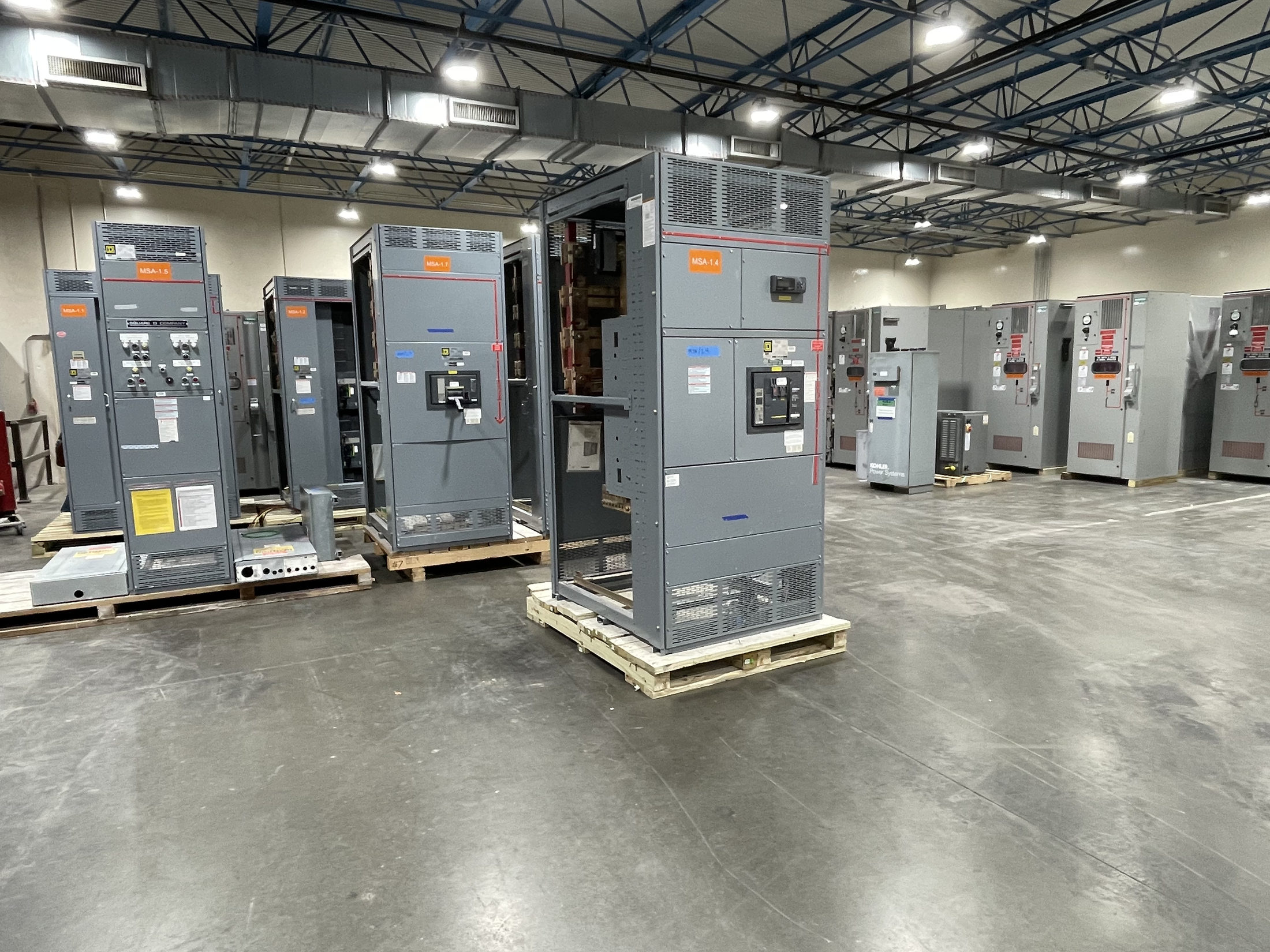
Start with the Project’s Fault-Current Basis
Verifying fault ratings in submittals means checking whether the proposed new switchgear is suited to the electrical system it will serve—not merely locating a number on a product schedule. Begin with the project’s current one-line diagram, system voltage, transformer data, source configuration, and available fault-current information. Confirm the study’s point of evaluation and the assumptions used for normal and alternate operating arrangements. These inputs establish the context for comparing equipment ratings; none should be inferred from a general product description.
The equipment submittal should identify the applicable rating data and the assembly or device to which each value applies. Check that the submitted lineup, main and feeder devices, and specified configuration correspond to the reviewed drawings. If the project documents conflict or omit an input, record the gap and request clarification from the engineer of record before treating the rating review as complete.
Distinguish the Ratings Before Comparing Values
Short-circuit and fault ratings can describe different aspects of equipment performance. Depending on the equipment and design, submittals may present an assembly short-circuit rating, interrupting ratings for protective devices, or other rating data tied to specified conditions. Do not treat these values as interchangeable or assume that a breaker’s rating establishes the rating of the complete assembly. Review the manufacturer’s stated basis, configuration, and applicable conditions for each figure.
Compare like with like: the project requirement, the submittal value, and the point in the system must refer to compatible equipment and conditions. Check whether the schedule specifies a rating at a particular voltage or requires a specific tested combination. Where terminology or units differ, ask the design professional and manufacturer to identify the precise rating being compared. A higher-looking number alone does not resolve a mismatch or establish suitability.
Trace Discrepancies to Their Source
When values disagree, first identify exactly where: the one-line diagram, equipment schedule, fault-current study, device data, or assembly documentation. Then check for differences in voltage, source assumptions, transformer impedance, conductor details, or operating configuration. A study may represent a different system state from the one shown in the latest drawings. Revision dates matter; comparing a current submittal with superseded project data can create a false discrepancy or conceal a real one.
Keep a written discrepancy log that states the affected equipment, conflicting documents, relevant revision dates, and the question requiring resolution. Avoid selecting whichever value seems most favorable or changing design inputs informally. Route technical questions to the responsible electrical engineer and request corrected calculations, drawings, or submittal pages as needed. Preserve the resolution in the project record so procurement and later reviews use one coordinated basis.
Review the Entire System Interface
Fault-rating verification depends on the connected system, not just the switchgear lineup. Confirm upstream sources and protective devices, transformer and feeder information, ties or alternate feeds, and downstream equipment interfaces against project documents. Parallel operation, transfer arrangements, or future system changes may affect the study assumptions; the project team must determine which operating cases govern. Also check that the specified protective-device types and combinations match the configuration represented in the submittal.
Coordination review should distinguish the equipment rating check from protective-device coordination and arc-flash analysis. Those studies have related inputs but answer different questions, and one does not substitute for another. Identify who owns each calculation and which approved revisions it uses. If the switchgear configuration changes, or a source or device is revised, ask the responsible engineer to assess whether affected analyses and submittal ratings need to be updated.
Confirm Standards, Evidence, and Test Scope
Ask the manufacturer to identify the documentation supporting the proposed assembly and the conditions under which its stated ratings apply. Applicable standards and evidence depend on equipment type, design, and project requirements. UL 891 concerns suitable switchboards; it is not a blanket qualification for every switchgear product or a substitute for confirming the specified fault-rating basis. Do not infer a listing, test result, or rating from a product category or from another lineup’s documentation.
Review whether the submitted evidence covers the proposed arrangement, including relevant devices and configuration, and note any limitations or exclusions. If the specification calls for particular test documentation or certification, compare that request with the provided records and obtain clarification where they do not align. Qualified electrical professionals and relevant authorities must review project compliance. Document open items before release so unresolved rating questions are not carried into manufacture or field coordination.
Close the Review Before Equipment Release
Before approving the submittal for procurement, reconcile the rating data with the latest approved one-line, schedules, study, and equipment configuration. Confirm that the manufacturer’s quotation and submittal refer to the same scope, including lineup arrangement and specified protective devices. For custom new switchgear, design choices can affect the assembly and documentation; resolve any proposed substitution or deviation through the project’s formal review process rather than assuming it preserves the original rating basis.
A practical closeout is a marked-up submittal, a concise response to each discrepancy, and confirmation of the controlling project revisions. Ask the engineer of record to approve design-related resolutions and ensure updated study documents reach the equipment manufacturer. If an input remains uncertain, hold the affected decision until qualified reviewers establish the basis. This creates a traceable record for procurement, subsequent drawing coordination, and verification that the delivered configuration matches the approved design.
Project specification checklist
Use this checklist to organize the details for a project-specific review. Final ratings, applicable standards and equipment selections depend on the approved design.
| Item | What to confirm |
|---|---|
| System fault-current basis | Confirm the current study, evaluation point, source assumptions, and governing operating cases. |
| Equipment and device ratings | Identify each stated rating, its applicable voltage, configuration, and intended equipment component. |
| Project document revisions | Reconcile dates and revisions for the one-line, schedules, calculations, and submittal. |
| System interfaces | Check upstream sources, protective devices, ties, alternate feeds, and connected equipment against the reviewed design. |
| Supporting evidence | Confirm which documentation supports the proposed assembly and whether it matches the specified arrangement and requirements. |
| Discrepancy resolution | Record conflicts, assign technical review, and obtain documented approval before equipment release. |