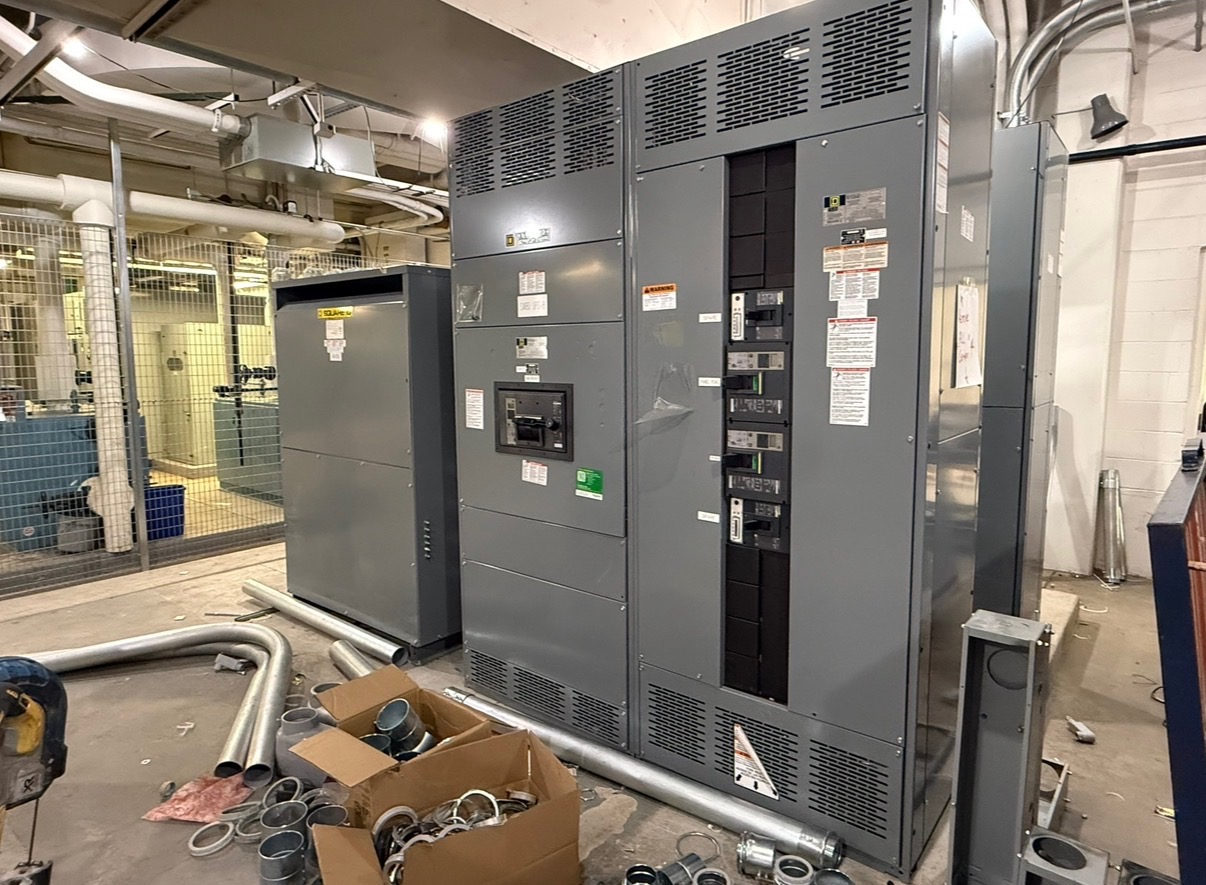
Start With the Switchboard’s Role
A useful switchboard pricing request begins with its place in the electrical system, not a presumed standard lineup. Describe whether the equipment will serve as service equipment, distribute power downstream, or support a particular facility process. Identify the source and downstream loads, the intended installation location, and any existing equipment or project interfaces. These details help determine the configuration and what information the design team needs before pricing can be developed.
Provide available one-line diagrams, load schedules, project specifications, and relevant equipment data. Flag documents that are preliminary or still under review. A qualified electrical professional should verify system conditions and project requirements; the manufacturer can then review the requested new switchboard design against those inputs. Pricing is more meaningful when the scope distinguishes confirmed requirements from open decisions.
Define Configuration and Connections
Configuration affects the arrangement of incoming and outgoing connections, the number and type of sections, and how the switchboard interfaces with the rest of the system. Share the required source arrangement, feeder count and destinations, and any main, tie, or distribution functions shown in the design. Clarify whether conductors enter from above or below, where they leave, and what connection provisions the drawings call for. These choices influence layout and should be settled early where possible.
Also identify any space, access, or sequencing constraints that affect section arrangement, conductor routing, or future expansion. Confirm interface details with the electrical designer, including coordination with upstream protection and downstream equipment. Do not infer that a particular configuration, interrupting capability, or rating is suitable from a brief description. Those selections require project-specific system data and professional review.
List Devices and Protection Requirements
Device selection is a major pricing input. Provide the requested device types and quantities, their assigned circuits, and the functions each must perform. Depending on the design, this may include main and feeder overcurrent devices, switching or isolation functions, control components, or provisions for future circuits. Identify any specified manufacturer or product restrictions, accessory requirements, and control interfaces rather than assuming equivalent devices or features are acceptable.
For protective devices, include the project’s documented electrical system information and any coordination or protection study requirements available at the time of inquiry. Applicable device ratings and standards depend on the design and installation; they should not be guessed from nominal system voltage or load alone. If the study or final device schedule is pending, mark it as an open item so pricing assumptions and later design changes can be reviewed explicitly.
Specify Metering and Signals
Metering scope can range from a defined set of local measurements to multiple monitored circuits and remote data interfaces. State what quantities the project requires, where readings must be available, and whether the design calls for local indication, communications, or both. Identify any requested meter locations, instrument transformers, control power, terminal points, and communications protocol or network interface shown in the project documents. Confirm who supplies connected network infrastructure and what information the equipment must exchange.
Separate required functions from preferences, and provide the metering schedule or control diagrams when available. Confirm signal naming, alarm points, and interface responsibilities with the controls or building-system team. Metering choices may affect devices, wiring, space, and testing scope, so late additions can change the design and price. Specific measurement accuracy, communications behavior, and equipment suitability must be confirmed against project requirements.
Confirm Enclosure and Installation Conditions
Enclosure inputs describe the environment and physical fit, not simply a preferred cabinet appearance. Provide the installation location, indoor or outdoor exposure, expected ambient conditions, contamination or moisture concerns, and any project requirements for access or environmental protection. Specify available room dimensions, equipment orientation, working clearances from the project design, and the intended conductor entry and exit areas. Identify any access doors, barriers, or other construction details explicitly required by the documents.
The project team should confirm the applicable enclosure type and construction with the manufacturer based on actual site conditions and governing requirements. Do not assume one enclosure or environmental rating is appropriate for every location. Also identify shipping and handling constraints, the receiving location’s access limitations, and the equipment’s path to its final position. These practical inputs help expose fit and logistics questions before the design is finalized.
Build a Reviewable Pricing Package
For a productive quote review, submit the latest one-line diagram, device schedule, metering and control requirements, enclosure and layout criteria, and project specification. Include the requested delivery destination and milestone needs, while treating lead time as project-dependent. List exclusions, alternates, and unresolved selections separately. Ask the manufacturer to identify assumptions in the proposed scope so the team can compare pricing against the intended design rather than against an incomplete equipment description.
Before release, have the electrical designer check configuration, device coordination, metering interfaces, physical fit, and applicable standards. UL 891 may apply to suitable switchboard assemblies, but it is not an automatic designation for every assembly; applicable standards and any listing requirements must be verified for the specific design. The US manufacturer builds with all-American components, can develop custom assemblies to specification, and can ship nationwide. A practical next step is to issue coordinated documents and request confirmation of scope, open items, and project-specific schedule.
Project specification checklist
Use this checklist to organize the details for a project-specific review. Final ratings, applicable standards and equipment selections depend on the approved design.
| Item | What to confirm |
|---|---|
| System and application | Confirm the switchboard’s role, source arrangement, downstream loads, and the latest available one-line diagram. |
| Configuration and connections | Document section arrangement, incoming and outgoing circuits, conductor entry direction, and required interfaces. |
| Devices and protection | Provide device types, quantities, circuit assignments, accessory needs, and available coordination-study requirements. |
| Metering and controls | Specify measurements, locations, communications, signal points, control power, and interface responsibilities. |
| Enclosure and logistics | Confirm environmental conditions, physical constraints, entry areas, receiving access, and destination. |
| Standards and schedule | Identify required standards or listing criteria for review and provide project milestones; confirm applicability and lead time. |