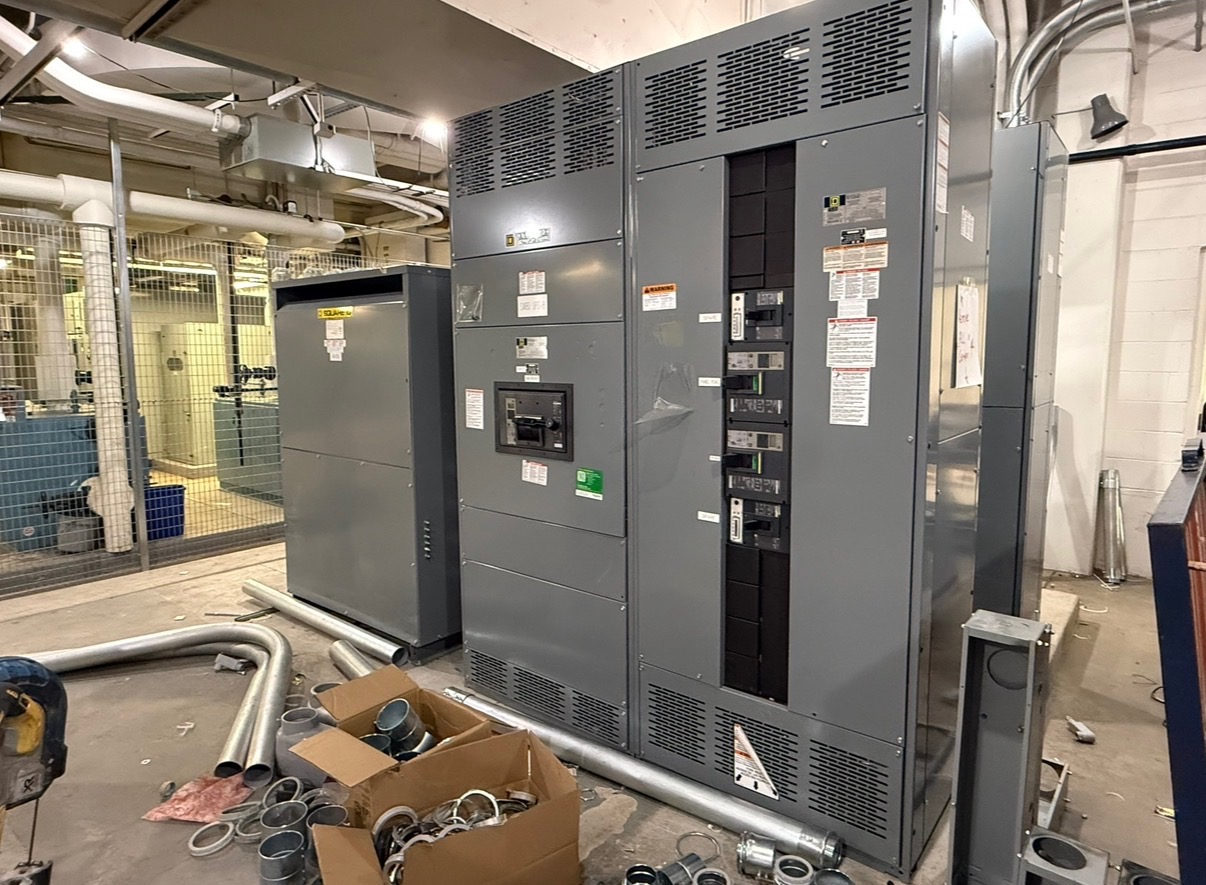
Start with the electrical application
Choosing new switchgear begins with the job it must perform, not a catalog rating. Identify whether the equipment will serve a building service, distribution point, industrial process, or another defined application. Document the source, connected loads, operating arrangement, and expected expansion so the design team can understand how the assembly fits into the system. For Central Texas projects, coordinate these details among the owner, electrical engineer, contractor, and equipment supplier early; project schedules and site constraints can affect what information is needed and when. This FAQ introduces the decisions behind ratings and design. Detailed topic pages can help you explore individual questions before developing a project specification.
What information should you gather first? Collect one-line diagrams, load and feeder schedules, available fault-current information, system grounding details, and the intended installation location when available. These inputs are not interchangeable: a rating suitable for one system arrangement may not suit another. A qualified electrical professional should establish or verify design values and applicable requirements. If the project is an upgrade, document existing interfaces and operating constraints rather than assuming a new assembly can simply match the old one. Clear inputs help manufacturers evaluate custom assemblies to specification and identify unresolved design questions before procurement decisions are made.
How do voltage and current ratings get selected?
Voltage and current ratings must match the electrical system and the equipment’s intended duty. Confirm system voltage, phase and wire configuration, frequency, continuous load, feeder requirements, and any anticipated operating conditions with the project engineer. Consider the complete lineup and connected devices, not just a single nameplate value. Neither an amperage nor a voltage should be treated as universally available or appropriate; selection depends on the design, component arrangement, applicable standards, and project requirements. A ratings overview page can explain terminology, while the project specification should state the required values and identify who is responsible for confirming them.
Ask whether the stated current requirement reflects present demand, planned loads, or a specified design basis, and whether any provisions for future circuits are needed. Physical space, conductor terminations, bus arrangement, and coordination with upstream and downstream equipment may influence the design. Do not infer suitability from a similar installation or a preliminary equipment description. The engineer of record and other qualified professionals should resolve discrepancies among drawings, schedules, and site data. For custom assemblies, send the latest controlled documents and identify revisions; that gives the manufacturer a clearer basis for review without substituting manufacturing input for engineering approval.
What should I know about fault-current ratings?
The available fault current at the installation point is a key design input. It affects the required short-circuit withstand or interrupting characteristics of the equipment and its components, as applicable to the design. Confirm the source information and calculation basis with the project’s qualified electrical professionals; utility or upstream-system changes can alter the value. Do not choose a short-circuit rating by guesswork, by copying a rating from another location, or by assuming a higher value is automatically suitable. The equipment configuration, protective devices, system arrangement, and applicable standards all matter. A dedicated short-circuit rating topic page can help frame the questions to resolve.
Also establish how protective-device coordination and the overall system study relate to the equipment specification. The necessary evaluation may involve fault-current and coordination analyses, and project requirements vary. Drawings and documents should clearly identify the relevant values, assumptions, and any required study responsibilities. If information is pending, flag it before the design is finalized or an order is placed. Qualified electrical professionals and relevant authorities must review the proposed design for the installation. Never use a website FAQ as authorization to install or operate equipment outside its documented ratings or approved project requirements.
Which enclosure and construction choices matter?
Enclosure selection depends on the installation environment and the specific location of the assembly. Confirm whether equipment will be indoors or outdoors, exposure to moisture, dust or other contaminants, ambient conditions, access needs, and the available space. The required enclosure type must be stated and verified for the actual application; no enclosure is appropriate for every setting. Layout decisions can also depend on cable entry and exit, working clearances, routing, access, and interfaces with adjacent equipment. Share relevant plans and site constraints with the design team. A construction and enclosure topic page can provide a focused checklist for developing these requirements.
Custom design choices may include lineup arrangement, sections, circuit provisions, control features, metering needs, and connection details, subject to the equipment type and project specification. Confirm which features are required now and which, if any, are intended as future provisions. Document interfaces with transformers, protective devices, control systems, and existing distribution equipment where applicable. Keep the specification aligned with current drawings and identify exclusions or unresolved choices explicitly. The manufacturer can build in the USA using all-American components and develop custom assemblies to specification; each proposed design still requires project-specific review for ratings, construction, and applicable standards.
How do standards, testing, and coordination fit?
Ask which standards apply to the equipment type and the particular assembly, and what evidence or documentation the project requires. UL 891 applies to suitable switchboard assemblies; it does not automatically cover every product or make a medium- or high-voltage assembly UL 891-listed. Other equipment and ratings follow their applicable standards. Confirm any requested listing or certification for the exact proposed design rather than assuming it from a general product description. A standards and testing topic page can help distinguish assembly requirements from system studies and field responsibilities. Project documents and qualified reviewers should establish the criteria before procurement.
Clarify the scope and timing of design reviews, submittal drawings, comments, and any specified factory testing or inspection. Testing requirements depend on the project and the equipment design; do not assume a particular test is included. Coordinate submittal review with the engineer, contractor, owner, and any relevant authority so that comments are consolidated and revisions are tracked. Confirm who approves final drawings and who verifies field interfaces. This coordination helps surface issues such as access, connections, and control requirements before shipment. It does not replace qualified installation, commissioning, or safety procedures, and no one should treat review documents as permission to work on energized equipment.
What should I prepare before requesting a proposal?
A useful inquiry includes the application, project location, target schedule, one-line diagram, equipment schedules, specification, available fault-current data, and installation constraints. Include required ratings, enclosure expectations, standards or listing requirements, control and metering needs, and any known interfaces. Mark information that is preliminary or awaiting confirmation. This lets the manufacturer identify gaps and assess a custom assembly against the project documents. Lead times are determined by the project and design details, so discuss schedule expectations without treating an early estimate as a commitment. Nationwide shipping is available, with shipment coordination based on the project and destination.
Before placing an order, have qualified project professionals reconcile the proposal and submittals with the final specification, drawings, and site conditions. Confirm scope, exceptions, required approvals, documentation, testing expectations, shipping destination, and the process for handling revisions. For Central Texas customers, include the delivery site’s access and receiving constraints and coordinate timing with the contractor and project team; this is logistics planning, not a claim of local service or factory presence. The practical next step is to submit a coordinated document set and a list of open questions. That creates a specific basis for review rather than relying on assumptions about ratings or availability.
Project specification checklist
Use this checklist to organize the details for a project-specific review. Final ratings, applicable standards and equipment selections depend on the approved design.
| Item | What to confirm |
|---|---|
| System data | Confirm system voltage, phase, frequency, grounding, and operating arrangement from project documents. |
| Load requirements | State load basis, feeder needs, and any defined future provisions for qualified review. |
| Fault-current basis | Provide the verified available fault-current information and identify study assumptions or pending data. |
| Installation environment | Specify indoor or outdoor location, environmental exposures, access, space, and connection constraints. |
| Standards and testing | Identify standards, any assembly-specific listing requirements, documentation, and testing criteria for the exact design. |
| Procurement coordination | Share current drawings, schedule expectations, shipping destination, approvals, and unresolved design questions. |