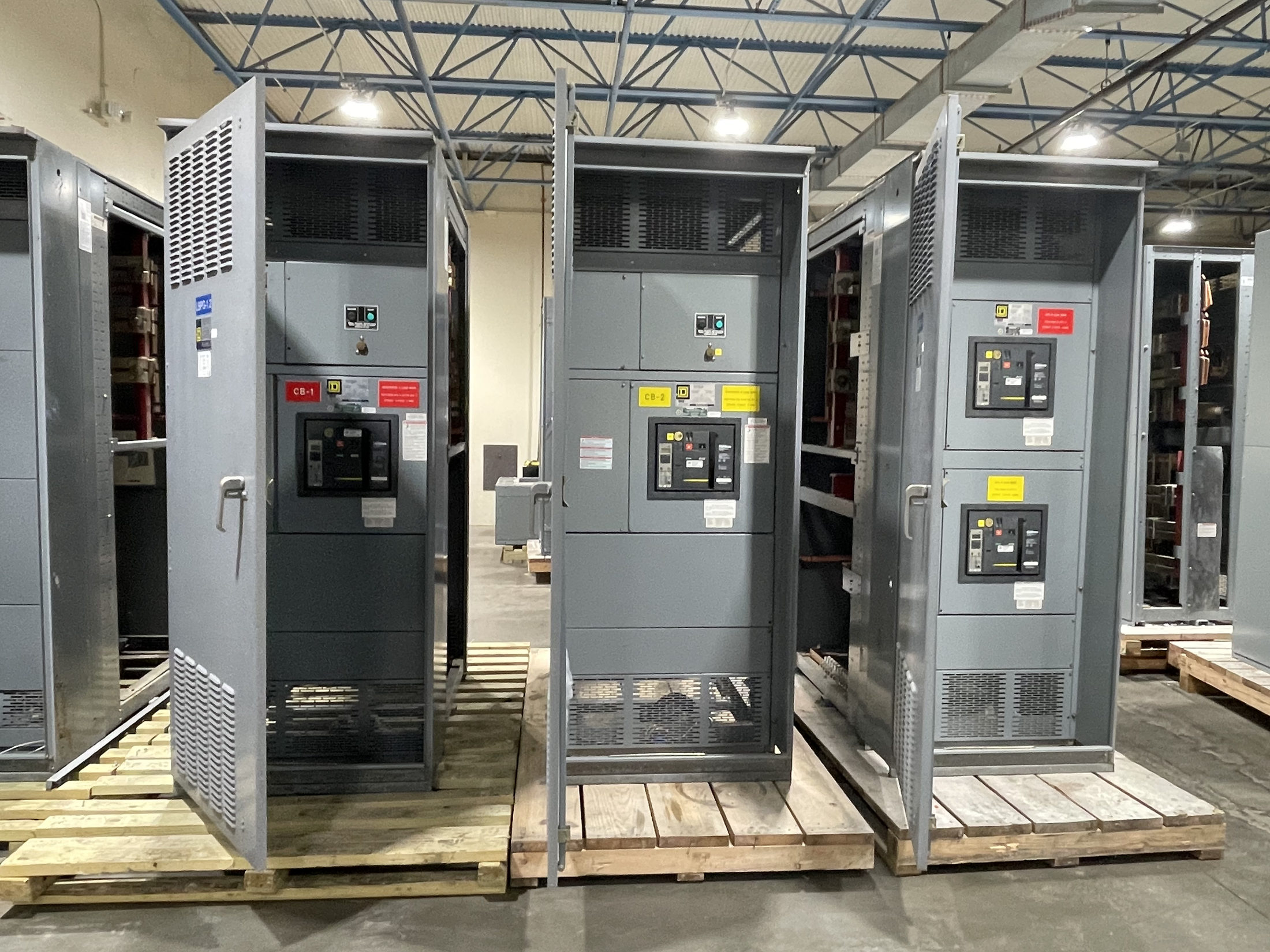
Start with the load the equipment must serve
Choosing a switchgear current rating starts with the electrical system it will serve, not with a single number taken from a catalog. The design team needs the expected connected load, demand assumptions, operating modes and any planned expansion. Motor starting, large cyclical loads, nonlinear loads and simultaneous operation can affect the load assessment. The result helps establish the continuous current the assembly and its components must carry under defined conditions.
For a facility considering new switchgear, provide a current one-line diagram and load information, including known future additions. A qualified electrical professional should reconcile those inputs with the project’s operating requirements and governing rules. A manufacturer can then evaluate an assembly against the specified application; an assumed building type or a past project is not a substitute for that review.
Apply the rules for the specific equipment
Current rating is only one part of a compliant design. The applicable electrical codes, product standards, utility requirements and authority having jurisdiction depend on the equipment type, installation and project scope. Switchboards, low-voltage switchgear and medium-voltage equipment do not automatically share the same standards or construction requirements. The project documents should identify the intended equipment and the rules the design team expects it to meet.
UL 891 applies to suitable switchboard assemblies; it should not be treated as a blanket designation for every kind of switchgear or every configuration. Confirm whether it applies to the proposed assembly and identify any other applicable requirements during specification review. The equipment supplier, qualified electrical professionals and relevant authorities should resolve questions before design details are finalized, rather than relying on a generic current-rating label.
Check ambient and installation conditions
A marked current rating is meaningful only in its stated rating conditions. Ambient temperature, ventilation, enclosure arrangement, installation location and the way equipment is grouped can influence thermal performance. The project team should confirm where the assembly will be installed, the expected surrounding conditions and any constraints on heat dissipation. Do not assume that a rating established under one set of conditions transfers unchanged to a different site or configuration.
Share available room and layout information, environmental conditions, mounting and access constraints, and any known restrictions on ventilation. If site conditions are not yet settled, identify them as open design inputs. Qualified professionals and the equipment manufacturer can determine whether the proposed design and rating conditions fit the actual installation. Enclosure and environmental suitability also require project-specific confirmation; no enclosure type should be presumed from current rating alone.
Coordinate feeders, devices and system interfaces
The selected assembly rating must align with the connected system. Useful inputs include source characteristics, feeder and bus requirements, protective-device types and settings, conductor information, downstream loads and the intended operating configuration. The team should also identify tie breakers, alternate sources and transfer arrangements where present. These interfaces affect the design and coordination of the assembly, even though they do not by themselves establish an acceptable current rating.
Current-carrying capacity and short-circuit withstand or interrupting requirements are distinct checks. A suitable current rating does not establish that equipment can safely manage a system fault. Qualified electrical professionals should review fault-current information, protection coordination and equipment interfaces, then specify the relevant ratings and device characteristics. Confirm that the proposed configuration matches the reviewed drawings and application before procurement; do not infer fault capability from an amperage value.
Resolve rating conditions through design review
Before the rating is finalized, compare the load assessment, applicable rules, ambient assumptions and equipment configuration against the project documents. Identify who is responsible for supplying each input and resolving discrepancies, such as conflicting one-line diagrams or load schedules. Review changes to operating modes or anticipated expansion as well; a late change can affect bus, device and enclosure selections. The final rating should be tied to a documented design basis, not a rough estimate.
Testing and markings should be considered in the context of the specified assembly and applicable requirements. Confirm what evidence, documentation and inspection or acceptance steps the project requires, and which party will review them. Do not assume a particular listing, test, or approval applies without verification. Any questions about standards, rating conditions or interfaces should be addressed by qualified electrical professionals and relevant authorities before release for manufacture.
Prepare a rating-ready request for new switchgear
A useful request for quotation or design review includes the one-line diagram, load schedule, source and fault information, operating sequence, environmental conditions, physical constraints and applicable project specifications. State the required equipment type and identify known future loads or alternate operating arrangements. If any information is preliminary, label it clearly and note when it will be confirmed. This allows the manufacturer to identify rating assumptions and questions instead of treating incomplete inputs as settled requirements.
For a Central Texas project, coordinate the equipment submittal schedule and delivery destination with the broader construction plan; shipping can be arranged nationwide, while lead time depends on the project. A US-built, all-American-component assembly can be developed to specification, subject to design review and applicable requirements. Before approval, verify the proposed current rating, its conditions, interfaces, documentation and any applicable UL 891 scope against the project’s needs. Final selection belongs with the qualified design team and relevant authorities.
Project specification checklist
Use this checklist to organize the details for a project-specific review. Final ratings, applicable standards and equipment selections depend on the approved design.
| Item | What to confirm |
|---|---|
| Load basis | Confirm connected and demand loads, operating modes, and planned future additions. |
| Applicable requirements | Identify equipment type, governing rules, project specifications, and whether UL 891 applies to the assembly. |
| Rating conditions | Document ambient, ventilation, enclosure arrangement, installation location, and other thermal assumptions. |
| System interfaces | Provide source, feeder, protective-device, fault-current, and operating-configuration information for qualified review. |
| Submittal and schedule | Confirm drawings, required evidence, approval responsibilities, delivery coordination, and project-dependent lead time. |