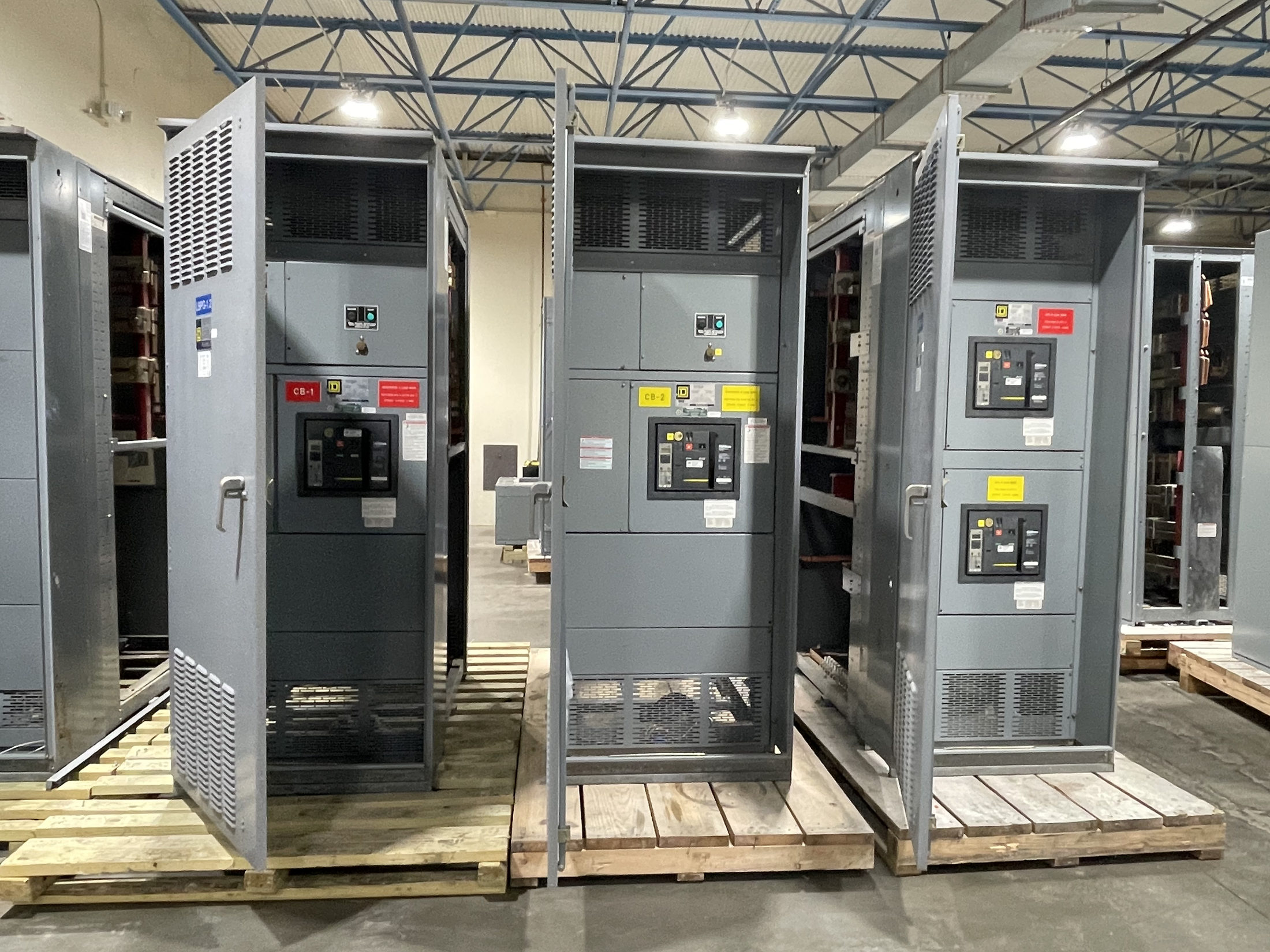
Why the Nameplate Matters
A switchgear nameplate is a compact record of equipment identity and declared characteristics. It helps qualified personnel distinguish an assembly from other equipment, match it to approved project documents, and check whether its stated ratings align with the electrical system. The exact information varies by equipment type, design, and applicable requirements; there is no single nameplate format that covers every switchgear assembly. For someone evaluating new switchgear, understanding these markings is useful before specifications are finalized and again during submittal review, installation planning, and commissioning.
A nameplate is not a substitute for drawings, instructions, or engineering review. It does not by itself establish that equipment is suitable for a particular installation. Confirm its information against the one-line diagram, system conditions, specified standards, and project requirements with qualified electrical professionals.
Identification and Traceability Markings
Identification details may include the manufacturer’s name, product or assembly designation, serial or other traceability identifier, and manufacturing information. The equipment may also carry a project designation or field-applied label so that its location and function can be matched to drawings and schedules. These identifiers help reviewers resolve questions about the correct assembly and distinguish nameplate data from field labels added for installation or operating purposes.
When specifying new equipment, decide how the assembly, sections, and circuits should be identified in project documents and on labels. Provide the required equipment tags, service description, and location information, and establish who will review them before production. Ask how identification will correspond to the approved submittals and delivered assembly. Do not treat a project tag as proof of electrical ratings or assume that a field label replaces manufacturer markings.
Electrical Ratings to Read Together
Depending on the assembly, markings may state voltage, frequency, current ratings, or other electrical characteristics. The meaning and applicability of each value depend on the equipment design and its intended role. For example, a stated current value cannot be evaluated in isolation from the system configuration, connected loads, protective devices, and project operating conditions. Likewise, voltage information must be checked against the actual system and the equipment’s specified use, rather than inferred from appearance or a general product description.
Project reviewers should compare nameplate values with the one-line diagram, load information, system study results where applicable, and the procurement specification. Confirm which ratings apply to the complete assembly and which may describe a component or section. Any mismatch, ambiguity, or missing value should be resolved through document review before acceptance or energization; never infer suitability from a rating that has not been verified for the project.
Short-Circuit and Standard Markings
Short-circuit markings, when applicable, communicate a defined capability under stated conditions. Their interpretation can depend on the assembly configuration, protective devices, and the basis used for the rating. A number on a nameplate is not a universal measure of fault withstand for every installation. The available fault current and required equipment capability must be established for the specific system by qualified professionals, then compared with the equipment documentation and project requirements.
Standards and certification marks also require careful reading. UL 891 applies to suitable switchboard assemblies; it does not automatically apply to all switchgear, medium-voltage equipment, or every product in a project. Other equipment may be subject to different applicable standards. Confirm the requested standard, scope, and any required markings during specification and submittal review. Do not assume a listing or certification from the equipment category alone; verify that the particular design and assembly qualify.
Enclosure, Environment, and Interfaces
Some nameplates or associated labels identify enclosure characteristics or environmental limitations, but the exact markings depend on the design and project. Confirm the intended installation environment, including indoor or outdoor placement, exposure concerns, access, and space constraints, against the specified enclosure requirements. The marking must be interpreted in the context of the complete assembly and installation instructions; it should not be taken as permission to place equipment in any location or condition.
Nameplate review also belongs alongside interface checks. Confirm incoming and outgoing connections, bus arrangements, control power and control-circuit needs, metering or communication interfaces, and coordination with upstream and downstream equipment as applicable. These details are generally established in drawings and submittals, not reliably inferred from a single nameplate. Raise conflicts early so the manufacturer can review design choices against the project specification before the assembly is finalized.
Reviewing Markings Before Procurement
For a new switchgear request, provide the application, system voltage and frequency, load and fault information, one-line diagram, installation environment, required standards, and interface expectations. Identify any required equipment tags, documentation, and inspection or testing expectations. These inputs let the manufacturer assess the proposed assembly and determine which ratings and markings are relevant. Custom assemblies can be developed to specification, but final details depend on engineering review; lead time is likewise determined by project scope and design.
During submittal review, compare the proposed nameplate information with the specification and drawings, and document open questions before approval. Confirm that required markings will be present and legible and that the delivered identification matches project records. The manufacturer builds in the USA using all-American components and can ship nationwide; procurement still requires project-specific coordination. Before installation or operation, qualified professionals and relevant authorities should review the equipment and its documentation. Never use nameplate interpretation as a reason to work on energized equipment.
Project specification checklist
Use this checklist to organize the details for a project-specific review. Final ratings, applicable standards and equipment selections depend on the approved design.
| Item | What to confirm |
|---|---|
| Equipment identity | Confirm manufacturer, assembly designation, traceability information, and project tags against approved documents. |
| System ratings | Specify and verify voltage, frequency, current, and other applicable values for the actual system. |
| Fault capability | Provide project fault information and confirm the required capability and rating basis with qualified reviewers. |
| Standards and markings | State applicable standards and required certification markings; verify applicability for the particular design. |
| Installation and interfaces | Confirm environmental conditions, enclosure needs, connections, controls, metering, and coordination requirements. |