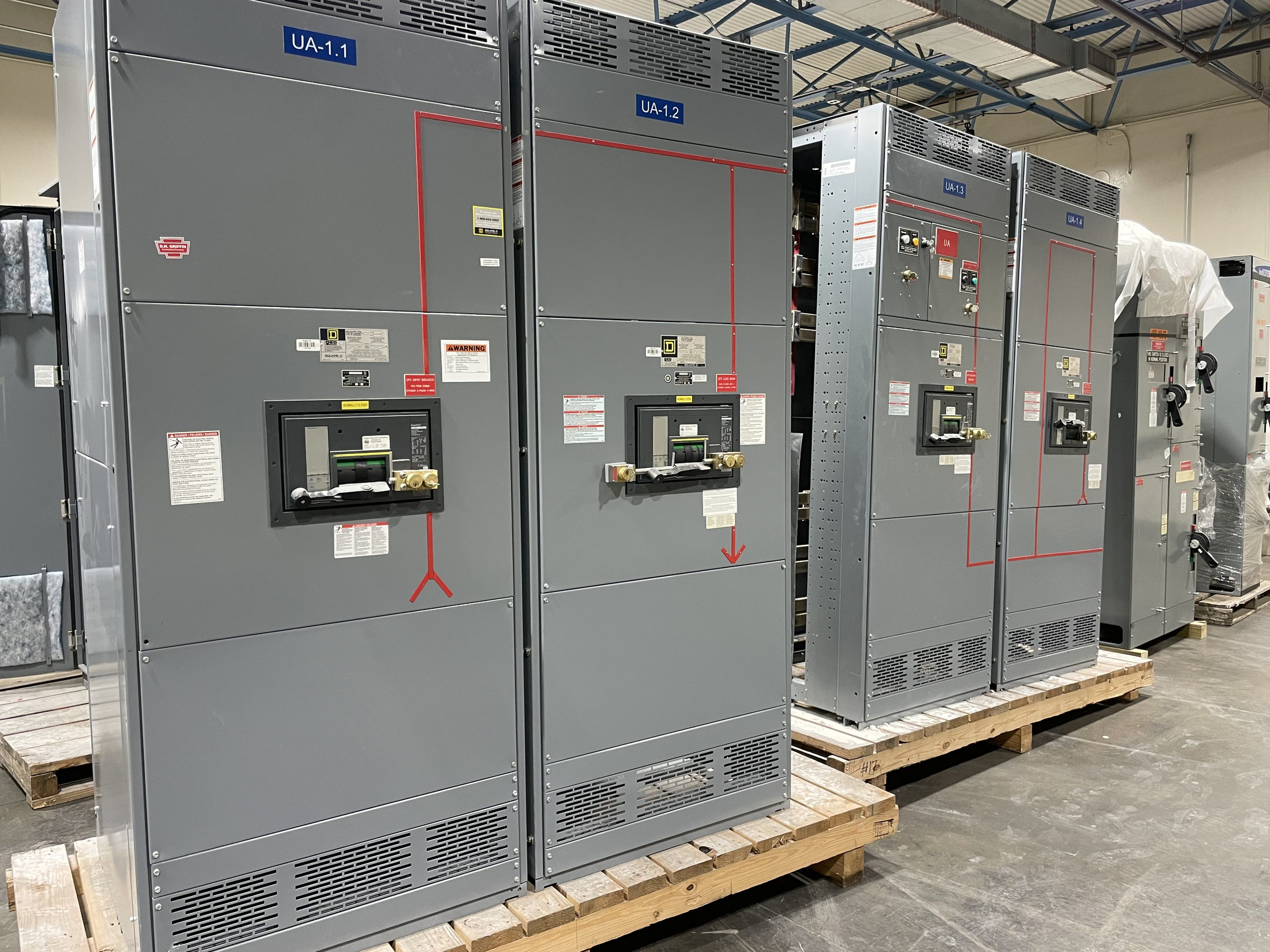
Signs Your Existing System Needs a New Design
The question “when is new switchgear needed?” usually arises when an electrical system is changing or existing equipment no longer fits documented operating needs. Common triggers include a facility expansion, a new service connection, added electrical loads, a major equipment replacement, or a project that changes how power is distributed. Capacity concerns may also emerge when the load forecast approaches the limits established for the existing equipment. That does not, by itself, prove that replacement is required: the full system, equipment condition, operating plans, and applicable requirements need review by qualified electrical professionals.
New switchgear can be considered when the project calls for a different arrangement, ratings, interfaces, or operating approach than the installed equipment can support. A site assessment should distinguish a genuine design gap from an assumption based on age or a single nameplate value. The relevant question is whether a new assembly, designed for the intended system and verified for its application, is the appropriate project response.
Evaluate Capacity Against the Planned Load
Capacity decisions should start with the present electrical load and a credible forecast of future demand. Provide the engineer with available load studies, service information, equipment schedules, anticipated additions, and expected operating patterns. Changes such as new production equipment, building systems, or electrification can affect the distribution design, but their impact depends on how and when loads operate. Qualified professionals must determine the required equipment ratings and confirm that connected components and upstream and downstream systems are compatible.
Do not select switchgear from a general rule of thumb or assume that a familiar voltage, amperage, or fault rating will suit every project. System voltage, available fault current, continuous and intermittent loads, service configuration, environmental conditions, and applicable codes and standards all inform selection. A manufacturer can develop a custom assembly to specification, but the design inputs and acceptance criteria must be established and reviewed for the specific installation.
Reliability Needs Can Drive Replacement
Reliability concerns may justify studying new equipment when unplanned interruptions are costly, the distribution arrangement is changing, or the existing gear does not align with current operational requirements. The discussion should identify which loads are critical, what outages the facility can tolerate, and what operating or maintenance procedures are expected. These goals help qualified professionals assess configuration and features; they do not establish that any particular switchgear arrangement will deliver a guaranteed level of uptime.
Useful evidence includes maintenance and inspection records, known operating issues, equipment documentation, and the history of system changes. If the equipment has been modified or its configuration is unclear, that uncertainty should be resolved before defining a replacement scope. Reliability also depends on the surrounding electrical system, protection coordination, installation, maintenance, and operating practices. Consider these factors together rather than treating new switchgear as a stand-alone solution.
Account for Interfaces and Design Choices
A new assembly must be designed around its electrical and physical interfaces. Confirm the incoming source, downstream feeders, conductor requirements, protection devices, control and monitoring signals, and any tie or transfer arrangements relevant to the project. The team should also document available space, access and working clearances, cable entry, environmental conditions, and constraints imposed by adjacent equipment. These details can affect the assembly layout and whether the proposed design is practical for the site.
Clarify whether the project requires a switchboard, switchgear, or another type of distribution equipment; terminology alone does not establish the correct product. Applicable standards and any listing requirements depend on the equipment design and application. UL 891 applies to suitable switchboard assemblies, not automatically to every switchgear product. Provide drawings and specifications early so the manufacturer and project professionals can resolve scope, interfaces, and design decisions before procurement.
Coordinate Review, Testing, and Procurement
Before an order is finalized, align the equipment specification with the electrical design, one-line diagram, schedules, and project requirements. Confirm responsibility for protection settings, coordination studies, control details, labeling, and any required submittal reviews. Identify the applicable inspection, testing, and documentation expectations with the engineer, owner, and relevant authorities. Factory testing and acceptance criteria should be specified for the actual assembly; do not assume a particular test, listing, or approval applies without confirmation.
Lead time should be discussed against the project schedule and the completeness of design inputs, since timing depends on the specific project. A US manufacturer using all-American components can build custom assemblies to specification and ship nationwide; suitability and schedule still require project review. For customers in Austin and Central Texas, coordinate site constraints, delivery access, receiving arrangements, and the installation sequence with the project team. Confirm who handles each interface rather than assuming a supplier provides site services.
Make the Next Step a Defined Scope Review
A practical first step is to assemble the latest one-line diagram, equipment schedules, existing nameplate information, load data, fault-current or coordination documentation if available, and a written description of the planned change. Add site dimensions, environmental conditions, interface requirements, desired operating arrangement, and the project schedule. Note which details are verified and which remain open. This gives the engineer and manufacturer a useful basis for determining whether new switchgear is appropriate and what design decisions need resolution.
Ask for a specification review that identifies required ratings, applicable standards, assembly boundaries, submittals, testing expectations, and unresolved assumptions. Have qualified electrical professionals evaluate the complete system and coordinate with relevant authorities before final selection. Compare proposed equipment against the documented application, interfaces, and schedule rather than choosing on a broad claim of capacity or reliability. A clear scope can expose missing information early and reduce avoidable redesign during procurement.
Project specification checklist
Use this checklist to organize the details for a project-specific review. Final ratings, applicable standards and equipment selections depend on the approved design.
| Item | What to confirm |
|---|---|
| Load and capacity | Confirm present and forecast loads, operating patterns, system voltage, and required ratings through qualified project review. |
| System conditions | Document available fault current, source configuration, protection requirements, and interfaces with connected equipment. |
| Physical fit | Verify dimensions, access and working clearances, conductor entry, environmental conditions, and adjacent equipment constraints. |
| Standards and listing | Identify standards and listing requirements applicable to the specific equipment design and project; do not assume coverage. |
| Testing and coordination | Agree on submittal review, protection coordination responsibilities, factory testing, documentation, and acceptance criteria. |
| Schedule and logistics | Confirm project-specific lead time, shipping and receiving arrangements, delivery access, and installation sequencing. |