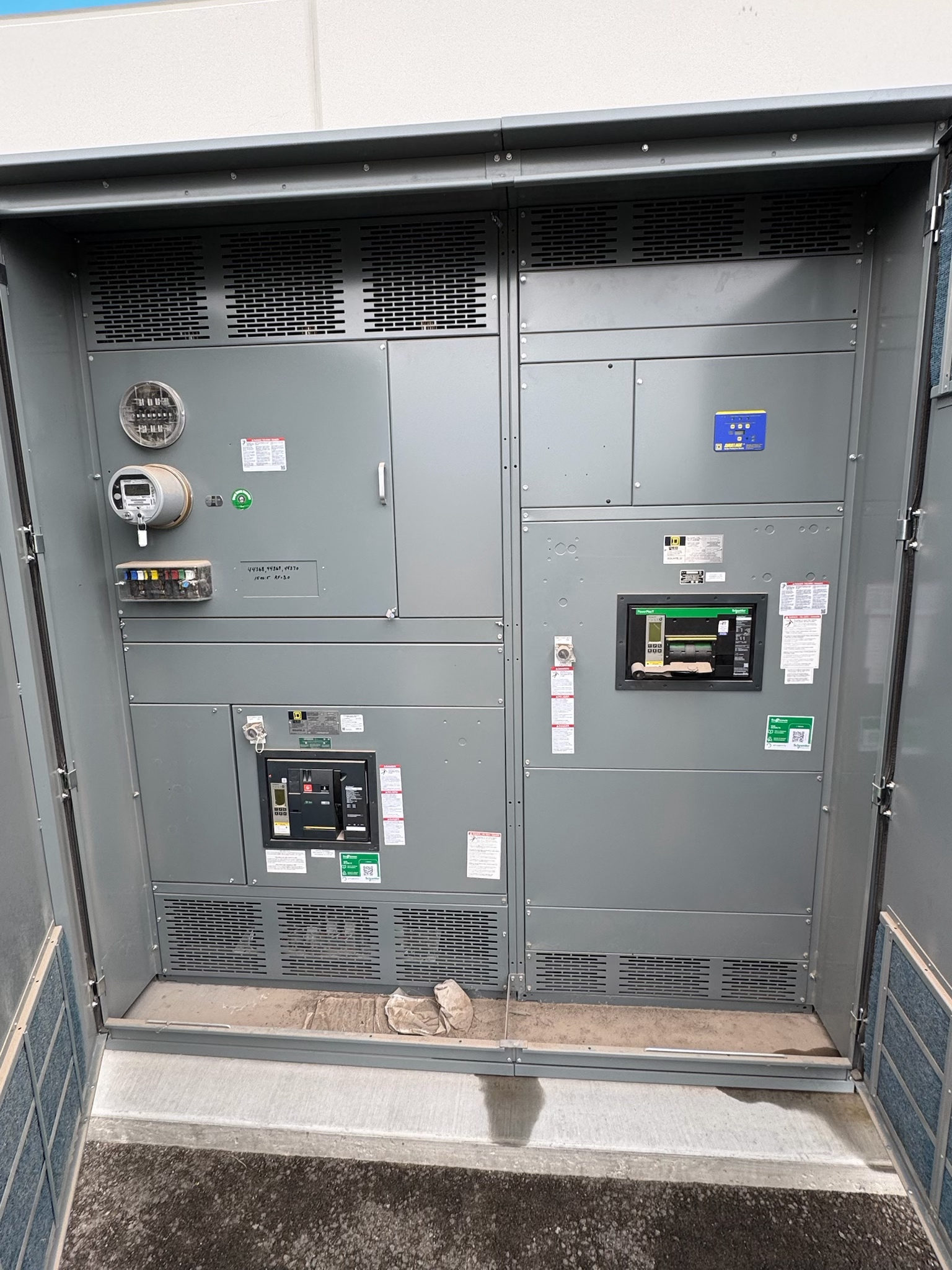
Continuous Current Rating: What the Term Means
A continuous current rating is the current electrical equipment is designed to carry indefinitely under specified operating conditions without exceeding applicable temperature limits. In switchgear, the rating is not simply a measure of how much current a component can tolerate briefly. It describes sustained operation in a defined configuration, with heat generated by current balanced against the equipment’s ability to dissipate that heat.
For a project team evaluating new switchgear, the rating helps determine whether a proposed assembly can serve the expected ongoing load. It must be read alongside the equipment’s design conditions and the project specification. A rating by itself does not establish suitability for every installation, nor does it indicate short-circuit withstand capability, voltage suitability, or performance under every ambient and enclosure condition.
Continuous Load and Operating Conditions
The relevant load is the current expected during normal, ongoing operation, not only a brief startup or fault event. Load profiles matter: a facility may have steady demand, recurring peaks, or equipment that operates in cycles. Qualified electrical professionals should establish which loads are expected to run together and how operating modes, planned expansion, and load management affect the sustained current the switchgear must carry.
Temperature conditions also influence selection. Ambient temperature, ventilation, enclosure arrangement, installation location, and heat from adjacent equipment can affect temperature rise. Conductors and connected devices may impose their own limitations. A continuous current rating should therefore be interpreted with the manufacturer’s stated conditions and the project’s actual installation assumptions, rather than treated as a standalone number or an automatic allowance for future load growth.
Inputs That Shape Equipment Selection
Useful design inputs include the system voltage, calculated load, expected operating profile, source configuration, number and type of feeders, and the required distribution arrangement. The team should also identify conductor material and size, termination style, cable entry direction, bus connections, and the devices that interface with the assembly. These details can influence the thermal design and the way current is distributed through the equipment.
Physical conditions belong in the same review: indoor or outdoor location, enclosure requirements, available space, access for conductors, and the surrounding temperature and ventilation. No enclosure type, current value, or design condition should be assumed acceptable without project verification. For custom new switchgear, these inputs help define the assembly to specification and support a review of whether its continuous-current provisions match the intended service.
Interfaces, Protection, and Related Ratings
Continuous current is only one part of a coordinated electrical design. The selected assembly must interface appropriately with the source, downstream distribution, protective devices, metering, and connected loads. Confirm device frame and trip selections, bus arrangement, conductor terminations, and any transition or tie connections against the one-line diagram and equipment schedules. A limiting component or connection can constrain the practical design even where another part of the assembly has a higher stated rating.
Do not confuse continuous current with short-circuit current ratings, interrupting ratings, or momentary withstand values. Those address different conditions and require their own project review. Applicable standards and any listing requirements depend on the equipment design and intended application. UL 891 applies to suitable switchboard assemblies where applicable; it should not be presumed to cover every switchgear product or assembly. Qualified professionals should resolve rating and coordination questions before release.
Design Review and Verification
During specification review, compare the proposed continuous current rating and its stated conditions with the documented load, environment, conductors, and connected equipment. Confirm whether the design assumptions include any ambient-temperature or installation limitations, and identify how those conditions will be communicated to the project team. Review the full assembly and its interfaces, not just a headline rating. Where the project requires a particular standard or certification, confirm its applicability to the specific design.
Testing and documentation should also be considered in the procurement specification. Ask what design information, drawings, and applicable test or compliance documentation will be provided for the proposed assembly; do not infer a test outcome or listing from a general product description. The electrical engineer, manufacturer, installer, and relevant authorities should coordinate open items. Final acceptance depends on the project requirements and applicable review, not on the continuous-current figure alone.
Practical Steps Before Ordering New Switchgear
Before requesting a proposal, prepare the latest one-line diagram, load and feeder schedules, operating assumptions, site conditions, interface details, and applicable standards or listing requirements. Mark items that are provisional, such as future feeders or anticipated load changes, so they can be reviewed rather than silently folded into the rating. Ask the manufacturer to identify the conditions behind the proposed continuous current rating and any design dependencies that require confirmation.
Then compare proposals on the same documented basis: sustained load, thermal and enclosure assumptions, connections, protective-device coordination, required documentation, and project schedule. Resolve discrepancies with the responsible electrical professionals before approving drawings or production. A manufacturer building new equipment can develop custom assemblies to specification, but the right design and lead time depend on the reviewed project requirements. This process makes the rating meaningful for the intended installation instead of relying on an isolated number.
Project specification checklist
Use this checklist to organize the details for a project-specific review. Final ratings, applicable standards and equipment selections depend on the approved design.
| Item | What to confirm |
|---|---|
| Expected sustained load | Confirm calculated normal operating current, load profile, operating modes, and planned expansion assumptions. |
| Thermal conditions | Document ambient temperature, ventilation, enclosure conditions, and nearby heat sources used for design review. |
| Electrical interfaces | Verify source, feeders, bus connections, conductor details, terminations, and downstream equipment. |
| Related ratings | Review voltage, short-circuit, interrupting, and withstand requirements separately; confirm project applicability. |
| Standards and documentation | Identify required standards or listings and confirm applicability, drawings, and test or compliance documents for the specific assembly. |