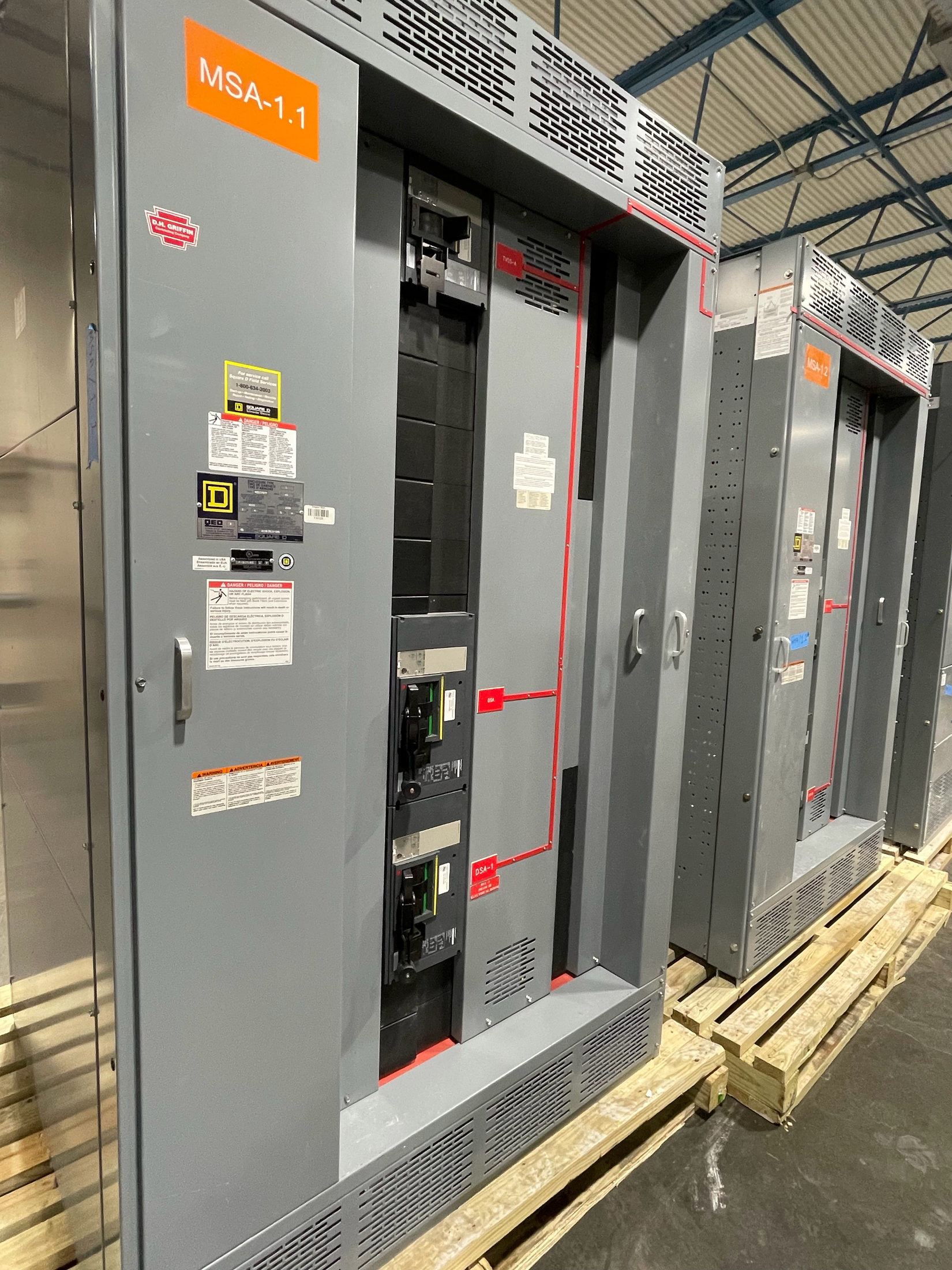
Start with the rating terms that shape equipment selection
An electrical ratings glossary helps project teams compare equipment specifications without treating familiar terms as interchangeable. For a new switchgear project, ratings describe defined operating limits and test conditions; they do not establish that a particular assembly suits every installation. Begin with the one-line diagram, load information, system configuration, and the requirements of the facility and serving utility. Then identify which terms need confirmation by the electrical engineer and equipment manufacturer.
This page introduces practical definitions and points to detailed topic pages for closer review. Central Texas project teams can use it to prepare questions before requesting a quotation, but location alone does not determine voltage, fault duty, or enclosure selection. Each choice must match the project documents and applicable codes and standards. Have qualified electrical professionals review the complete design and coordinate it with relevant authorities.
Voltage: nominal system value versus equipment rating
Nominal voltage is the system value used to identify an electrical distribution level. Equipment voltage rating describes the voltage conditions for which the equipment is designed, within the applicable standard and configuration. Those terms are related, but they are not a substitute for checking the system’s actual voltage, grounding method, frequency, and operating arrangement. Confirm these details from reliable project documents rather than inferring them from a building type or a nearby installation.
When evaluating new switchgear, verify that the proposed assembly and its components are suitable for the system voltage and any required insulation or switching duties. Ask how voltage terminology is used in the equipment schedule and whether the specification identifies nominal, maximum, or other relevant voltage values. A dedicated voltage ratings topic should explain these distinctions in greater depth. Final selection requires engineering review, including coordination with upstream and downstream equipment.
Current ratings: continuous load and component limits
A continuous current rating indicates the current equipment can carry under specified conditions; it is not simply a target operating value or a promise that any load profile is acceptable. The project’s load calculation, demand assumptions, future provisions, conductor arrangement, ambient conditions, and assembly design can all affect selection. The rating of a complete assembly may also depend on its bus, devices, connections, and configuration, so a single number in a preliminary schedule needs context.
Confirm the required current rating and the basis for it with the engineer responsible for the electrical design. Check whether the specification addresses continuous loading, spare capacity, and any planned expansion, without assuming that extra capacity is automatically appropriate. The current ratings topic can provide more detail on terminology and comparison points. Avoid selecting an assembly from a headline rating alone; review the equipment schedule and applicable design conditions together.
Short-circuit ratings and available fault current
Short-circuit or withstand ratings describe equipment performance under defined fault conditions and test criteria. They must be considered alongside the available fault current at the installation point, protective-device characteristics, and the system’s clearing time. A short-circuit rating is not interchangeable with continuous current, and a higher value should not be assumed necessary or suitable without analysis. Fault-current information should come from the project’s engineering study or other validated design documentation.
For procurement, ask the engineer to identify the required rating and the standard or test basis used in the specification. Confirm that the proposed assembly configuration and protective devices are covered by the stated performance. Detailed short-circuit rating guidance can help teams understand the terms, but does not replace a fault-current study or professional review. Any discrepancies between drawings, schedules, and study results should be resolved before equipment design is finalized.
Other terms: frequency, temperature, and enclosure
Frequency, temperature conditions, and enclosure descriptions provide additional context for equipment suitability. Frequency must align with the electrical system and connected equipment. Temperature and installation conditions may affect performance assumptions or require design review. An enclosure designation describes particular protection characteristics under its governing standard; it should not be treated as a universal measure of suitability for every indoor, outdoor, or environmental condition. Confirm the exact application and the standard language used in the project documents.
Record where equipment will be installed, what environmental exposure is expected, and any access, space, or connection constraints that influence the design. Then ask the manufacturer to identify the applicable enclosure and environmental assumptions for the proposed assembly. Requirements vary by equipment type and project. A separate enclosure or environmental ratings page can explain designation terms; the final choice remains subject to the specification, site conditions, and qualified professional review.
Turn glossary terms into a procurement-ready specification
Use the glossary as a checklist, not as a substitute for an engineered equipment schedule. Assemble the one-line diagram, load data, system voltage and grounding information, fault-current study, protective-device requirements, installation conditions, and any applicable standards. Mark unclear or conflicting values for resolution before requesting a proposal. Ask which ratings apply to the complete assembly, which apply to individual components, and what design assumptions or project inputs are needed to confirm compliance.
For new switchgear serving a Central Texas project, share the project location and schedule needs early so manufacturing and shipping coordination can be discussed; nationwide shipping is offered, while lead time depends on the project. The manufacturer builds in the USA with all-American components and can develop custom assemblies to specification. UL 891 applies to suitable switchboard assemblies only, not automatically to every product. Request written confirmation of applicable standards, ratings, and testing for the proposed design, then have qualified professionals and relevant authorities review it.
Project specification checklist
Use this checklist to organize the details for a project-specific review. Final ratings, applicable standards and equipment selections depend on the approved design.
| Item | What to confirm |
|---|---|
| System voltage | Confirm nominal and maximum voltage, grounding method, frequency, and system configuration from project documents. |
| Continuous current | Verify the required assembly and component ratings against load calculations, design conditions, and future provisions. |
| Fault duty | Provide the validated available fault current and protective-device information; confirm the required rating and test basis. |
| Installation conditions | Document indoor or outdoor location, environmental exposure, space constraints, and applicable enclosure requirements. |
| Standards and testing | Identify applicable standards and required testing for the specific equipment type and proposed assembly. |