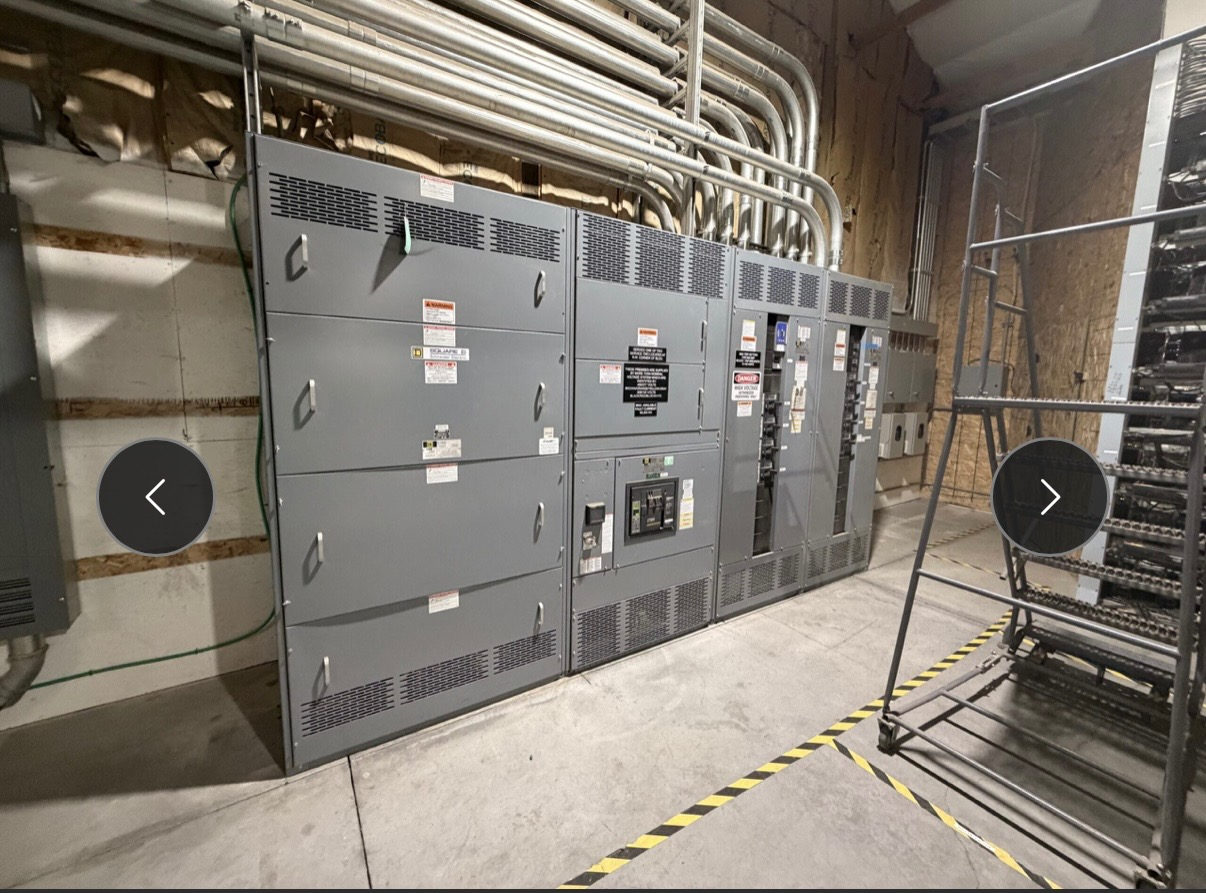
What Maximum Equipment Voltage Defines
In an electrical ratings glossary, maximum equipment voltage means the highest system voltage for which equipment is assigned a particular voltage rating under the applicable standard. It is a classification limit, not a promise that equipment can operate safely in every installation at that voltage. The definition and rating conventions depend on the equipment type and the standard used. For new switchgear, this value helps establish whether a proposed design belongs in the correct voltage class, but it does not replace checks of insulation coordination, operating conditions, or other ratings.
The term can be confused with nominal system voltage, the voltage normally identified for a power system. A system’s nominal voltage and the equipment’s assigned maximum voltage are related but are not interchangeable. The project specification should state both clearly and identify the applicable standard or design basis. Qualified electrical professionals must verify that the equipment rating is appropriate for the actual system and installation.
Start with the System Voltage and Conditions
Selection begins with the system information at the equipment connection point: nominal voltage, grounding method, frequency, and whether the installation is single-phase or three-phase. Confirm the highest system voltage the equipment may encounter under normal operating conditions, using the project’s governing criteria rather than assuming a nominal value tells the whole story. Utility or facility system data, one-line diagrams, and design documents should agree; discrepancies should be resolved before equipment is specified.
Also document environmental and installation conditions that can affect design suitability, including altitude, ambient conditions, indoor or outdoor placement, and exposure to contamination or moisture. These details do not redefine the standard’s maximum equipment voltage, but they can influence insulation performance, clearances, and construction choices. The correct combination of voltage class and equipment design must be reviewed for the particular site, not inferred from a catalog description alone.
Distinguish Voltage Class from Other Ratings
Maximum equipment voltage addresses a voltage boundary; it does not establish current-carrying capacity, interrupting capability, short-circuit withstand, or arc-resistance performance. Those are separate characteristics that require their own project-specific evaluation. A design can be within the right voltage class and still be unsuitable if another rating, configuration, or operating duty does not match the system. Specifications should therefore list each required rating separately and avoid using “voltage rating” as shorthand for overall suitability.
The relevant standard depends on the equipment category and design. UL 891 applies to suitable switchboard assemblies, not automatically to all switchgear or every voltage class. Medium-voltage and high-voltage equipment may be governed by different standards and evaluation paths. Confirm the intended equipment type, applicable standard, and any required listing or certification with the manufacturer and responsible electrical professionals. Do not assume a standard or listing applies solely because equipment is described as switchgear.
Check Interfaces and Coordination
The voltage class must align across the complete electrical interface. Review the incoming source, bus, protective devices, metering and instrument transformers, cables or bus connections, and downstream equipment. For each interface, confirm the voltage and insulation requirements as well as any relevant operating and fault-duty ratings. A mismatch at a transition, such as between equipment sections or connected devices, can undermine an otherwise appropriate selection. Drawings and schedules should identify boundaries and provide consistent data for the equipment supplier.
Protection and insulation coordination are related but distinct engineering tasks. Protective-device settings and system studies should be developed using verified equipment data and project conditions; a maximum equipment voltage does not determine those settings. Where testing, inspection, or documentation is required, identify the applicable scope and acceptance criteria in the project documents. Factory testing and field acceptance activities should follow the agreed design, standard, and project requirements, with qualified personnel responsible for review and approval.
Translate the Rating into a New-Equipment Specification
A useful procurement specification states the nominal system voltage and the required maximum equipment voltage or voltage class, together with the governing standard and equipment category. Include system frequency, grounding, phase arrangement, installation conditions, and the one-line diagram or other interface information needed for design review. Separately state required continuous-current and fault-duty ratings, enclosure and access requirements, protective-device functions, control power, and metering provisions where applicable. Each value must come from the project design, not an assumed product capability.
For custom assemblies, resolve ambiguities before requesting a final quotation or releasing approved drawings. Ask the manufacturer to identify the proposed standard basis, confirm how the specified voltage class is applied to the assembly, and flag any interface data still needed. Review submittals against the one-line diagram, equipment schedules, and project specifications. A manufacturer building new equipment in the USA with all-American components can develop assemblies to specification and ship nationwide; lead time remains dependent on project scope and design review.
Practical Checks Before Approval
Before approving the equipment, compare the voltage information on the submitted drawings and nameplate data with the project’s stated nominal voltage, maximum equipment voltage, and standard. Confirm that connected devices and transition points use compatible ratings, and that environmental assumptions remain valid for the intended location. If the system information changes, revisit the voltage class and associated design decisions rather than carrying forward an earlier selection without review.
A practical next step is to provide the supplier with the latest one-line diagram, equipment schedule, system study inputs, installation conditions, and the project’s standard and listing requirements. Request clarification wherever the documents use “nominal voltage,” “rated voltage,” and “maximum equipment voltage” inconsistently. The responsible engineer and relevant authorities should review the final design for the installation. This process helps distinguish a correct standard-defined voltage limit from a broader claim of suitability.
Project specification checklist
Use this checklist to organize the details for a project-specific review. Final ratings, applicable standards and equipment selections depend on the approved design.
| Item | What to confirm |
|---|---|
| System voltage basis | Confirm nominal voltage, highest expected system voltage, phase arrangement, frequency, and grounding method from current project documents. |
| Equipment class and standard | Identify the equipment category, applicable standard, and required listing or certification; verify applicability for the specific assembly. |
| Connected interfaces | Check voltage and insulation compatibility at sources, buses, protective devices, transformers, cables, and downstream equipment. |
| Separate electrical ratings | Specify continuous current, fault-duty, and other required performance ratings independently of maximum equipment voltage. |
| Installation and review | Document environmental conditions and have qualified electrical professionals review drawings, submittals, testing scope, and authority requirements. |