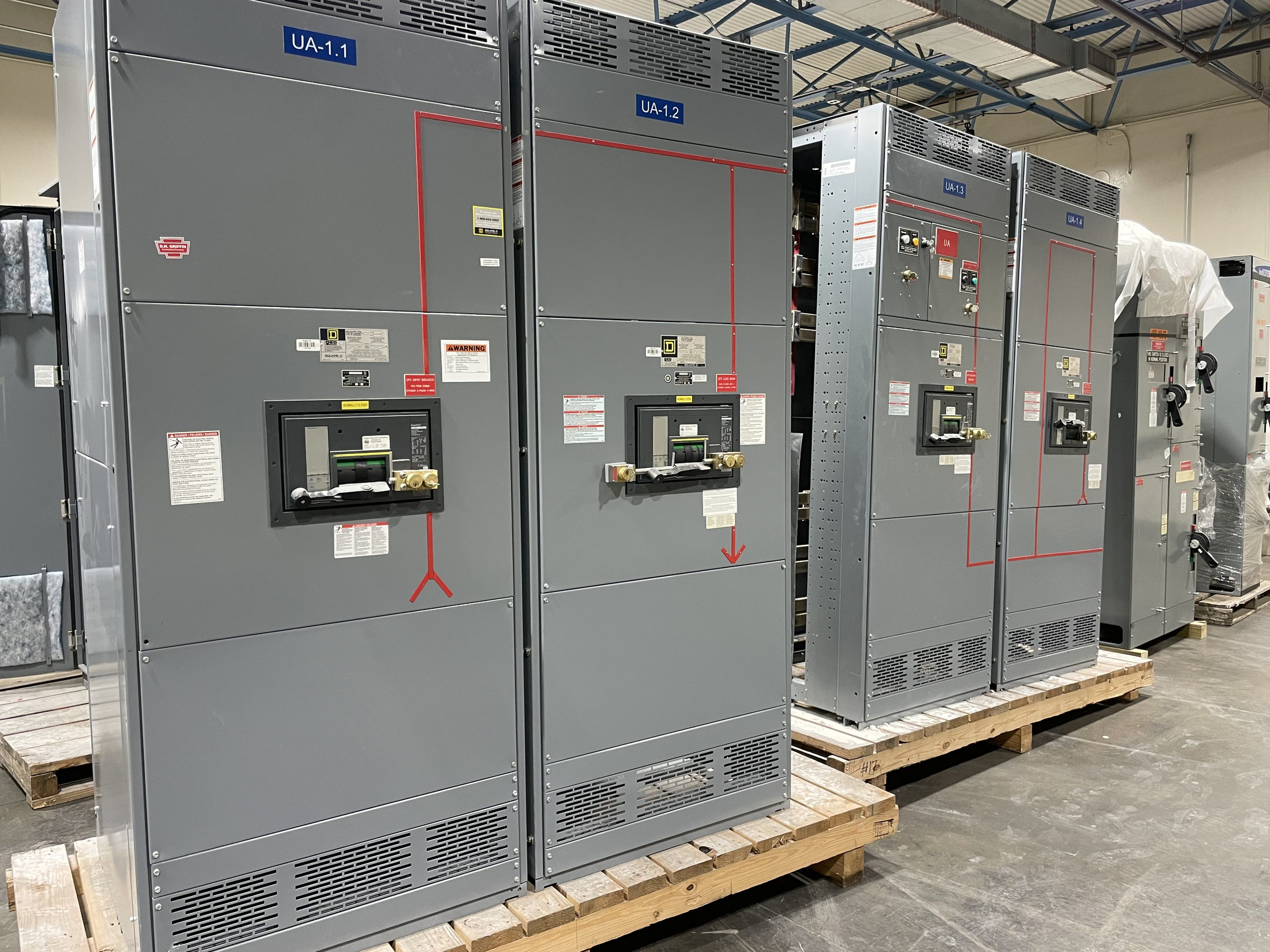
Metal-clad switchgear: the construction meaning
Metal-clad switchgear is a construction category for electrical equipment, not a statement that every product has the same voltage, interrupting capacity, enclosure rating, or certification. In applicable standards, the term describes an arrangement in which major components are separated within grounded metal compartments, with barriers and access provisions defined by the design. The exact requirements depend on the equipment type and the standard that applies to the project. A metal enclosure alone does not establish that equipment qualifies as metal-clad switchgear.
For a facility evaluating new switchgear, the definition matters because construction affects equipment arrangement, access, maintenance planning, and interfaces with the electrical system. Confirm the intended use and governing specification before comparing proposals. A qualified electrical professional should determine whether this construction category and its applicable standard fit the system, installation conditions, and owner requirements.
How compartmentalized construction affects the installation
Metal-clad construction commonly organizes functional elements into separate compartments, which may include switching, interruption, control, and bus sections according to the design. The number, arrangement, and access method are not universal. A project should define operating and maintenance needs, required equipment functions, cable entry and exit directions, and available working and equipment space. Those inputs shape the lineup and its interfaces with upstream and downstream systems.
Compartment separation can influence how equipment is inspected or serviced, but it should not be treated as proof that an assembly is safe to access while energized or that every internal fault risk is eliminated. Safe work practices and access conditions must follow the approved design, procedures, and applicable rules. Review doors, barriers, interlocks, and access clearances with qualified professionals as project-specific design features, rather than assuming a particular arrangement from the term metal-clad.
Select ratings from system and site data
The appropriate electrical ratings must be established from the system study and project specification. Relevant inputs can include nominal system voltage, frequency, continuous current, available fault current, protective-device coordination, grounding method, and expected operating conditions. Do not infer a rating from the construction category or from a general product description. Confirm that the proposed equipment and each specified component are suitable for the actual system duty.
Site conditions also affect selection. The project team should document indoor or outdoor placement, ambient conditions, altitude where relevant, contamination or moisture exposure, seismic or other environmental criteria, and available footprint and access routes. Enclosure construction and environmental protection are separate decisions that require verification; metal-clad does not, by itself, designate an enclosure type. The design professional and relevant authorities should review the complete application and applicable standards before equipment is specified.
Define lineup details and electrical interfaces
A useful specification describes more than a switchgear category. Identify the required feeder and source functions, bus arrangement, protective relaying and control needs, metering requirements, cable or bus connections, and any provisions for future sections. State the preferred cable-entry direction and interface dimensions when known, and coordinate these with the building layout, grounding plan, and connected equipment. Custom assemblies can be developed to project specifications, subject to design review and confirmation of feasible interfaces.
Interface information should be exchanged early among the owner, electrical engineer, equipment manufacturer, and other responsible parties. Confirm control power, communication requirements, terminal locations, interconnection responsibilities, and the documents needed for integration. Where equipment connects to transformers, generators, utility facilities, or other switchgear, establish boundaries and requirements with the parties responsible for those systems. Avoid assuming that a standard arrangement or an existing drawing will match the new project without verification.
Standards, documentation, and verification
The applicable product standard depends on equipment type and design. UL 891 applies to suitable switchboard assemblies; it should not be assumed to cover metal-clad switchgear or every assembly. Confirm the specified equipment category, applicable standard, and any required certification or listing directly in project documents and manufacturer submittals. Standards and requirements can differ across low-voltage, medium-voltage, and other equipment, so terminology alone is not sufficient evidence of compliance.
During procurement, review drawings, equipment schedules, bill of materials, interface details, and stated ratings against the approved specification. Establish the inspection and testing scope, required records, and any project-specific witness or acceptance requirements before release. Factory testing and documentation depend on the design and contract requirements; do not infer a test program from a construction label. Qualified professionals and relevant authorities should resolve deviations and confirm acceptance criteria for the particular installation.
Practical steps for specifying new equipment
Begin with a one-line diagram, system study information, site constraints, and a clear statement of operating requirements. Ask the design team to identify the governing standard and explain why metal-clad construction is appropriate for the application. Then prepare a requirements package covering ratings, protective functions, compartment and access preferences, interfaces, environmental conditions, documentation, and testing. Mark unknowns for resolution rather than filling gaps with assumed values. This gives manufacturers a consistent basis for design review and quotation.
For a custom assembly, submit the package for a technical review before finalizing dimensions, connections, or procurement timing. The manufacturer builds new equipment in the USA using all-American components and can ship nationwide; project-specific scope, lead time, and applicable standards must be confirmed. Compare proposed designs against the same approved inputs, record any exceptions, and route final drawings through the responsible electrical professionals and authorities. This process makes the definition useful as a specification decision, not merely a glossary term.
Project specification checklist
Use this checklist to organize the details for a project-specific review. Final ratings, applicable standards and equipment selections depend on the approved design.
| Item | What to confirm |
|---|---|
| Equipment category and standard | Confirm the intended equipment type and the applicable standard; do not infer coverage from the metal-clad label. |
| System ratings | Establish voltage, continuous current, fault duty, and related ratings from project studies and approved specifications. |
| Construction and access | Document required compartments, operating functions, access provisions, clearances, and maintenance considerations. |
| Site and enclosure conditions | Verify installation environment, enclosure requirements, footprint, entry routes, and environmental criteria for the site. |
| Interfaces and controls | Coordinate cable or bus connections, grounding, control power, relaying, metering, communications, and connected equipment. |
| Submittals and testing | Agree on drawings, compliance evidence, inspection and test scope, records, and acceptance requirements before procurement. |