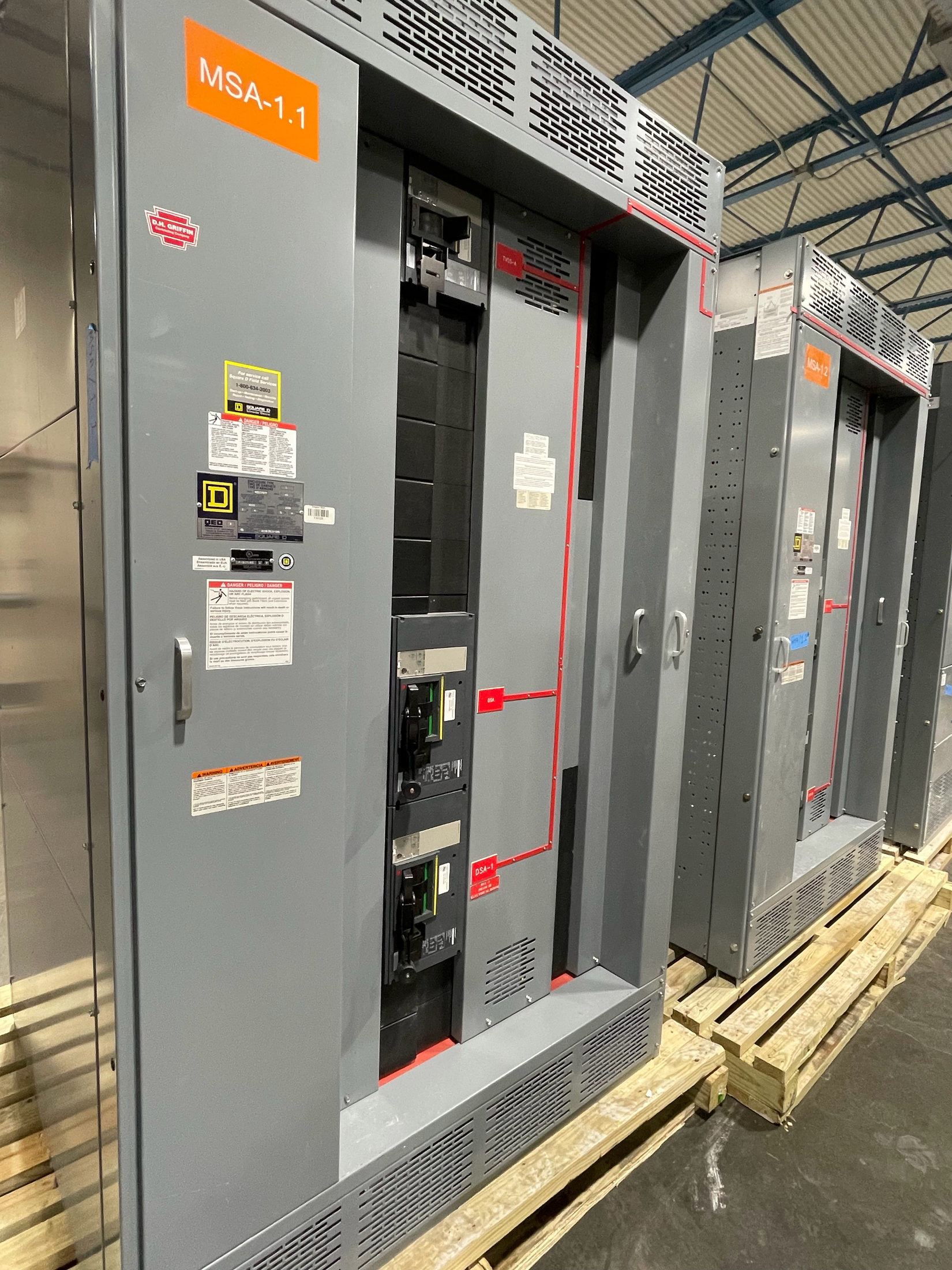
Coordinate Distribution Across Airport Facilities
Airport electrical distribution serves more than passenger-facing spaces. Terminal areas, baggage handling, maintenance buildings, parking facilities, and other airport functions may depend on distinct distribution paths and operating schedules. New airport switchgear must fit the facility’s electrical architecture and the loads it is intended to serve; equipment selection should begin with the project’s one-line diagrams, load information, and operating requirements rather than a generic airport package.
For Central Texas projects, early coordination among the owner, electrical engineer, contractors, and equipment supplier helps clarify interfaces and delivery constraints. Identify which buildings or systems fall within the switchgear scope, where connections to existing distribution occur, and how the project will manage outages or phased work. Airport-specific access, staging, and work-window requirements should be established by the project team; they cannot be assumed from the equipment description alone.
Map Loads, Sources, and Operational Priorities
Build the equipment basis from a verified load inventory and distribution plan. Confirm normal and alternate sources, downstream panels or switchboards, major motor loads, and any systems designated for continuity by the facility’s design criteria. Baggage equipment, lighting, HVAC, communications, and life-safety loads may have different operational roles and applicable requirements. Their presence does not establish that they belong on one assembly or share a common transfer arrangement.
The engineer should document expected demand, growth assumptions, system grounding, available fault current, and required protective-device coordination. Confirm voltage, phase, frequency, current ratings, and short-circuit ratings for the actual system and location; none should be selected by treating a typical airport value as universal. Applicable codes, standards, and authority requirements depend on the design and project. Qualified electrical professionals should verify the system study and equipment specifications before release.
Choose Equipment for the Actual Installation
The equipment type follows its position and function in the distribution system. A project may call for low-voltage switchboards, switchgear, or other assemblies, while a medium-voltage application requires equipment designed and evaluated for that service. Determine whether the scope includes incoming sections, feeder distribution, metering, protective devices, or provisions for future circuits. Enclosure and environmental requirements should reflect the specific installation location, including indoor or outdoor conditions where relevant.
Review physical arrangement alongside electrical performance. Confirm dimensions, access and working clearances, cable or bus connections, conductor entry, routing, and separation from other building systems against coordinated drawings. Define the intended operating and maintenance approach with the design team, including any interlocking or control interfaces. UL 891 may apply to suitable switchboard assemblies; it is not a blanket designation for all switchgear. Verify the applicable standard and any required listing for each specified assembly.
Coordinate Interfaces, Controls, and Testing
Airport distribution projects often involve interfaces beyond the equipment lineup. Establish responsibility for protective-device settings, metering signals, control wiring, communications, grounding connections, and any transfer or generator-related functions included in the design. Confirm interface points with the relevant electrical, controls, and facility teams, and reconcile them with current drawings and equipment schedules. A detailed responsibility matrix can reduce late changes caused by assumptions about who supplies devices, wiring, or configuration.
Before procurement, agree on the documentation and inspection or testing requirements that apply to the project and selected equipment. Submittals should allow the engineer to review ratings, device selections, dimensions, connection details, and control interfaces. Factory testing, field acceptance activities, and commissioning scope should be defined by the project specifications and responsible professionals; do not assume a particular test is included. Work practices and test procedures must be established by qualified personnel, with safety controls appropriate to the equipment and site.
Plan Procurement Around Design Milestones
A practical procurement package includes approved one-line diagrams, equipment schedules, load and fault-study information, physical constraints, and a clear statement of scope. Include operating requirements, accessory and metering needs, connection details, required documentation, applicable standards, and submittal milestones. Resolve open design choices before requesting a firm equipment configuration. Custom assemblies can be built to specification, but feasibility and lead time depend on the project’s design, components, and review cycle.
For airport work in Central Texas, coordinate procurement with construction phasing, site access, receiving arrangements, and the planned installation sequence. Nationwide shipping is available, while shipment timing and logistics must be confirmed for the specific order and destination. Lead times are project-dependent, so request a schedule based on a sufficiently complete specification and allow for engineering review and approval. The owner and contractor should also identify who manages drawing comments and authorizes final release.
Prepare a Focused Equipment Review
Start the next review with the intended service, system voltage, load and fault-study basis, and the one-line diagram showing where the new assembly connects. Add the required equipment type, environmental conditions, available space, connection orientation, protective-device requirements, controls, and applicable project standards. Mark any unresolved items instead of substituting assumptions. This gives the engineer and manufacturer a concrete basis to evaluate a custom assembly and identify information still needed before design approval.
Use the review to confirm the boundary between switchgear and adjacent systems, the submittal sequence, required tests, and the project’s delivery and receiving constraints. Where the scope includes a switchboard, ask whether UL 891 applies to that specific assembly; confirm requirements for other equipment separately. The responsible engineer and relevant authorities must review the final design. Clear, coordinated inputs help airport owners and project teams compare compliant options and move toward procurement without relying on generic ratings or unverified commitments.
Project specification checklist
Use this checklist to organize the details for a project-specific review. Final ratings, applicable standards and equipment selections depend on the approved design.
| Item | What to confirm |
|---|---|
| Facility scope | Confirm buildings, loads, distribution boundaries, and phased-work interfaces included in the project. |
| Electrical basis | Verify system voltage, load data, available fault current, grounding, and protective-device coordination. |
| Equipment and ratings | Specify assembly type and project-appropriate current, short-circuit, and environmental requirements. |
| Physical interfaces | Confirm dimensions, access, conductor entry, cable or bus connections, and installation constraints. |
| Standards and testing | Identify applicable standards, any required listing, submittals, and project-defined inspection and test scope. |
| Procurement and logistics | Align design approvals, project-dependent lead time, shipping destination, receiving, and construction sequence. |