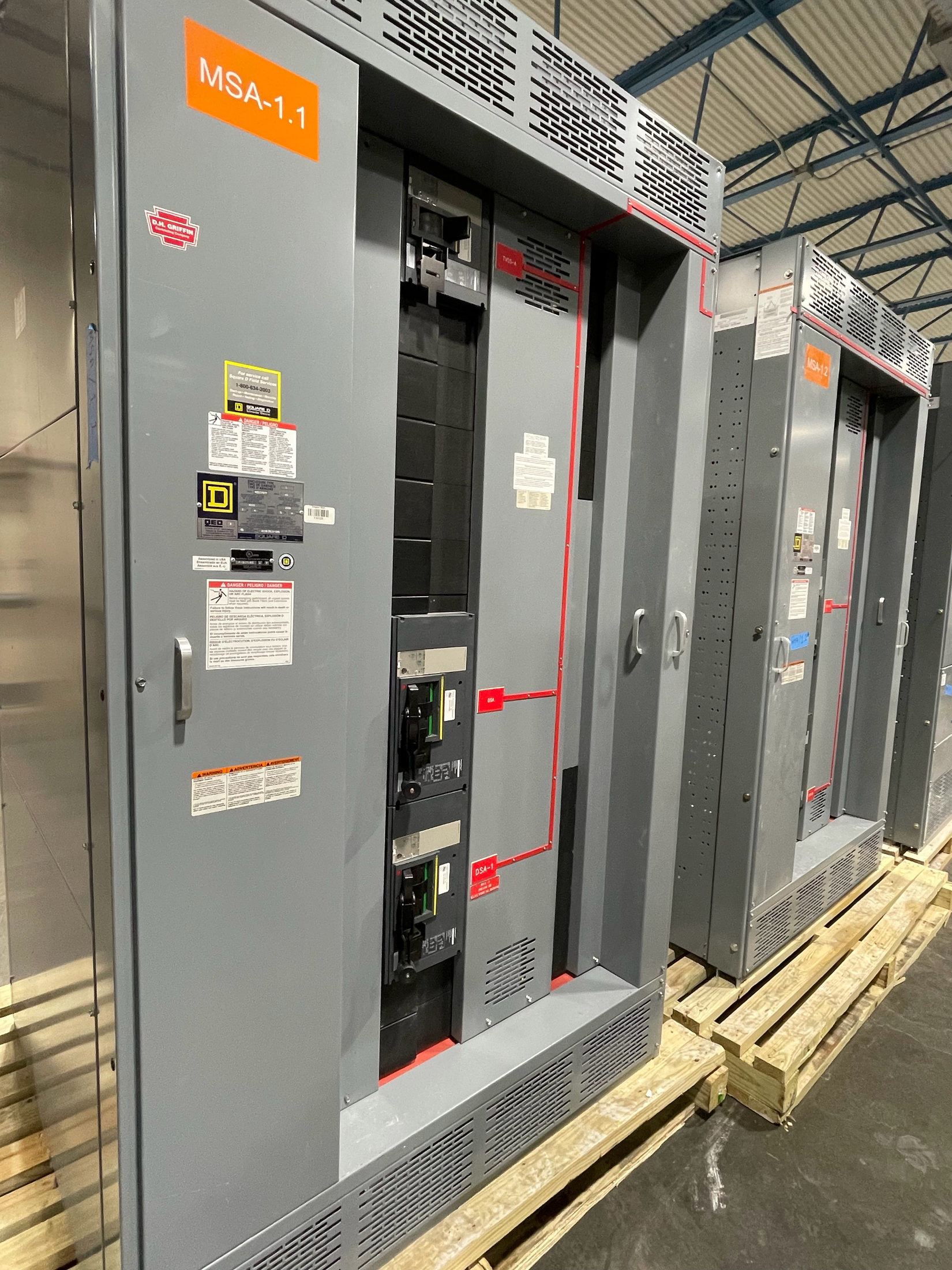
Plan the Changeover Around Patient Care
Hospital electrical renovation phasing must connect the new switchgear installation sequence to clinical operations, not treat changeover as an isolated equipment swap. A plan should identify which distribution sections serve patient-care spaces, life-safety functions, essential systems, support areas, and other loads, then establish how each transition will be managed. The facility’s electrical and clinical stakeholders can use that map to identify unacceptable interruptions, required notifications, and operational constraints before equipment is specified or ordered.
The changeover approach depends on existing system configuration and the project’s approved operating plan. Determine whether work will proceed by distribution section, building area, or another sequence, and document what remains energized at each stage. Qualified electrical professionals and hospital representatives must review the sequence, switching responsibilities, contingency provisions, and applicable authority requirements. No general phasing method should be assumed safe or suitable for every facility.
Gather Site and Load Information Before Selection
A useful design package begins with current one-line diagrams, equipment schedules, available field information, and a clear account of loads served by each existing section. Confirm system voltage, phase, frequency, feeder arrangement, grounding approach, source configuration, and the electrical characteristics required for the new assembly. Existing labels and drawings may not reflect later renovations, so qualified personnel should determine how discrepancies will be resolved and what verification is needed before design decisions are finalized.
For hospital switchgear, gather load and future-planning information from facilities engineering and relevant clinical departments. Identify critical load classifications and any project-specific continuity requirements without assuming that a particular circuit or classification applies universally. Review physical access, room dimensions, equipment location, cable entry, working clearances, ventilation, environmental conditions, and routes for removing old equipment and bringing in new equipment. These inputs influence enclosure and assembly choices, layout, interface details, and whether the proposed phasing is practical.
Define New Equipment and System Interfaces
Select new switchgear to match the documented electrical system and the intended role of each lineup or section. Project professionals should establish required bus and feeder arrangements, protective-device functions, metering, control power, monitoring, and coordination with upstream and downstream equipment. Voltage, continuous current, interrupting capability, and other ratings require engineering review against system conditions; none should be inferred from a general product description. Applicable standards and any listing requirements depend on the equipment design and project. UL 891 applies to suitable switchboard assemblies, not automatically to every switchgear application.
Identify every interface that can affect the changeover: incoming sources, transformers, emergency or standby systems, transfer equipment, generators, distribution panels, building monitoring, and control wiring, where present. Confirm who supplies or configures each interface and how signals, terminations, and protection settings will be documented. Manufacturer-built custom assemblies can be developed to project specifications, but the approved drawings and interface schedule must resolve responsibilities before release. This reduces the risk of discovering incompatible connections or missing functions during installation planning.
Make Phasing and Temporary Arrangements Explicit
Translate the preferred sequence into defined stages, each showing the equipment affected, loads involved, required approvals, and conditions for proceeding. The facility’s project team should decide whether temporary distribution, alternate feeds, or other continuity measures are needed; their feasibility, design, and acceptance must be assessed for the actual site rather than presumed. Record dependencies such as room readiness, feeder routing, access restrictions, outage authorization, and completion of upstream or downstream work.
For each planned transition, assign accountable parties for operational approval, electrical switching, communications, and verification. Establish how affected departments will receive schedules and status updates, including a method for communicating changes to an approved window. The plan should identify hold points where work cannot advance until specified checks are complete. Coordination should also cover construction access, infection-prevention requirements, and facility procedures where applicable, as determined by the hospital. These measures make the sequence reviewable without substituting a generic outage plan for site-specific judgment.
Coordinate Procurement, Testing, and Readiness
Procurement timing should follow design maturity: confirm scope, required ratings, interfaces, drawings, and phasing assumptions before authorizing fabrication. New equipment is built in the USA using all-American components, with custom assemblies available to specification and nationwide shipping. Lead times are determined by project, so the schedule should be checked against approved submittals, manufacturing requirements, transportation, site access, and the planned installation window. Avoid relying on an unverified delivery date when sequencing hospital work or communicating outage expectations.
Before changeover, establish project-specific inspection, testing, documentation, and acceptance responsibilities. The qualified project team should determine which factory and field checks apply, how protective-device settings and control functions will be verified, and what records operators need. Testing and energization plans must follow the approved design, manufacturer documentation, safety procedures, and authority requirements. Review commissioning dependencies with facilities operations and other system-interface owners. The applicable standards and required approvals must be confirmed for the actual equipment and installation; do not assume a certification or listing based solely on equipment category.
Build a Practical Project Review Package
A productive next step is a coordinated review package containing the existing and proposed one-line diagrams, load and equipment schedules, site dimensions, interface list, preliminary stage sequence, outage constraints, and open technical questions. The hospital’s facilities team can use it to bring clinical operations, engineering, the electrical designer, contractor, equipment supplier, and relevant authorities into the same discussion. Mark assumptions clearly, identify who will confirm each one, and track decisions that affect ratings, assembly configuration, procurement, access, testing, and changeover order.
Before releasing new switchgear for production, resolve the design inputs that could force a late revision: source and feeder details, protection and control requirements, cable entry, physical arrangement, monitoring interfaces, and approved changeover boundaries. Then align the procurement schedule with documented readiness milestones rather than a hoped-for outage date. Austin and Central Texas projects can also coordinate equipment shipment and site logistics with the same project team; nationwide shipping is available. Final plans and equipment suitability require review by qualified electrical professionals and applicable authorities.
Project specification checklist
Use this checklist to organize the details for a project-specific review. Final ratings, applicable standards and equipment selections depend on the approved design.
| Item | What to confirm |
|---|---|
| System data | Confirm voltage, phase, frequency, sources, grounding, feeder configuration, and verified existing conditions. |
| Load and continuity needs | Document served loads, clinical operating constraints, and facility-approved continuity requirements. |
| Equipment ratings and design | Engineering review must establish required ratings, protective functions, metering, controls, and applicable standards. |
| Interfaces and layout | Confirm connected equipment, signals, terminations, cable entry, room dimensions, access, and removal route. |
| Phasing and acceptance | Define stage boundaries, approvals, outage constraints, verification steps, testing responsibilities, and required records. |