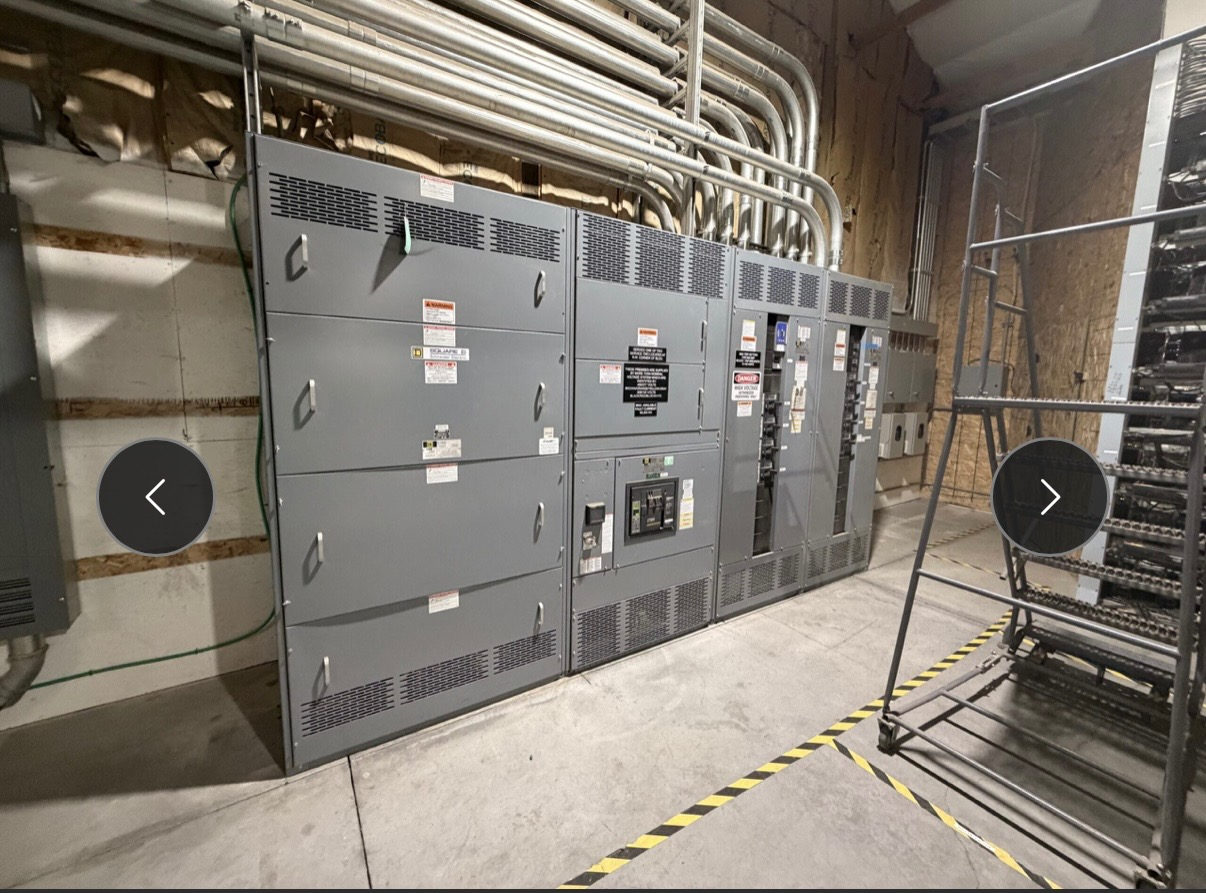
Power Distribution for Production Operations
Manufacturing facility switchgear supports the distribution and control of electrical power across production areas, building services, and supporting systems. A new switchgear project can provide a defined point for incoming power, protective devices, and feeders serving equipment such as process lines, material handling, HVAC, and compressed-air systems. The arrangement should reflect how the facility actually operates, including which loads are essential, which can be interrupted, and how production is expected to change.
Start by mapping the utility or upstream source, existing distribution, major loads, and planned equipment additions. Record operating schedules, starting characteristics, and any process constraints that affect how circuits may be interrupted or restored. For Central Texas facilities, coordinate site access, shipment receiving, and installation sequencing with the project team; location alone does not establish a particular service configuration or equipment rating. Qualified electrical professionals should review the facility requirements and applicable authority requirements.
Translate Production Loads into Equipment Requirements
Selection begins with verified electrical data, not a generic switchgear size. Confirm the system voltage, available fault current at the equipment location, required continuous load, grounding arrangement, and the protection and switching functions needed for each feeder. These values depend on the project and upstream system. A qualified engineer should determine suitable ratings and protective-device settings using current system information; do not infer them from the nameplate of a nearby panel or from production equipment alone.
Build a load schedule that distinguishes present demand from credible future additions. Include motors, variable-frequency drives, welders, ovens, and other loads where applicable, with manufacturer data and operating modes. Consider whether simultaneous operation, motor starting, or sensitive controls influence distribution and protection choices. This information helps the design team specify an assembly fit for its intended role while avoiding both unsupported assumptions and unnecessary oversizing. Applicable standards depend on the equipment design and project.
Choose an Arrangement That Fits the Facility
The physical configuration should support safe access, clear circuit identification, and the facility’s operating plan. Discuss where the assembly will be located, how feeders leave it, what working and service clearances apply, and how conductors will enter and route. Confirm environmental conditions and enclosure requirements for the actual installation location rather than assuming a type based on the word “industrial.” Space constraints, dust or moisture exposure, and nearby process equipment may affect the design and must be evaluated by the project team.
Decide whether production continuity calls for separate distribution sections, spare feeder provisions, or a planned path for future expansion. Those choices are project-specific: a spare space is useful only if its arrangement and electrical capacity suit the future load. Custom assemblies can be developed to specification, subject to design review. UL 891 applies to suitable switchboard assemblies where applicable; it is not a blanket certification for every switchgear product or project.
Coordinate Protection and Facility Interfaces
Switchgear does not operate in isolation. Protection must be coordinated with upstream devices, downstream distribution, and the facility’s grounding and control arrangements. Provide the design team with current one-line diagrams, transformer and source information, protective-device data, and known changes to existing equipment. Review how an upstream trip or a feeder outage would affect connected production, and identify any process loads requiring a particular operating sequence. Qualified professionals should assess coordination and safety requirements for the complete system.
Also settle interface details early: metering or control needs, communications requirements, cable termination assumptions, feeder destinations, and responsibility for field connections. Confirm which information is needed from the utility, engineer, equipment vendors, and site team, and who will resolve inconsistencies. Clear interface decisions reduce the risk of mismatched drawings or late changes. Any operational procedures and energized-work decisions belong with qualified personnel under applicable safety requirements; this page is not a substitute for site-specific review.
Plan Submittals, Verification, and Procurement
Before ordering new switchgear, reconcile the equipment specification with the one-line diagram, load schedule, layout, and project schedule. Confirm ratings, protective-device requirements, enclosure, access, incoming and outgoing connections, and the intended assembly standard where applicable. Request drawings and technical submittals for review, and document deviations or unresolved assumptions. Manufacturing in the USA with all-American components and custom assemblies to specification are available project considerations; the final design and scope still require confirmation against the project documents.
Define the expected inspection and testing documentation with the engineer and procurement team before release. Factory checks and any specified tests should correspond to the approved design and applicable requirements, while field verification and commissioning are planned separately by the responsible project professionals. Lead time is determined by project scope, design finalization, and other project factors; avoid treating an initial estimate as a delivery commitment. Confirm shipping, receiving access, storage conditions, and the sequence for getting equipment to its final location.
Prepare a Practical Project Handoff
A useful next step is to assemble the latest electrical one-line, load and motor schedules, available fault-current study or source data, room layout, and a list of planned production changes. Identify the engineer of record, utility contact where relevant, purchasing lead, and site coordinator. Ask the team to flag decisions still open—such as feeder destinations, enclosure conditions, future circuits, protection interfaces, and required submittals—so they can be resolved before the equipment design is finalized.
For a Central Texas project, coordinate shipment timing and receiving arrangements with the facility’s construction or maintenance schedule, without assuming a local factory or office. Nationwide shipment is available, with timing dependent on the particular project. A focused specification review lets the manufacturer assess the requested new switchgear assembly, identify missing design inputs, and connect the discussion to detailed topics such as switchboard standards, protection coordination, enclosure selection, and testing. Final suitability remains subject to qualified professional review and applicable authority requirements.
Project specification checklist
Use this checklist to organize the details for a project-specific review. Final ratings, applicable standards and equipment selections depend on the approved design.
| Item | What to confirm |
|---|---|
| System and source data | Confirm voltage, grounding arrangement, source configuration, and available fault current at the proposed equipment location. |
| Production load schedule | Document connected loads, operating modes, motor and process equipment data, and credible future additions. |
| Protection and coordination | Define feeder protection needs and provide upstream and downstream device information for qualified coordination review. |
| Installation conditions | Verify location, access and clearances, conductor entry and routing, and environmental conditions to determine the suitable arrangement and enclosure. |
| Standards and verification | Identify applicable standards and required submittals, inspections, and tests for the specific assembly and project. |
| Procurement and logistics | Confirm approved scope, design inputs, receiving and storage arrangements, and project-dependent lead-time expectations. |