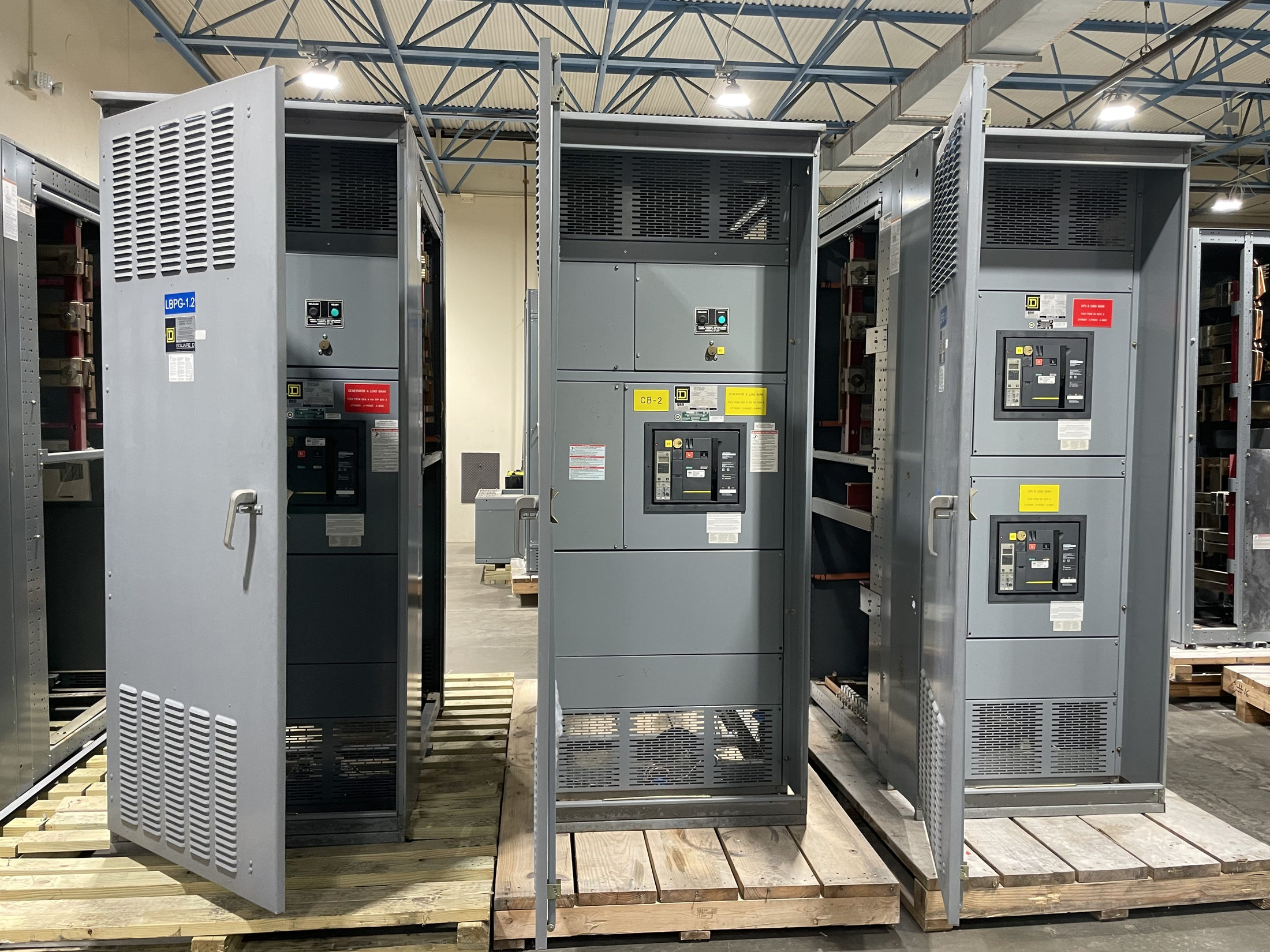
Plan Around the Expansion Sequence
Semiconductor facility expansion planning must account for how production areas and supporting systems come online—not just the eventual connected load. New process tools may be installed in phases, while existing operations remain in service. The electrical plan should identify which loads belong to each phase, when they are expected to be energized, and which systems must be available before a tool can be commissioned. This sequence helps determine where new switchgear fits, which sections or feeders may be required, and how expansion interfaces with existing distribution.
Develop a load schedule with facilities, process, controls, and construction stakeholders. Distinguish initial, intermediate, and ultimate demand, and flag loads with unusual starting, cycling, power-quality, or continuity needs for engineering review. Avoid treating projected capacity as a confirmed equipment rating: qualified electrical professionals must validate demand, operating scenarios, and applicable requirements before equipment is specified.
Coordinate Utility Requirements Early
Utility coordination can shape the expansion design before switchgear is selected. Confirm the proposed service arrangement, available fault-current information, metering and protection interfaces, utility review milestones, and any limits or conditions affecting the planned demand. These inputs may change as the project develops, so establish who will obtain and verify them, and when updated information is needed for design and equipment submittals.
Map the boundary between utility-owned facilities and customer equipment, including responsibility for relaying, metering, grounding, communications, and approvals. Record assumptions rather than treating preliminary discussions as final acceptance. The manufacturer can review the customer’s defined requirements for new switchgear, but utility criteria and project-specific authority requirements must be confirmed by the project team. Early alignment reduces the chance that a late interface change disrupts procurement or commissioning plans.
Select Equipment From Verified Inputs
Selecting semiconductor facility switchgear begins with the electrical one-line, system voltage, calculated load, available fault current, protective-device coordination needs, and the intended connection to existing distribution. The project team should also define operating modes, source configuration, required isolation, metering, control signals, and future expansion allowances. Enclosure and environmental requirements depend on the actual installation location and must be specified rather than assumed.
Ratings and construction must be evaluated as a coordinated design, not selected from a generic facility profile. Confirm bus and device requirements, short-circuit withstand or interrupting considerations as applicable, internal separation or access needs, and the governing standards for the equipment type. UL 891 may apply to suitable switchboard assemblies; it is not an automatic designation for all switchgear. Provide the latest reviewed documents and identify unresolved inputs before requesting a proposal.
Resolve Interfaces With Existing Operations
An expansion often creates interfaces beyond the new lineup: existing switchgear, transformers, feeders, protective relays, control systems, and monitoring networks may all affect the design. Document connection points and verify whether the existing equipment can accommodate the proposed configuration. Identify ownership of design changes, required settings studies, signal mapping, and any limits on outages or access. These items are especially important where manufacturing operations continue during construction.
Build a phased interface plan showing what is installed, inspected, tested, and energized at each milestone. Define isolation boundaries and switching responsibilities through the project’s qualified personnel and approved procedures; do not rely on informal assumptions about safe access or energized work. A clear interface register gives the manufacturer and engineering team a common basis for reviewing drawings, terminal requirements, and control details before fabrication.
Align Procurement and Commissioning
Procurement timing should follow design maturity and the facility’s phase schedule. Share the one-line, load schedule, specifications, site and environmental conditions, utility interface criteria, and required submittal milestones when requesting new equipment. Identify which decisions are fixed and which remain open, such as future feeder provisions or communications protocols. Custom assemblies can be built to specification, and lead times depend on project requirements, design review, and the scope of the assembly; confirm timing against the actual project schedule.
Commissioning planning should start during design. Define inspection and test responsibilities, documentation, acceptance criteria, required settings, and the sequence for factory and site activities. Factory testing scope should be agreed for the specific assembly, while field verification and energization readiness belong to the project’s qualified team and relevant authorities. Confirm that drawings, labels, settings information, and interface records will be available for review before each planned stage.
Prepare a Phase-Ready Equipment Package
Before releasing an expansion package for review, reconcile the load schedule with the one-line and phase plan. Check that each new feeder has an identified destination, that spare or future provisions are intentional, and that protection and control interfaces are assigned. Submit utility correspondence and current fault-current data, note open engineering decisions, and identify existing equipment that may constrain the connection. This focused package makes design review more useful and exposes gaps before they become procurement changes.
For each planned energization stage, record prerequisites: completed installation checks, verified protection settings, resolved control signals, approved operating procedures, and required utility or authority coordination. Confirm who accepts each item and what documentation closes it. Then have qualified electrical professionals review the final design and applicable standards for the specific equipment. A phased, evidence-based readiness plan helps align new switchgear delivery with facility expansion without assuming ratings, approvals, or site conditions.
Project specification checklist
Use this checklist to organize the details for a project-specific review. Final ratings, applicable standards and equipment selections depend on the approved design.
| Item | What to confirm |
|---|---|
| Load phases | Confirm staged demand, tool startup characteristics, and the planned energization sequence. |
| Utility interface | Verify service configuration, fault-current data, metering, protection, and review requirements. |
| System design basis | Provide the current one-line, voltage, load schedule, operating modes, and coordination study inputs. |
| Existing equipment | Document connection points, capacity constraints, outage limits, and control interfaces. |
| Assembly requirements | Specify installation conditions, ratings, construction, and applicable standards for project review. |
| Commissioning plan | Define factory and field test scope, acceptance criteria, responsibilities, and phase prerequisites. |