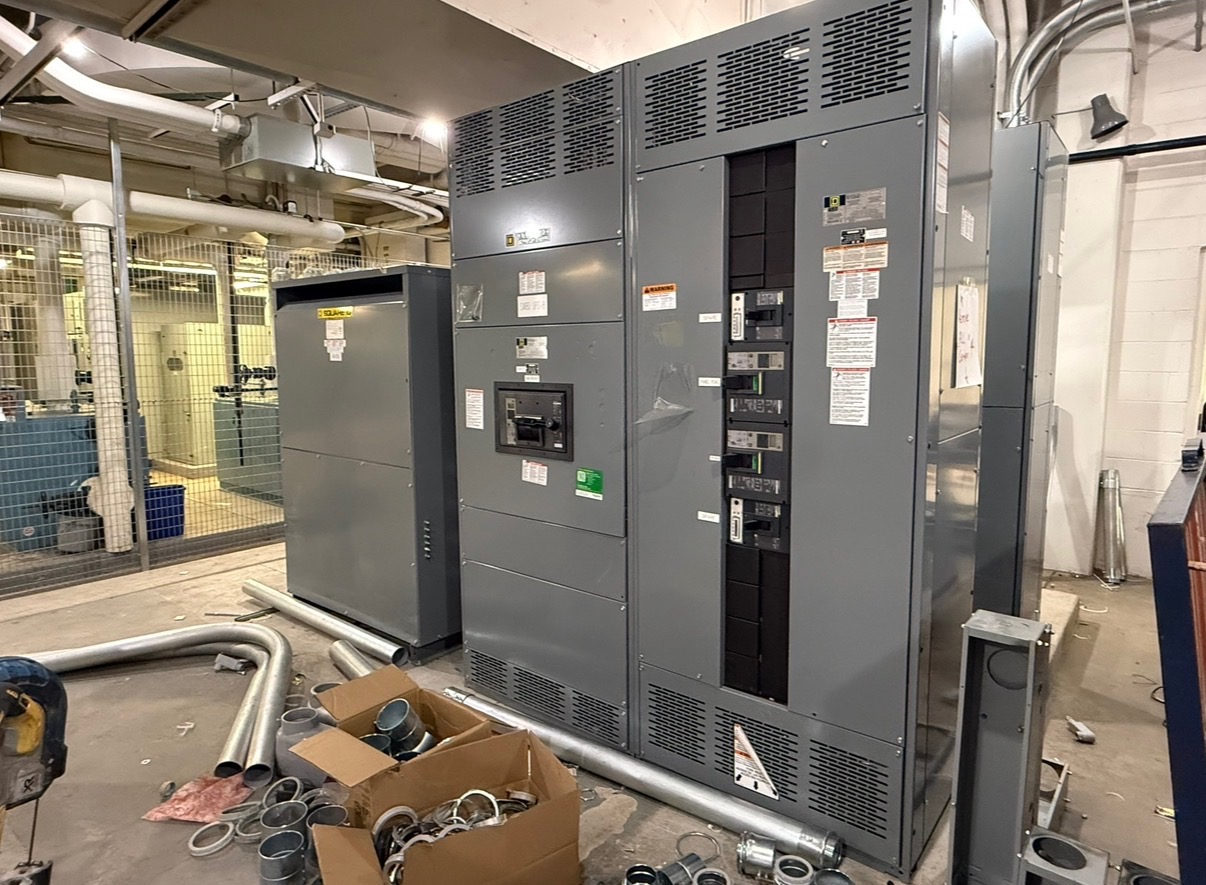
Distribution for Wastewater Processes
Wastewater facilities depend on electrical distribution to support treatment processes that may include influent pumping, screening, aeration, solids handling, disinfection, and building services. New switchgear should be planned around how these loads are supplied, controlled, and maintained—not selected from a generic equipment description. The facility’s one-line diagram, load information, operating sequence, and project scope help establish whether the need is a switchboard or another type of distribution equipment.
Start by identifying the loads served, their operating relationships, and which systems require continuity during routine maintenance or a fault. Clarify whether the project is a new facility, an expansion, or replacement within an operating plant. These distinctions affect tie-ins, phasing, and the information needed to define an assembly. For Central Texas projects, early coordination among the owner, engineer, electrical contractor, and equipment supplier helps surface site and schedule constraints before design details are fixed.
Build the Electrical Basis of Design
Selection begins with verified system conditions: nominal voltage, phase and wire configuration, available fault current, required interrupting or withstand performance, and the upstream protective-device arrangement. Confirm the intended main and feeder configuration, metering or monitoring needs, spare provisions, and any source or bus-tie arrangement shown in the design. These characteristics must be evaluated together; an amperage or short-circuit value cannot be treated as suitable without review of the complete system and project requirements.
The engineer’s drawings and specifications should identify applicable codes and standards, environmental conditions, and the required equipment type. UL 891 applies to suitable switchboard assemblies; it should not be assumed to apply to every switchgear product or design. Applicable standards and any listing requirements depend on the equipment and project. Qualified electrical professionals should verify system data and selections, with relevant authorities involved as required.
Account for Plant Conditions and Maintenance
Wastewater sites can place equipment near process areas where moisture, corrosive agents, washdown practices, dust, or temperature variation may affect enclosure and component choices. Document the actual installation location and exposure rather than assuming a particular enclosure is adequate. Confirm indoor or outdoor placement, room dimensions, access routes, working clearances, cable entry direction, and available space for safe operation and future maintenance. Site conditions should be assessed by the project team and reflected in the equipment specification.
Operational access matters when distribution supports equipment needed for ongoing treatment. Define how operators expect to isolate feeders, accommodate planned outages, and coordinate maintenance with process operations. Identify interfaces with motor control centers, variable-frequency drives, generators, transfer equipment, or controls where they are part of the project; do not assume these are included in the switchgear scope. Clear scope boundaries help prevent gaps between distribution equipment and connected systems.
Coordinate Controls, Interfaces, and Verification
A wastewater distribution package may need to align with process controls, alarms, supervisory systems, or remote monitoring, depending on the design. Identify required status points, metering data, communications protocols, terminal provisions, and responsibility for field wiring. Confirm whether control components belong in the switchgear assembly or in separate equipment. Sharing interface schedules and approved drawings early allows the engineer, controls team, contractor, and manufacturer to resolve wiring and space requirements before fabrication.
Establish the documentation and inspection expectations in the project specifications, including drawing review, nameplate information, and applicable factory checks or tests. The required verification depends on the assembly and contract requirements; no test or certification should be assumed without confirmation. The project team should review approved submittals against the one-line diagram and feeder schedule, then coordinate receiving, storage, installation, and final field verification. Installation and commissioning should be handled by qualified personnel under project procedures, not by relying on equipment selection alone.
Plan Procurement Around Project Inputs
For a new switchgear order, useful procurement inputs include the latest one-line diagram, equipment specifications, feeder schedule, load data, available fault-current information, site conditions, and target project milestones. Also identify required submittal formats, review participants, shipping destination, and any restrictions on delivery access or staging. Complete information supports a more meaningful design review and helps identify unanswered questions that could otherwise affect approvals or sequencing. Lead time is project-dependent and should be discussed against the defined scope and review process.
A US manufacturer using all-American components can develop custom assemblies to specification and ship nationwide. Those capabilities do not replace engineering review or establish that a particular configuration is available or suitable. For Central Texas procurement, coordinate the shipping destination and site receiving plan with the contractor and owner, especially where access or storage arrangements need advance planning. Confirm the final scope, applicable requirements, documentation, and schedule assumptions before proceeding.
Prepare a Clear Request for Review
Before requesting a proposal or design review, assemble the current electrical documents and mark unresolved items rather than filling gaps with assumptions. Note whether the facility is operating during construction, what equipment remains in service, and which loads are critical to the project’s operating plan. Provide the proposed installation location and known environmental exposures, plus dimensions or access constraints when available. This lets the project team distinguish confirmed requirements from decisions that still need engineering input.
Ask the engineer and equipment supplier to review the proposed equipment type, ratings, enclosure requirements, feeder arrangement, interfaces, applicable standards, and submittal expectations against the project documents. Resolve inconsistencies between drawings and specifications before finalizing procurement. A practical next step is a coordinated question list assigning each open item to the owner, engineer, contractor, controls team, or supplier. That record helps keep wastewater facility switchgear decisions traceable from design through delivery and installation.
Project specification checklist
Use this checklist to organize the details for a project-specific review. Final ratings, applicable standards and equipment selections depend on the approved design.
| Item | What to confirm |
|---|---|
| System data | Confirm voltage, configuration, available fault current, and protective-device coordination from project documents. |
| Load and feeder scope | Verify served process loads, feeder schedule, main arrangement, and any required spare provisions. |
| Installation conditions | Document location, environmental exposure, enclosure needs, access, clearances, and cable entry. |
| Controls and interfaces | Define monitoring, communications, alarms, field wiring, and equipment-scope boundaries. |
| Standards and verification | Confirm applicable standards, listing requirements where applicable, submittals, and specified checks. |
| Procurement coordination | Align approved scope, review milestones, shipping destination, receiving plan, and project-dependent lead time. |