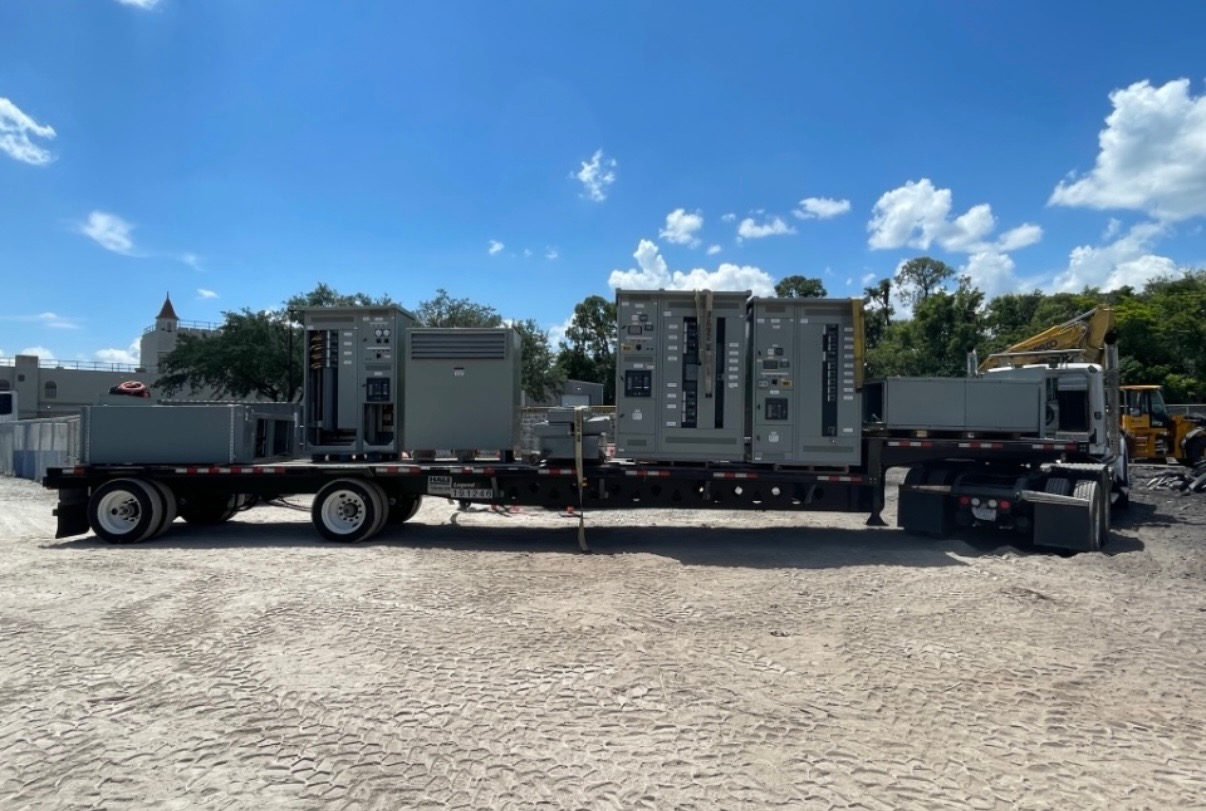
Planning a Kyle Switchgear Inquiry
For a facility in Kyle, Texas, a useful new switchgear inquiry starts with the electrical system the equipment must serve—not just a requested amp rating or a general product name. Describe whether the need is for a switchboard, service equipment, distribution assembly, or another type of switchgear, and identify the project’s purpose, location within the facility, and expected procurement schedule. New switchgear for a healthcare site, commercial building, or other application can involve very different source arrangements and operating requirements.
A clear initial description helps identify which design details need review before a quote can be prepared. Share available one-line diagrams, specifications, load information, and project documents, while noting which details are preliminary. The manufacturer builds equipment in the USA using all-American components, can develop custom assemblies to specification, and can ship nationwide. For Kyle-area projects, delivery timing and logistics should be coordinated against the project schedule; no local office, stock, or site-service availability should be assumed.
Define the System and Operating Conditions
Selection begins with the electrical characteristics and installation conditions that govern the assembly. Confirm system voltage, phase and frequency, service configuration, normal and emergency sources where applicable, and the loads served. Identify the required continuous current and available fault current from project studies or other qualified sources. The appropriate interrupting, withstand, and bus ratings depend on the actual system and design; a rating should not be selected from a generic range or treated as acceptable without engineering review.
Also describe the installation environment and physical constraints: indoor or outdoor placement, room dimensions, access paths, cable entry preferences, and any environmental or enclosure requirements. These conditions affect layout, construction, and coordination with adjacent equipment. Provide the applicable project specifications and governing requirements, and have qualified electrical professionals verify system data and design assumptions. Standards and product certifications depend on the equipment type and design; UL 891 applies to suitable switchboard assemblies, not automatically to every switchgear product.
Healthcare Transfer Switching Details
Healthcare transfer-switching inquiries need particular attention to how power moves between sources and which loads are served. State the normal and alternate source types, their nominal system ratings, and the source characteristics available from the project design. Describe the required load-transfer sequence, including which loads transfer first, whether any loads are delayed or shed, and how the system should respond when a source is unavailable or returns. Identify any required bypass, isolation, or maintenance arrangement only when it is part of the project criteria.
Include the relevant one-line diagram, transfer sequence narrative, load schedule, and control or monitoring requirements with the inquiry. Distinguish essential branches or other defined load groups according to the project documents rather than relying on broad labels. Confirm the applicable healthcare and electrical requirements with the project’s qualified design professionals and authorities. The sequence, equipment ratings, and control functions must be reviewed together; a requested transfer function does not establish that a particular assembly or rating is suitable.
Choose a Project-Specific Assembly
The final configuration depends on how the equipment connects to the electrical system and how operators need to use it. Specify incoming and outgoing circuit requirements, protective-device types where established, metering, instrumentation, controls, and any communications interfaces. Identify spare or future provisions as design requirements rather than assuming unused capacity will be included. Physical arrangement, bus configuration, compartmentation, and access clearances should align with project drawings and the installation plan.
Custom assemblies can be developed to the project specification, but the specification must resolve interfaces and responsibilities. Clarify which devices, wiring, controls, and accessories are included in the requested scope, and identify related equipment supplied by others. Confirm whether a UL 891 switchboard assembly is appropriate for the application; other equipment follows its applicable standards and design requirements. Final suitability depends on coordinated review of the drawings, ratings, installation conditions, and project requirements, not on a product label alone.
Coordinate Submittals, Review, and Testing
Before release, compare the proposed equipment documents with the current one-line diagram, schedules, and specification. Review dimensions, connection points, protective-device information, control diagrams, and transfer logic where applicable. Resolve discrepancies among the equipment submittal, upstream and downstream devices, and the project’s operating sequence before fabrication. In healthcare applications, the design team should verify how testing and planned maintenance affect continuity of required loads, following the project procedures and applicable requirements.
Establish what documentation and factory testing are required by the contract or specification, and confirm test scope, acceptance criteria, and witness expectations before ordering. Testing must correspond to the supplied design and should not be assumed to cover interfaces or field conditions outside its defined scope. Qualified professionals and relevant authorities must review the equipment and installation. Short lead times are a project-dependent objective, not a guaranteed schedule; drawing approval, design complexity, and component requirements can affect timing.
Prepare a Quote Request from Kyle
To move an inquiry forward, send the project name or identifier, Kyle-area delivery location, requested equipment type, target schedule, and the latest available electrical documents. Mark open questions clearly—for example, an unconfirmed fault-current value, pending source rating, or healthcare transfer sequence still under design. Include the person responsible for technical clarifications and indicate when a coordinated submittal or procurement decision is expected. This lets the manufacturer assess the information needed to define a new assembly and identify gaps before quoting.
Ask the quote to state its equipment scope, assumptions, exclusions, required customer inputs, and schedule basis. Confirm shipping destination, unloading and receiving arrangements, and any site access constraints with the project team; do not assume on-site installation or service is included. Once a proposal is received, have the responsible electrical professionals reconcile it with the project documents before approval. These concrete steps help Kyle customers compare proposals on configuration and scope—not on an unverified rating or an assumed delivery commitment.
Project specification checklist
Use this checklist to organize the details for a project-specific review. Final ratings, applicable standards and equipment selections depend on the approved design.
| Item | What to confirm |
|---|---|
| Equipment application | Identify the equipment type, facility use, and loads served; confirm the requested scope against project documents. |
| Electrical system data | Provide verified voltage, phase, frequency, source configuration, load requirements, and available fault-current information. |
| Healthcare transfer sequence | Document normal and alternate sources, source ratings, load groups, transfer order, delays, and required operating behavior. |
| Installation constraints | Confirm indoor or outdoor conditions, enclosure needs, dimensions, cable entry, access, and delivery-site constraints. |
| Standards and testing | Specify applicable standards, listing expectations where suitable, required submittals, factory tests, and acceptance criteria. |
| Quote and schedule inputs | Share current drawings, scope boundaries, target dates, delivery location, open design items, and review contacts. |