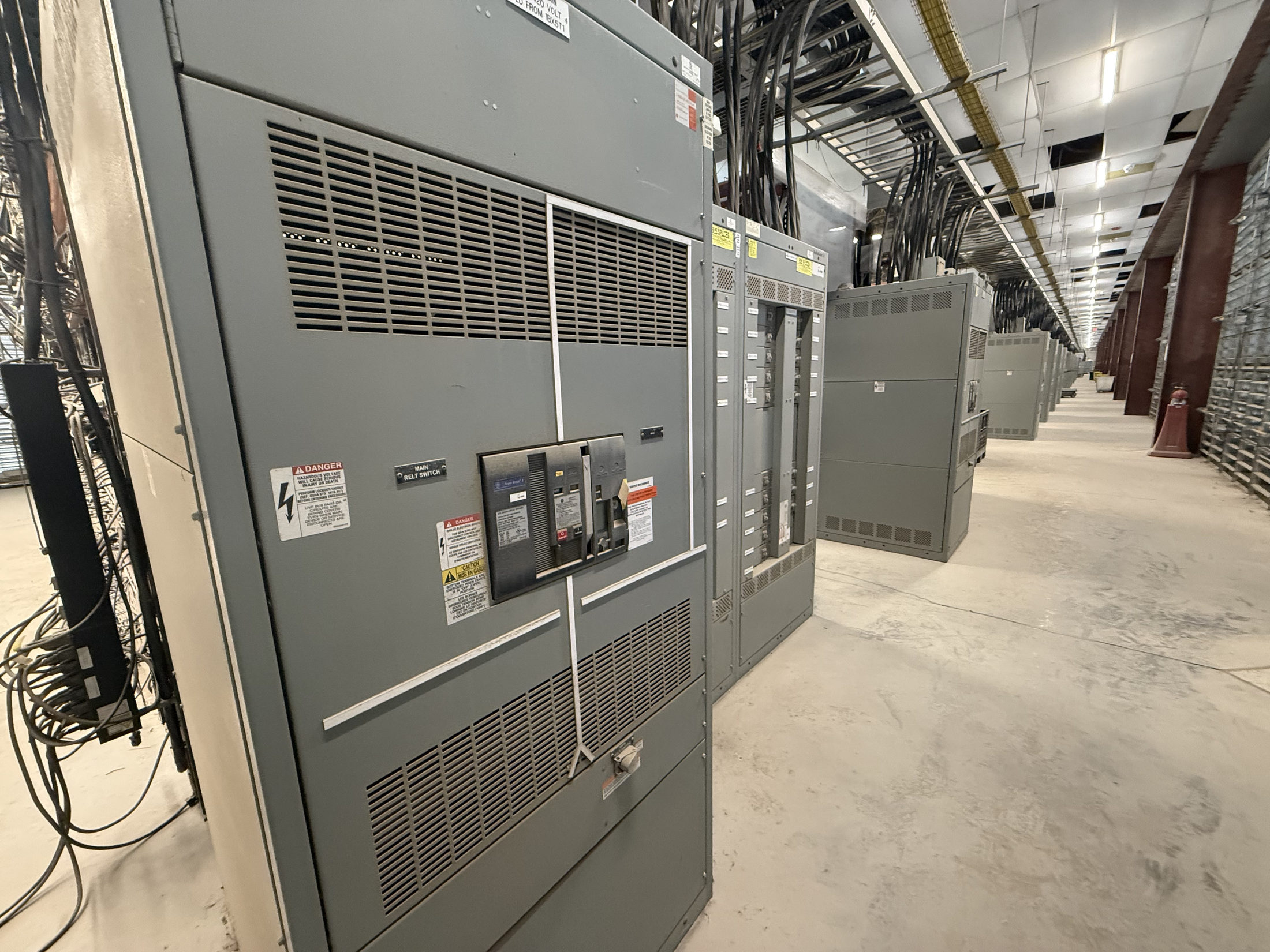
Map the San Marcos Campus Distribution System
A university campus in San Marcos may receive power through one or more service points and distribute it among academic buildings, laboratories, residence halls, dining facilities, and central plant equipment. A new-equipment inquiry should start with the specific buildings and loads involved, not a generic campus-wide assumption. Identify the upstream source, existing distribution boundaries, and whether the project serves a new building, a renovation, or a replacement within an operating system. This map helps establish where new switchgear or switchboards fit and what continuity requirements apply.
Gather available one-lines, load schedules, equipment records, and utility or campus electrical criteria. Note which feeders are new, relocated, or retained, and identify connections to emergency or standby systems where applicable. For a San Marcos university campus distribution project, this early information supports a focused review of equipment scope and interfaces before design decisions are fixed. A qualified electrical professional should verify the system arrangement and applicable authority requirements.
Define Sources, Feeders, and Operating Priorities
Campus distribution equipment must match its role in the electrical system. Clarify whether an assembly receives a service source, distributes power to downstream panels, serves a large mechanical load, or connects sources through a transfer or tie arrangement. Document normal and alternate source relationships, feeder destinations, protective-device coordination needs, and any restrictions on paralleling or transfer. These details influence the lineup arrangement, bus configuration, metering, controls, and provisions for future expansion.
Describe loads by building function and operating importance. Research laboratories, data or communications rooms, residence areas, and instructional spaces may have different interruption tolerances, but those priorities must be established by the campus team rather than assumed. Confirm the system voltage, phase, frequency, continuous load basis, available fault current, and required interrupting or withstand ratings from project documents. Ratings and device selections require engineering verification; no single configuration is suitable for every university installation.
Choose Equipment for the Project Conditions
Design choices should reflect the installation location, electrical duty, and maintenance approach. Confirm indoor or outdoor placement, environmental conditions, access clearances, cable entry direction, conductor sizes, and the physical route from the source to each feeder. Establish whether the project calls for a switchboard or another class of switchgear, since equipment terminology, construction, and applicable standards vary. UL 891 applies to suitable switchboard assemblies; it should not be presumed to cover every switchgear type or project configuration.
Review bus and device arrangements, metering requirements, control interfaces, labeling, and spare or future feeder provisions against the campus design criteria. Enclosure selection and ratings must be determined for the actual environment and project conditions. If the design includes medium-voltage or other specialized equipment, its requirements and standards differ from those for low-voltage assemblies. A qualified designer should reconcile the equipment submittal with the one-line, specifications, protection study, and governing requirements before release.
Coordinate Around Academic Operations
University construction schedules often have distinct constraints around semesters, exams, research activity, residence occupancy, and summer work. The project team should identify approved outage windows, building access restrictions, delivery routes, staging limits, and any sequence that keeps adjacent facilities operating. These are planning inputs, not assumptions about available site support. For a San Marcos project, provide the manufacturer with the required ship-to location and receiving constraints early so equipment dimensions, packaging, and shipment timing can be considered alongside the construction schedule.
Coordinate feeder cutovers and temporary-power decisions with campus facilities personnel, the electrical designer, contractor, and relevant authorities. Clarify who approves outages and switching plans, and allow time for required reviews. Never treat equipment arrival as authorization to connect or energize it. Installation, testing, and commissioning plans should be developed by qualified project personnel under applicable procedures, with work on energized equipment avoided and electrical safety requirements observed.
Prepare for Submittal Review and Testing
A complete inquiry helps avoid preventable redesign. Share the project specification, current one-line diagrams, feeder schedule, load information, available fault-current data, protection and coordination requirements, physical layout, and target construction milestones. Flag unresolved items instead of silently filling gaps. The equipment design and any UL 891 assembly scope, where applicable, can then be reviewed against the intended use. Applicable standards and listing requirements depend on the design and project; they should be confirmed rather than inferred from a product category.
Agree on submittal content and review responsibilities, including drawings, device schedules, control schematics, and required factory or field test documentation. Testing scope should follow the contract documents and equipment design, with acceptance criteria established by the responsible professionals. Resolve comments on clearances, cable access, interlocks, metering, and interfaces before approval to manufacture. A documented review process gives the university and its project team a clearer basis for checking that the delivered assembly matches the approved design.
Make the New-Equipment Inquiry Actionable
For procurement, identify the decision-maker and technical contact, project phase, requested equipment scope, required ship date, delivery constraints, and whether the inquiry concerns a new installation or replacement. Include the latest drawings and note when revisions are expected. U.S.-built assemblies using all-American components and custom configurations to specification may be considered for suitable projects; nationwide shipment is available. Lead time depends on the project, design maturity, component requirements, and review process, so confirm timing against the actual submittal and construction schedule rather than relying on a general estimate.
Before requesting a proposal, assemble a short list of open decisions: confirmed source and feeder boundaries, required ratings, enclosure conditions, future provisions, controls and metering, applicable standards, outage windows, and receiving logistics in San Marcos. Ask the design team to validate technical values and identify authority reviews still pending. This practical package lets a manufacturer assess scope, identify missing information, and discuss a project-specific path for new switchgear without assuming campus conditions or promising a fixed delivery date.
Project specification checklist
Use this checklist to organize the details for a project-specific review. Final ratings, applicable standards and equipment selections depend on the approved design.
| Item | What to confirm |
|---|---|
| System sources | Confirm utility, campus, standby, and alternate-source relationships, including permitted transfer or tie operation. |
| Feeder scope | Identify each feeder destination, load basis, conductor and cable-entry needs, and retained or relocated circuits. |
| Electrical ratings | Have qualified professionals verify voltage, available fault current, device ratings, and coordination requirements. |
| Installation conditions | Specify location, environment, enclosure requirements, clearances, access, and cable routing for the actual site. |
| Schedule and logistics | Provide academic outage constraints, submittal milestones, ship-to and receiving details, and desired construction dates. |
| Standards and tests | Confirm equipment category, applicable standards and listing scope, submittal review, and required test documentation. |