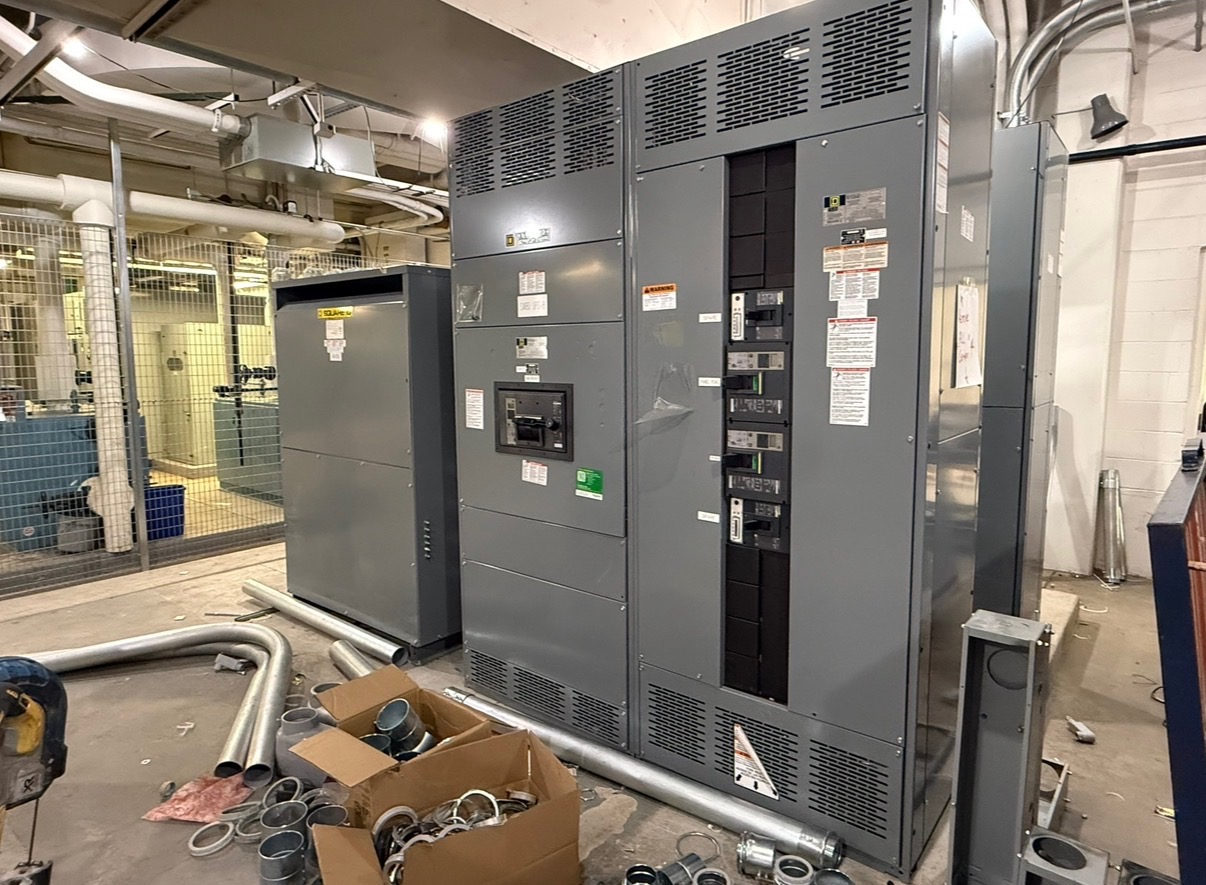
Planning a Round Rock Switchgear Inquiry
For a Round Rock facility, a useful new switchgear inquiry starts with the work the equipment must support—not simply a requested amperage or a product name. Identify whether the project is a replacement, capacity change, new building, or planned electrical upgrade, and explain what loads and operating conditions are involved. That context helps determine whether a switchboard or another type of switchgear is appropriate and which design questions need resolution.
Share the project location in Round Rock and the anticipated delivery site, while distinguishing the equipment quote from field services or installation. Equipment can be built in the USA with all-American components and shipped nationwide. Delivery timing and lead time depend on the project; neither a local office nor local stock should be assumed. Early coordination helps align the proposed assembly with the site’s schedule and receiving constraints.
Describe the Existing System and Required Loads
Provide available one-line diagrams, equipment schedules, and existing nameplate information, along with the system voltage, phase, frequency, grounding arrangement, and source configuration. Identify the service or feeder functions, connected loads, expected future additions, and any load-priority requirements. These details help the design team evaluate the bus arrangement, incoming and outgoing devices, metering, and space needs without treating any rating as suitable before engineering review.
For replacement work, explain what is changing and what must remain compatible, including conduit or cable entry direction, access clearances, mounting conditions, and interfaces with upstream and downstream equipment. If records are incomplete, state that plainly and identify which information still needs field verification by qualified professionals. A proposed configuration should be checked against available fault-current information, protection coordination, applicable codes, and the project’s operating requirements.
Hospital Upgrades: Continuity and Health-Care Needs
A hospital electrical upgrade in Round Rock calls for early definition of the health-care spaces and loads affected. Describe which systems require continuity, which loads are essential or time-sensitive, and how the facility’s electrical design classifies and serves them. Provide relevant engineering documents and project criteria rather than assuming a particular switchgear layout will satisfy health-care requirements. The facility’s qualified electrical professionals and authorities having jurisdiction must determine the applicable codes, standards, and approval path.
Explain how the work relates to existing normal and alternate sources, emergency distribution, and any planned transfer equipment. Identify interfaces, control signals, sequencing expectations, and the parties responsible for those systems. Switchgear selection alone does not establish a compliant emergency-power or transfer arrangement. Resolve these boundaries in the specifications and drawings so the equipment design, transfer strategy, and facility procedures can be reviewed together before procurement.
Transfers, Outages, and Construction Coordination
For an occupied hospital or other Round Rock facility, describe the proposed outage windows, operational restrictions, temporary-power assumptions, and required approvals. State whether the project is phased and which portions of the distribution system must remain available during each phase. These are planning inputs, not a promise that an outage or transfer can be completed within a particular duration. Facility operations, the electrical engineer, contractors, and relevant authorities need to establish a safe, approved work plan.
Clarify whether transfer equipment is included in the new assembly, supplied separately, or outside the procurement scope. Document source availability, desired transfer behavior, interlocks, controls, and the equipment interfaces that must be coordinated. Before finalizing the design, confirm how factory documentation and any specified inspection or testing will support field integration. Work on energized equipment should not be inferred from an equipment quote; qualified personnel must determine and follow the project’s safety procedures.
Choose Ratings, Construction, and Applicable Standards
The design should establish voltage, continuous-current needs, short-circuit withstand or interrupting requirements as applicable, enclosure conditions, and the intended installation environment. None is a universal capability or a safe default. Confirm these requirements from the system study, drawings, site conditions, and governing specifications. Also identify bus material or configuration preferences, device types, metering, communications, control power, labeling, and access needs where they affect the assembly.
Custom assemblies can be developed to project specifications, subject to technical review. UL 891 applies to suitable switchboard assemblies when applicable; it does not automatically cover every switchgear product or medium- and high-voltage equipment. Other equipment may follow different standards according to its design and use. Ask the project engineer to identify the required standards and listing expectations, then confirm they are addressed in the proposed scope rather than assuming a certification or rating.
Prepare a Quote Package and Confirm Next Steps
To request a meaningful quote, assemble the current one-line diagram, specifications, load and fault-current data, equipment schedules, preferred delivery window, and a clear scope boundary. Include transfer and outage requirements for health-care work, plus site receiving limitations and any documentation or testing requirements. Mark unknowns for review instead of filling gaps with guessed ratings. A complete package makes it easier to identify design questions, exclusions, and decisions that could affect cost or lead time.
After technical review, resolve open items with the project’s electrical engineer and procurement team, then compare the proposed scope against the drawings and specifications. Confirm the applicable standards, configuration, interfaces, submittal expectations, and project-specific schedule before release. For Round Rock delivery, coordinate access, unloading responsibility, and receiving dates with the site team; do not presume installation or local service is included. These concrete checks help move a new-equipment inquiry toward an aligned proposal.
Project specification checklist
Use this checklist to organize the details for a project-specific review. Final ratings, applicable standards and equipment selections depend on the approved design.
| Item | What to confirm |
|---|---|
| Project and delivery location | Confirm the Round Rock site, receiving contact, access limitations, unloading responsibility, and requested delivery window. |
| System data | Provide verified voltage, phase, frequency, grounding, source configuration, load information, and available fault-current data. |
| Equipment scope | Identify replacement or new-build intent, incoming and outgoing functions, interfaces, and whether transfer equipment is included. |
| Health-care continuity | Document affected spaces, essential-load priorities, source relationships, transfer expectations, outage constraints, and facility approvals. |
| Ratings and standards | Have qualified project professionals confirm required electrical ratings, enclosure conditions, applicable standards, and any listing expectations. |
| Submittals and schedule | Specify drawing, documentation, inspection, and testing needs; confirm lead time and delivery timing against project requirements. |