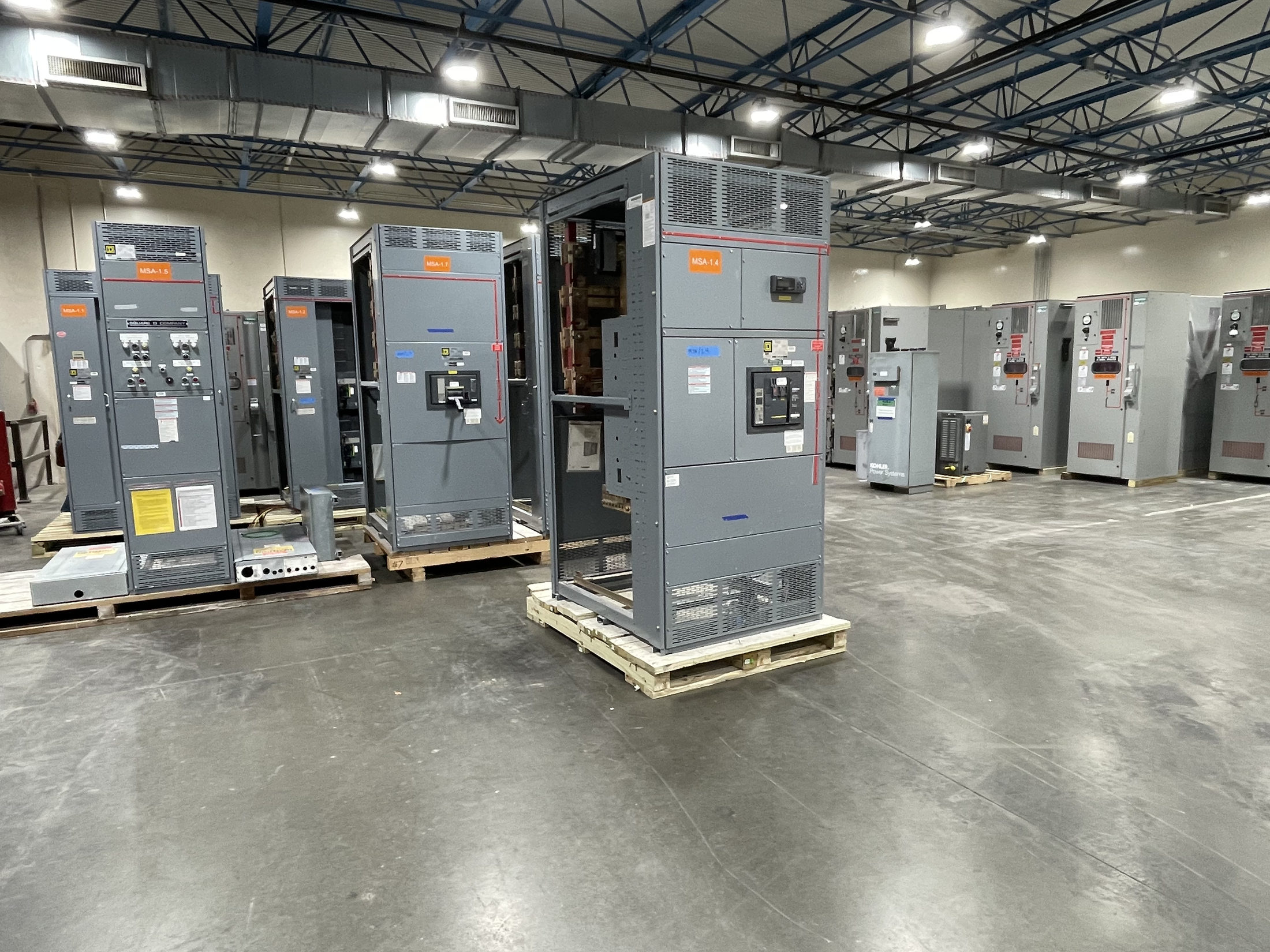
Plan Distribution Around Taylor’s Facility Needs
For Taylor-area facilities, new switchgear planning begins with the electrical distribution job it must perform—not a presumed standard lineup. A semiconductor project may need to serve process tools, support systems, building loads, or distinct areas that come online at different stages. Describe which loads the equipment will supply, where it fits in the distribution system, and whether the scope is new construction, an expansion, or a replacement. Taylor switchgear inquiries are easier to evaluate when the intended function and project boundaries are clear. Include available one-line diagrams, load schedules, and design documents when they exist; identify preliminary information as preliminary so it is not mistaken for an approved design.
Describe Tool Loads and Power-Quality Concerns
Semiconductor tool loads can differ substantially in operating profile and sensitivity. For a quote, provide known load data by tool or group, expected operating modes, startup characteristics, and any planned diversity assumptions from the project’s electrical designer. Explain power-quality concerns that matter to the facility, such as sensitivity to voltage disturbances, harmonic-producing loads, or requirements for monitoring. Do not assume a particular switchgear configuration will resolve a power-quality issue: the source, distribution path, load behavior, and mitigation strategy need qualified engineering review. Share relevant study findings or design criteria, and flag information still being developed. This gives the manufacturer a sound basis to identify design questions rather than infer performance needs from the facility type.
Establish Ratings and System Interfaces
Selection depends on the actual system and installation conditions. Provide the nominal system voltage, frequency, available fault-current information, grounding approach, and the protection and coordination criteria established for the project. The required continuous current and short-circuit withstand or interrupting capabilities must be determined for the specific equipment and application; neither should be treated as a universal rating. Clarify whether the scope concerns low-voltage switchboards, medium-voltage equipment, or another arrangement, since applicable standards and construction differ. Identify incoming sources, transformers, generators, ties, downstream feeders, and planned interfaces. Qualified electrical professionals must verify the design against system studies, codes, and authority requirements before equipment ratings and construction are finalized.
Allow for Phased Expansion and Future Changes
Where a Taylor facility will expand in stages, distinguish the initial installation from later phases. List which feeders, sections, or distribution functions are required at each stage, what future provisions are desired, and which items remain optional or unfunded. Describe expected changes to tool counts or load groups, while avoiding assumptions that reserved space alone will make a future addition electrically suitable. Future capacity, bus arrangements, protection, physical layout, and connection methods all require review against the eventual system design. If construction sequencing affects access, shipping, or integration, note the relevant milestones and constraints. Clear phasing information helps the quote address the intended scope and makes later design changes easier to identify and evaluate.
Coordinate Submittals, Testing, and Delivery
A complete inquiry should identify the project schedule, required submittal dates, review sequence, delivery constraints, and the party responsible for receiving and integrating the equipment. For a semiconductor facility, coordinate interface information with the electrical engineer, construction team, tool-planning stakeholders, and other equipment suppliers as appropriate. Confirm what drawings, wiring details, labels, and test documentation the project specification calls for; factory inspection and testing requirements should be agreed upon for the particular assembly. Do not assume a delivery date or test scope before design review. Assemblies meeting UL 891 may be considered where applicable to the specified switchboard design, but that standard does not automatically apply to every type of switchgear or project.
Prepare a Quote Request That Can Be Reviewed
To start a new switchgear quote, send the project location in Taylor, the equipment function, one-line diagram, load information, system data, scope boundaries, expansion phases, specification, and target milestones. Mark missing items and identify who can answer technical questions. The manufacturer builds in the USA using all-American components, can develop custom assemblies to specification, and ships nationwide; lead time is determined by the design and project requirements. These details do not replace project review or establish availability. Before release, qualified electrical professionals and relevant authorities should confirm ratings, applicable standards, interfaces, and installation requirements. A focused request lets the team identify open decisions early and respond to the actual distribution need rather than a generic equipment description.
Project specification checklist
Use this checklist to organize the details for a project-specific review. Final ratings, applicable standards and equipment selections depend on the approved design.
| Item | What to confirm |
|---|---|
| Load information | Confirm tool and facility load schedules, operating modes, startup characteristics, and design assumptions. |
| System data | Provide voltage, frequency, grounding, available fault-current data, and protection criteria for professional verification. |
| Equipment scope | Identify the distribution function, equipment type, incoming sources, feeders, and connected interfaces. |
| Expansion phases | Separate initial requirements from future provisions and describe expected load or configuration changes. |
| Project coordination | Confirm drawing and submittal needs, review responsibilities, schedule milestones, and delivery constraints. |
| Standards and testing | Specify required standards and test documentation; verify applicability for the exact assembly and project. |