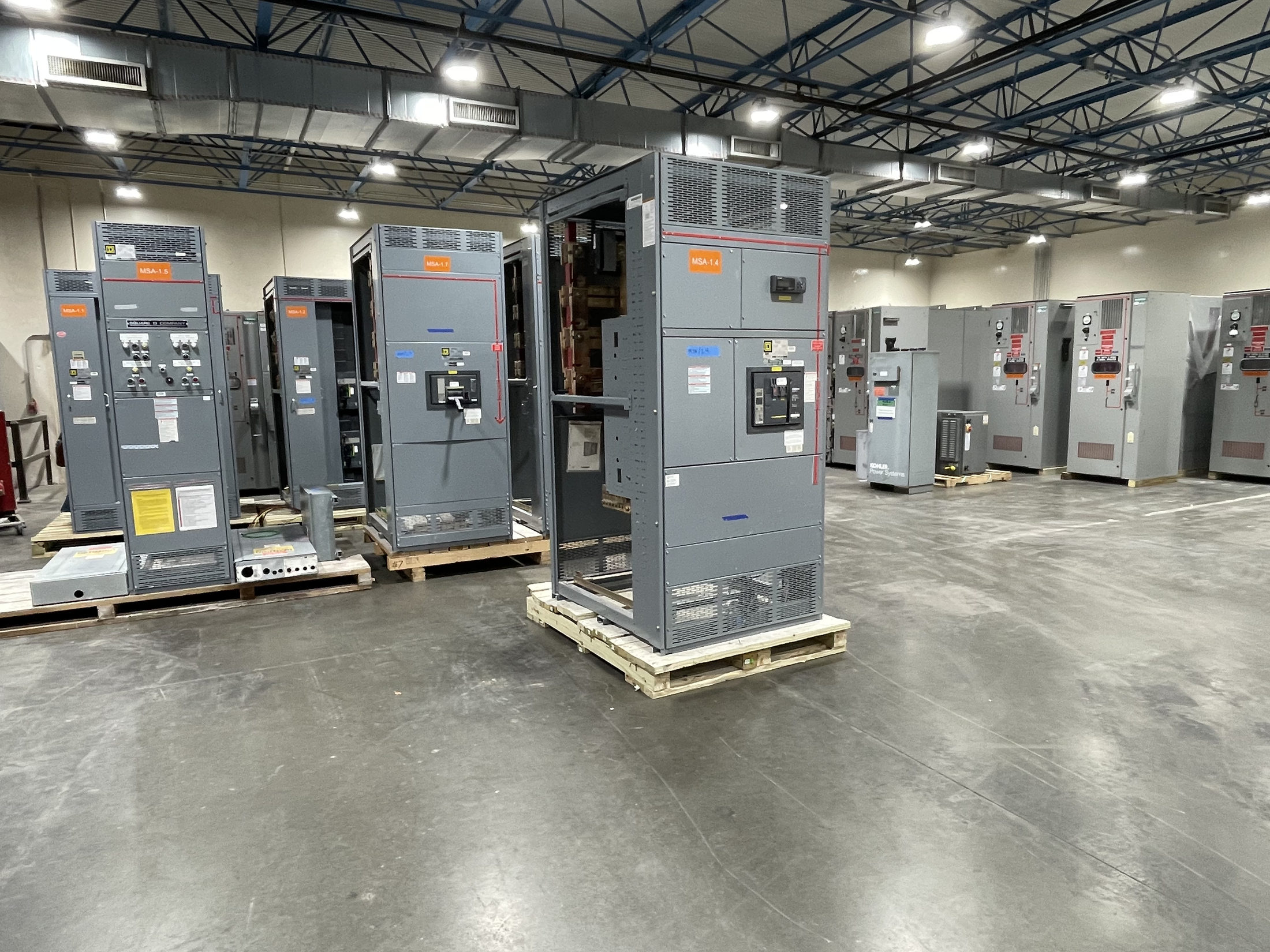
Planning New Switchgear for a Temple Facility
For Temple-area owners, engineers, and contractors, a new switchgear inquiry starts with the facility’s electrical needs—not a presumed standard configuration. Identify whether the project serves a healthcare building, campus, industrial site, or another application, and explain whether the equipment is for new construction, an expansion, or replacement. This context helps determine the appropriate equipment type and which design details require review.
A Temple switchgear project may involve coordination among the owner, electrical engineer, contractor, and equipment supplier, with schedules and shipping plans shaped by the project location. The manufacturer builds new equipment in the USA using all-American components and can ship nationwide. Describe the requested delivery location and project milestones early; shipment timing and lead time depend on the assembly and project requirements, and no local office or site service should be assumed.
Define the Electrical System and Equipment Scope
Describe the distribution system the equipment must serve, including the project’s documented voltage, phase, frequency, and intended role in the system. Clarify whether the inquiry concerns service entrance equipment, distribution, tie or feeder sections, or an interface with other assemblies. Provide available one-line diagrams and the latest electrical specifications so qualified reviewers can assess how the proposed equipment fits the system.
Switchgear and switchboards are not interchangeable terms for every application. The required equipment type, construction, ratings, and applicable standards depend on the design and project conditions. State the required continuous-current and short-circuit ratings only as established by the project’s qualified electrical professionals, and identify the available fault-current information and protective-device assumptions. Ratings, enclosure requirements, and suitability must be verified for the specific application rather than inferred from a general product description.
Healthcare Distribution and Essential-System Interfaces
Healthcare inquiries should identify which loads and distribution sections are associated with essential electrical systems, how those sections relate to normal and alternate sources, and what interfaces are within the requested equipment scope. Provide the project’s diagrams and sequence-of-operation requirements, including relevant transfer equipment interfaces, monitoring points, and coordination boundaries. These details help reviewers understand intended operation without assuming that a switchgear assembly alone provides every essential-system function.
Responsibility for healthcare system design and compliance remains with the project’s qualified electrical professionals and applicable authorities. The engineer of record and other designated reviewers should determine applicable codes, essential-system classifications, source arrangements, separation, and testing requirements. Confirm who supplies, reviews, and verifies each interface, including equipment outside the switchgear scope. Do not treat a manufacturer’s equipment description as approval of the overall healthcare distribution design or as a substitute for project-specific review.
Select Ratings, Construction, and Custom Features
For a useful quote, share the required bus arrangement, number and purpose of sections, feeder or breaker requirements, metering and protective-device needs, control interfaces, and any specified compartment or access preferences. Include drawings, equipment schedules, approved manufacturer requirements if applicable, and the project’s governing specifications. The manufacturer can develop custom assemblies to specification, subject to technical review of the requested design and applicable product standards.
Identify environmental conditions and installation constraints that affect construction, such as indoor or outdoor placement, available room dimensions, cable entry direction, access clearances, and the specified enclosure type. These are project decisions, not universal product capabilities. UL 891 applies to suitable switchboard assemblies where applicable; it should not be assumed for all switchgear or for medium- or high-voltage equipment. The applicable standards and any required listing must be confirmed for the particular assembly and project.
Coordinate Submittals, Testing, and Schedule
Establish who will provide and review the one-line diagram, equipment layout, control diagrams, and other required submittals, and identify the approval sequence before release for manufacture. Discuss required inspections, factory testing, witness points, documentation, and any project-specific acceptance criteria at the inquiry stage. Testing scope should follow the specification and applicable standards; it should not be assumed from the equipment category alone.
For a Temple-area project, coordinate the requested ship-to location, receiving arrangements, site access constraints, and target dates with the project team. Confirm when approved drawings and final specifications are needed, since design decisions and review cycles can affect the schedule. Short lead times may be possible depending on the project, but timing is not guaranteed. Any installation, commissioning, or field-service responsibilities should be assigned and confirmed separately rather than presumed as part of an equipment quote.
Prepare a Complete Temple-Area Quote Request
Send a concise inquiry package with the project name or reference, Temple-area delivery location, equipment application, requested quantity and scope, required-by date, and the latest available drawings and specifications. Flag healthcare essential-system interfaces, unusual coordination needs, and unresolved design questions. If some ratings or details are still pending, label them as pending and identify the responsible reviewer instead of guessing; this helps keep the quote aligned with the eventual approved design.
Before requesting a final proposal, ask the project engineer or other qualified professional to confirm the basis of design, required ratings, applicable standards, and boundaries between switchgear and adjacent equipment. Then request clarification of quoted scope, exclusions, submittal expectations, testing requirements, and schedule assumptions. This practical review gives Temple customers a clearer basis for comparing a custom new-equipment proposal and resolving open items before procurement proceeds.
Project specification checklist
Use this checklist to organize the details for a project-specific review. Final ratings, applicable standards and equipment selections depend on the approved design.
| Item | What to confirm |
|---|---|
| Application and scope | Confirm facility type, new-build or replacement context, equipment function, and included or excluded sections. |
| System data | Provide project-verified voltage, phase, frequency, fault-current information, and required equipment ratings. |
| Healthcare interfaces | Identify essential-system sections, source and transfer interfaces, monitoring needs, and review responsibilities. |
| Construction constraints | Confirm indoor or outdoor placement, enclosure requirements, dimensions, cable entry, and access conditions. |
| Standards and testing | Specify applicable standards, required listing if any, submittals, inspections, and project-defined test criteria. |
| Schedule and logistics | State Temple-area ship-to details, receiving constraints, approval milestones, and target dates for schedule review. |