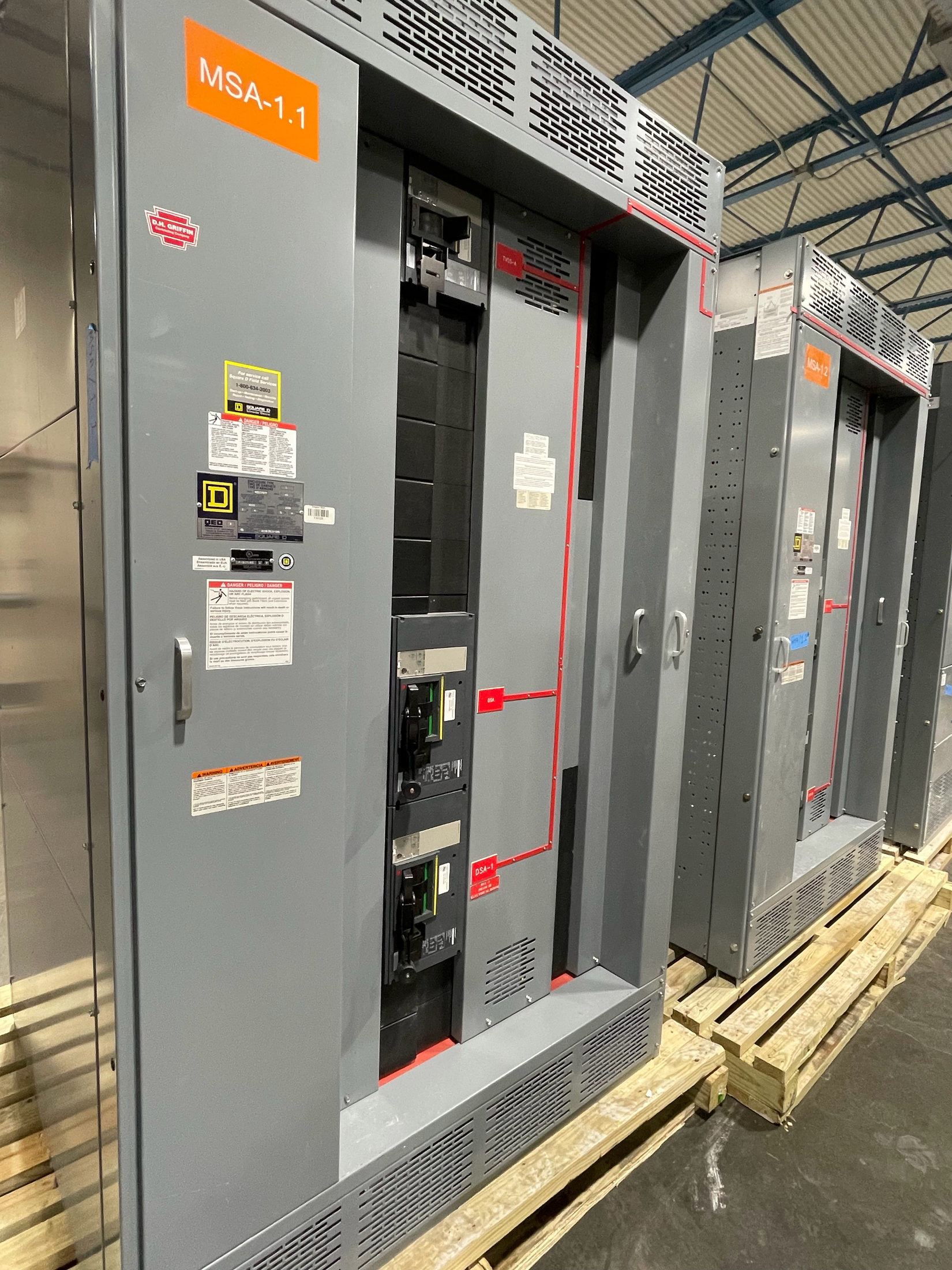
Plan Distribution Around Temple’s Care Operations
A Temple health-care facility needs electrical distribution planned around the care functions it supports, not simply the building’s connected load. New switchgear may serve normal power distribution, coordinate with emergency or legally required systems, or feed selected clinical and building loads. Those roles must be established by the facility’s electrical design team. For a Temple project, begin by identifying the served areas, continuity requirements, planned expansion, and how the distribution equipment interfaces with the facility’s overall one-line diagram.
The equipment manufacturer can review a defined new-equipment inquiry and build custom assemblies to specification. That review depends on complete project documents and does not replace decisions by the owner’s engineers, electrical contractor, or authority having jurisdiction. Early agreement on system boundaries helps prevent a switchboard or switchgear package from being assigned responsibilities that belong to transfer equipment, protective devices, or another part of the essential electrical system.
Define Essential-System Interfaces Before Selecting Equipment
Health-care projects can include normal, emergency, and other essential-system distribution paths, with requirements shaped by the facility’s use and applicable codes. Document which sources feed each section, how transfer functions are handled, which loads are served, and where downstream distribution begins. Clarify whether the new assembly is intended to accept a source connection, distribute power after transfer, or serve a different role; do not assume that switchgear itself performs the transfer function.
The project’s qualified electrical professionals should determine system classification, required separation, protective-device coordination, and applicable code obligations. They should also identify interfaces with generators, automatic transfer switches, UPS equipment, and downstream panels where relevant. The manufacturer can use those approved design inputs to develop an assembly configuration, but should not be asked to establish clinical risk categories or interpret facility requirements in place of the responsible design team.
Confirm Ratings and Construction From Project Data
Selection should follow the project’s documented voltage, phase and wire arrangement, continuous load, available fault current, and protection scheme. These values are project-specific; no amperage, short-circuit rating, or voltage should be treated as suitable until the electrical design team verifies it. Confirm the intended indoor or outdoor location, environmental conditions, access and working clearances, cable entry direction, and space available for the equipment. Also establish whether future capacity or spare provisions are needed and how they will be documented.
Construction choices may include compartment arrangement, main and feeder devices, metering, control interfaces, and provisions for isolation or maintenance, depending on the design. Specify the required enclosure and applicable standards for the exact assembly. UL 891 applies to suitable switchboard assemblies, not automatically to every switchgear product or to medium- and high-voltage equipment. The manufacturer builds in the USA using all-American components; applicable standards and product suitability still require project-specific review.
Coordinate Drawings, Controls, and Testing Responsibilities
Before release, reconcile the equipment submittal with the current one-line diagram, schedules, specifications, and essential-system sequence of operation. Review device functions, labeling, metering, control power, communications, terminal arrangements, and interface points with the other electrical equipment. Resolve discrepancies through the project’s established design and approval process. For a Temple facility, coordination with the owner’s representatives and project contractors should establish who provides each interface and which documents govern when drawings differ.
Define inspection and testing expectations in the procurement documents, including what documentation is required and who performs or witnesses each activity. Factory checks, field acceptance testing, commissioning, and system-level verification are distinct responsibilities; the project team should assign them rather than assume they are included with the equipment. Testing and installation must be planned and performed by qualified personnel under applicable procedures, with relevant authorities involved where required. No review of drawings alone establishes that an installed system is ready for patient-care use.
Prepare a Complete New-Equipment Inquiry
A useful inquiry includes the project location in Temple, equipment function, current one-line diagram, specifications, load and fault-current information, device schedules, enclosure conditions, and required interfaces. Include the anticipated submittal and delivery milestones, site receiving constraints, and any project-specific documentation requirements. If design details remain open, identify them as pending rather than treating estimates as approved ratings. A clear list of questions lets the manufacturer identify missing information before configuration and pricing are finalized.
Custom assemblies can be developed to project specifications, and the manufacturer can ship nationwide. Lead time is determined by the project and the finalized scope, so confirm schedule expectations during review rather than relying on a general promise. Compare proposals against the same scope, standards, ratings, included devices, documentation, and exclusions. This helps Temple project stakeholders evaluate equipment consistently and distinguish a complete distribution package from a preliminary concept or partial assembly.
Use a Review Sequence That Supports Safe Turnover
For a practical next step, have the facility’s electrical engineer establish the system role and approve the basis of design; then have the contractor confirm field dimensions, routing, access, and installation interfaces. Submit the coordinated documents for manufacturer review, resolve comments with the responsible parties, and document approved changes before production. Confirm receiving, storage, installation, and testing responsibilities in the project plan. These steps help keep the new switchgear aligned with the intended health-care distribution scheme without assuming local inventory, a Temple office, or guaranteed on-site service.
Before energization, the project’s qualified professionals should verify installation against approved documents, complete required tests, confirm protective-device settings and system interfaces, and obtain any required authority approvals. Maintain final drawings, settings, test records, and operating information with facility documentation. For a Temple health-care facility distribution inquiry, the most effective request is one that clearly states what the assembly must serve, what it must connect to, and which design decisions remain subject to professional approval.
Project specification checklist
Use this checklist to organize the details for a project-specific review. Final ratings, applicable standards and equipment selections depend on the approved design.
| Item | What to confirm |
|---|---|
| System role | Confirm normal or essential-system function, served loads, and boundaries with the facility’s electrical design team. |
| Electrical ratings | Provide approved voltage, load, available fault current, and protective-device requirements for project review. |
| Interfaces | Identify sources, transfer equipment, downstream connections, controls, and communications responsibilities. |
| Construction and standards | Specify location conditions, enclosure needs, assembly configuration, and standards applicable to the exact design. |
| Schedule and review | Confirm submittal milestones, receiving constraints, testing responsibilities, and project-specific lead time. |