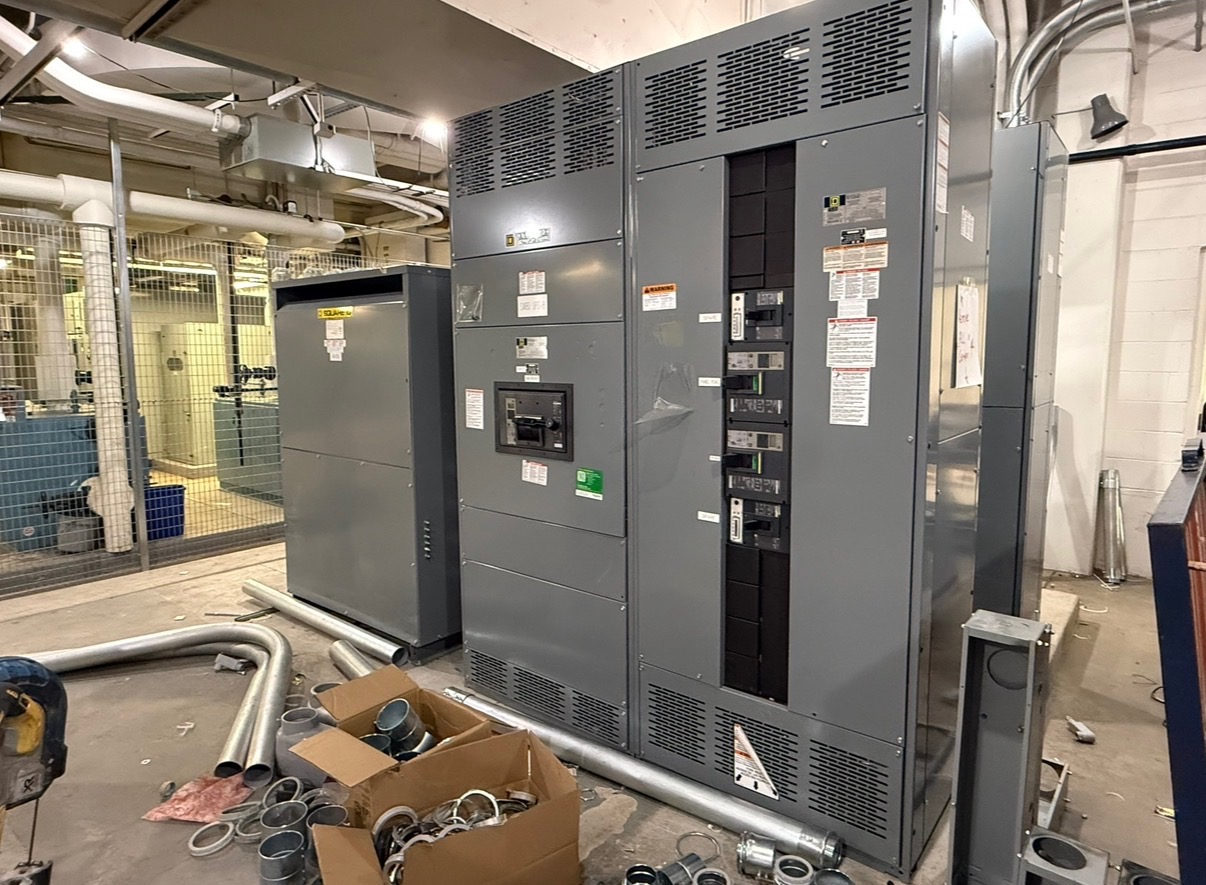
Custom switchgear starts with the project
Custom switchgear building means developing new electrical equipment around a project’s documented needs, rather than choosing an assembly based on a product label alone. For owners, engineers and contractors in Austin and Central Texas, the first question is what the equipment must do in the electrical system: distribute power, serve specified loads, accommodate defined operating conditions, and fit the project’s physical and operational constraints.
The design should follow the project’s electrical studies, drawings and specifications. Those documents establish the basis for equipment selection and identify interfaces with upstream sources, downstream feeders, controls and the building. A manufacturer can use that information to develop an assembly to specification; unresolved assumptions should be identified early, not silently converted into equipment requirements.
Establish the system and equipment scope
Before comparing configurations, confirm the system voltage and frequency, number and type of sources, distribution arrangement, feeder count, load characteristics and expected operating sequence. Identify whether the scope is a switchboard, low-voltage switchgear, medium-voltage equipment or another assembly. These categories are not interchangeable, and the appropriate construction and standards depend on the equipment design and application.
Document the required continuous current and fault-duty basis for the specific system, along with protective-device requirements and any coordination-study criteria. No rating is suitable simply because it is common on another project. Qualified electrical professionals must verify the system data, calculations and applicable requirements, with review by relevant authorities where required.
Choose a configuration that fits the installation
A project-specific layout considers the number and arrangement of sections, incoming and outgoing connections, metering, control features and access needed for operation and maintenance. The one-line diagram is a useful starting point, but elevations, room plans, cable entry directions and connection details help reveal conflicts that a one-line cannot show. Confirm how the assembly will interface with other electrical equipment.
Physical conditions can affect enclosure and construction choices. Share the intended indoor or outdoor location, available floor space, access route, environmental conditions and any specified enclosure requirements. These details need engineering review; do not assume a particular enclosure type, dimensions or construction is available or acceptable before the design is checked against the application.
Define protection, controls and interfaces
Specify the required protective devices and functions, metering, control power, indication, communications and interlocks where applicable. Describe what signals must connect to other systems and who is responsible for each interface. A control narrative and point list can make the intended operation clearer than a device list alone, particularly when the assembly interacts with multiple sources or facility controls.
Protection settings and coordination depend on the system and the project’s engineering studies. Identify the documents and responsible parties that will establish or approve them, and confirm what information the manufacturer needs for design. Do not treat a proposed component or control scheme as approved until it has been checked against the complete project requirements and applicable standards.
Resolve drawings and scope before release
A coordinated submittal process gives the project team a chance to review arrangement drawings, connection details, device schedules and control information before construction proceeds. Provide current electrical drawings, equipment schedules, specifications, site constraints and interface requirements. Mark deviations and open items clearly so the team can distinguish agreed design choices from pending decisions.
For custom assemblies, scope boundaries matter. Confirm what equipment and accessories are included, what information must come from the customer or engineer, and how revisions will be handled. Review access, shipping dimensions and the planned route to the installation area with the project team. These checks help avoid late changes, without implying any particular configuration or delivery schedule.
Plan verification and applicable standards
Ask how the proposed design will be reviewed and what inspections or tests are included for the specified assembly. The answer depends on equipment type, design and project requirements; it should identify relevant documentation and the project’s acceptance expectations rather than rely on a generic claim. Coordinate witness or documentation needs early if they are part of the specification.
UL 891 applies to suitable switchboards, not automatically to every switchgear assembly or to medium- and high-voltage equipment. Other equipment follows applicable requirements based on its design and use. Confirm any requested listing or standard against the exact assembly and project documents. All designs require review by qualified electrical professionals and relevant authorities; no statement here substitutes for that review.
Coordinate procurement for a new build
A useful request for quotation includes the one-line diagram, specifications, load and fault-duty information, equipment schedule, layout constraints, preferred interfaces and a list of unresolved decisions. State the project location, required submittal milestones and schedule constraints so the manufacturer can assess the request. Lead times are determined by project scope, design completion and other project-specific factors; do not plan around an unconfirmed delivery date.
For Central Texas projects, coordinate site access, receiving arrangements, delivery restrictions and the installation sequence with the general contractor, electrical contractor and project team. A US-built assembly using all-American components may be custom-developed to specification and can ship nationwide, but the particular design and schedule still require confirmation. Compare proposals on defined scope, documentation and technical fit—not assumptions about availability.
Prepare a focused next-step package
To begin a productive design conversation, assemble the latest one-line diagram, equipment specification, room or site layout, load information, fault-duty basis and control requirements. Add the project schedule, delivery location, preferred connection arrangement and names or roles of the parties responsible for engineering decisions. Note which requirements are firm and which need review so questions can be addressed in order.
Use the resulting review to confirm equipment category, ratings, configuration, applicable standards, interfaces, submittals and testing expectations before authorizing construction. Where the design is not settled, ask for specific information needed to close each open item and document the decision owner. This gives the project team a practical path from concept to a defined new switchgear scope without assuming unverified capabilities.
Project specification checklist
Use this checklist to organize the details for a project-specific review. Final ratings, applicable standards and equipment selections depend on the approved design.
| Item | What to confirm |
|---|---|
| System basis | Confirm voltage, frequency, source arrangement, load data and the engineering basis for required ratings. |
| Equipment scope | Identify the equipment category, functions, feeder arrangement and project boundaries. |
| Site and layout | Provide room plans, access route, installation conditions, connection orientation and enclosure requirements for review. |
| Protection and controls | Document protective functions, metering, control power, communications, interlocks and responsible design parties. |
| Standards and verification | Confirm applicable standards, any requested listing, submittal documents and project-specific testing or acceptance criteria. |
| Procurement coordination | Share location, scope, schedule constraints, receiving requirements and open decisions; confirm lead time for the specific project. |