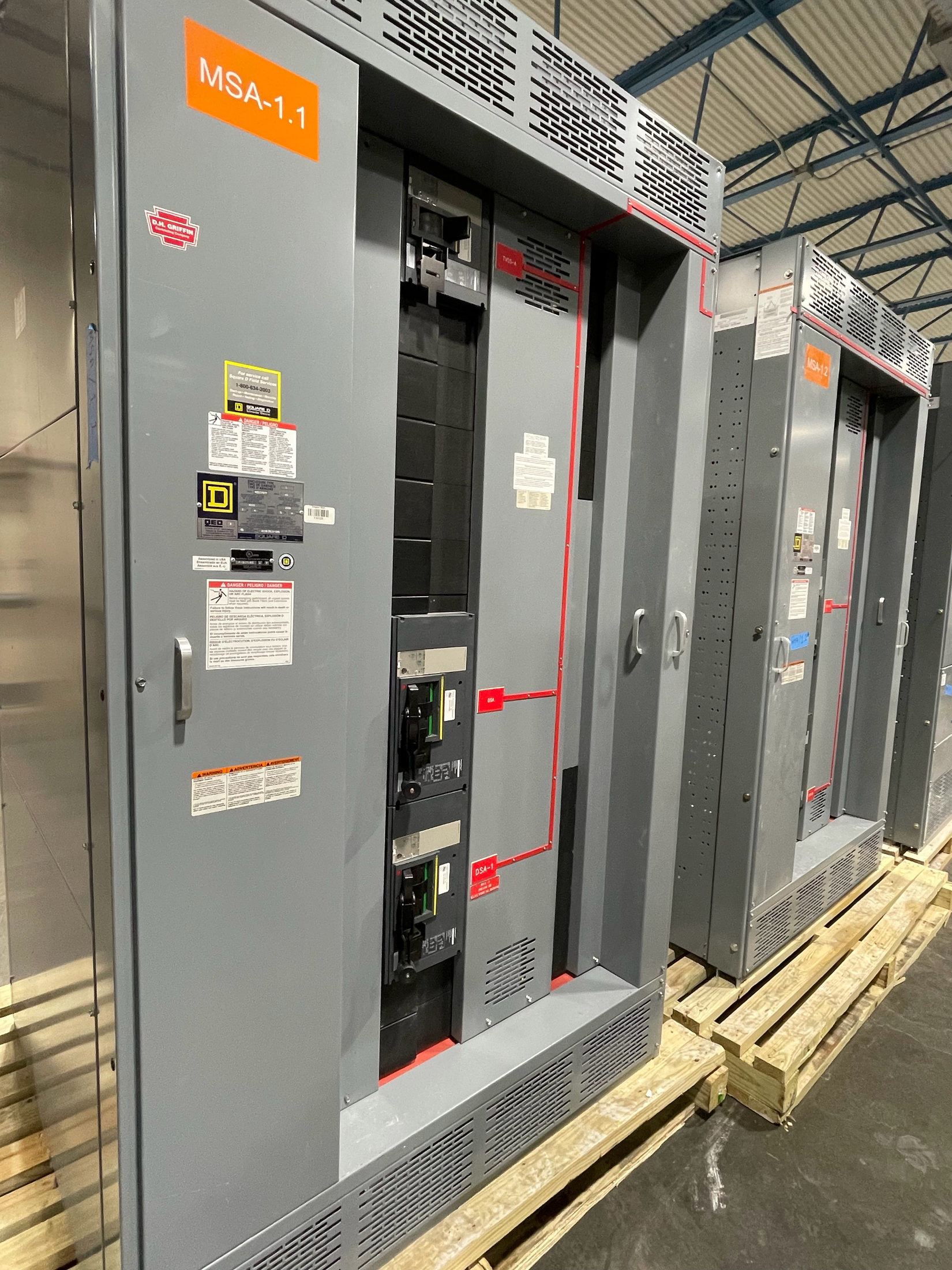
Treat the listing question as a project decision
UL 891 field installation questions begin with a distinction: a switchboard’s product evaluation does not, by itself, establish that every proposed installation condition is acceptable. The project team must confirm whether the specified new assembly is suitable for its intended use and whether its listing, if applicable, covers the actual configuration. UL 891 applies to suitable switchboard assemblies; it should not be presumed to cover every switchgear product or every design. The electrical engineer, manufacturer, installer, and authority having jurisdiction (AHJ) should align on the equipment type, applicable requirements, and evidence needed before procurement and field work proceed.
Establish the installation conditions before selection
Document the site conditions that can shape equipment selection and arrangement: indoor or outdoor location, available floor space, access route, working clearances, mounting surface, environmental exposure, and the planned cable or bus connections. Confirm the project’s system voltage, configuration, grounding approach, load characteristics, and available fault-current information through the responsible electrical design professional. These inputs influence the required design and ratings; no voltage, enclosure, or short-circuit capability should be assumed suitable in isolation. Share the installation drawings and specification with the manufacturer early so that proposed assembly details can be reviewed against the intended location and interfaces.
Define the boundaries of listing and field work
Ask which portions of the proposed assembly are covered by the applicable listing and what configuration documents, labels, or installation instructions apply. Confirm whether the specified lineup, sections, options, and field connections match the evaluated design. Any proposed field modification, substitution, or alteration should be referred to the manufacturer and responsible code professionals before it is made; do not assume that a change preserves a listing. The AHJ determines acceptance for the project under its jurisdiction. Keep responsibility clear: product documentation supports review, while the project team verifies that installation conditions and field work meet approved plans and applicable requirements.
Coordinate electrical and physical interfaces
Resolve how the switchboard connects to upstream and downstream equipment, including conductor or bus entry, neutral and grounding arrangements, control wiring, and protective-device coordination. Confirm termination space, routing, access, and any required provisions for future connections against approved drawings. Physical coordination matters as well: verify dimensions, section arrangement, room access, lifting and placement constraints, and the relationship to adjacent equipment. These are project-specific design choices, not universal product features. The electrical engineer and installer should identify interface ownership and provide current documents to the manufacturer for review before the assembly is finalized, especially when multiple suppliers contribute connected equipment.
Agree on review, inspection, and testing responsibilities
Before delivery, establish what submittals the design team and AHJ need to review, which documents will be provided, and how deviations from the approved design will be handled. Coordinate manufacturer documentation, installation instructions, drawings, and applicable listing information with the project specification. The commissioning or testing plan should be developed by qualified project professionals and identify the checks appropriate to the equipment and installation, including any required inspection, connection verification, and functional testing. Testing scope and acceptance criteria depend on the design, governing requirements, and project documents. Never treat field testing as permission to work on energized equipment; safe work planning belongs to qualified personnel.
Procure new equipment against confirmed requirements
Use a complete, coordinated specification when requesting a new switchboard assembly: application, system data, required ratings, arrangement, connection details, environmental conditions, options, applicable standards, and documentation expectations. Mark unresolved items rather than allowing assumptions to become purchase requirements. Ask the manufacturer to identify what information is needed to assess the design, whether UL 891 is applicable to the proposed assembly, and what listing documentation is available for that configuration. The manufacturer builds in the USA, uses all-American components, offers custom assemblies to specification, and can ship nationwide. Lead time is project-dependent; confirm it against the defined scope and current schedule rather than relying on a general estimate.
Close open items with named owners
A practical next step is to hold a focused installation review with the electrical engineer, manufacturer, installer, and AHJ as appropriate. Bring the one-line diagram, equipment specification, available fault-current and system information, room and access drawings, connection details, and proposed inspection or testing requirements. Record each open question, the party responsible for answering it, and the drawing or document that will capture the resolution. Before release for manufacture, reconcile approved submittals with the intended field configuration and identify any remaining jurisdictional decisions. This process helps prevent avoidable redesign while keeping listing scope, installation suitability, and acceptance decisions with the responsible parties.
Project specification checklist
Use this checklist to organize the details for a project-specific review. Final ratings, applicable standards and equipment selections depend on the approved design.
| Item | What to confirm |
|---|---|
| Application and system data | Confirm intended use, system configuration, voltage, grounding, load information, and available fault-current data with the electrical design professional. |
| Installation environment | Document location, exposure, mounting, access, clearances, and physical constraints; verify the proposed design for those conditions. |
| Listing scope | Ask whether UL 891 applies to the proposed switchboard assembly and confirm the evaluated configuration and relevant documentation. |
| Field interfaces | Coordinate incoming and outgoing connections, controls, protective-device requirements, adjacent equipment, and responsibility for each interface. |
| Review and acceptance | Identify required submittals, inspection and testing scope, deviation controls, and AHJ review or acceptance requirements. |
| Procurement schedule | Finalize the specification and unresolved inputs before release; confirm project-specific lead time and shipping coordination. |