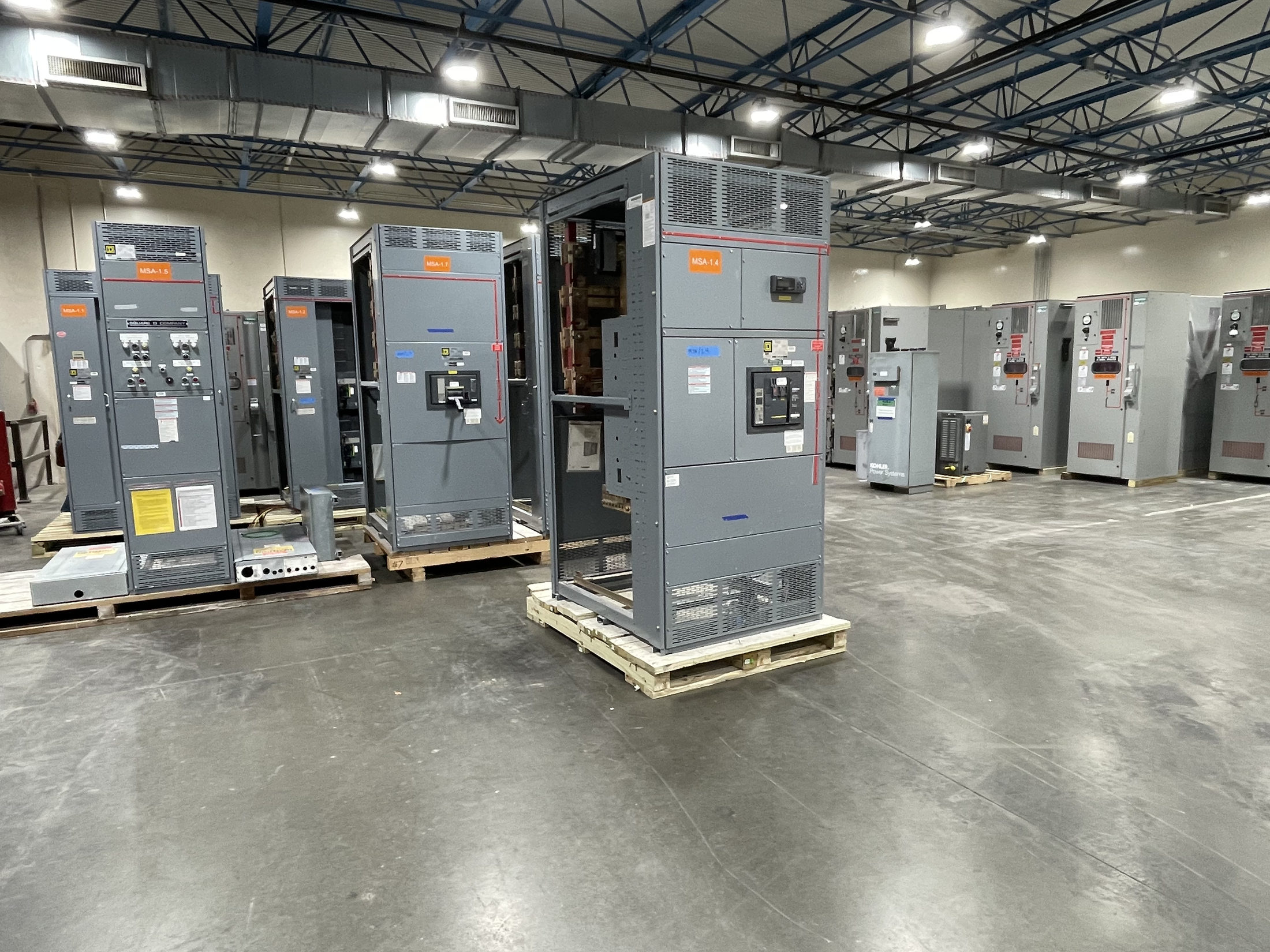
Start with the equipment’s actual identity
UL 891 label verification means checking the marking on the switchboard being supplied and confirming that its documentation applies to that specific assembly. A quotation, drawing note, or product description that mentions UL 891 is not, by itself, proof that the delivered equipment bears the appropriate marking. For a new switchboard, review the equipment identification and the project documents together before approval and again when receiving it. This helps the electrical engineer, purchasing team, and installation contractor work from the same basis and identify any discrepancy before it affects integration or acceptance.
The first question is whether the equipment is a switchboard within the scope of UL 891, rather than a different type of switchgear. UL 891 applies to suitable switchboard assemblies; it should not be assumed to cover medium-voltage or high-voltage equipment, or every product in a manufacturer’s range. Confirm the intended equipment type, design, and applicable standards for the project with qualified electrical professionals.
Read the marking as evidence, not a shorthand claim
Inspect the actual nameplate or other required marking on the assembly, using the approved submittal to identify where it should appear and what information is expected. Confirm that the manufacturer identification, equipment identity, and marked characteristics can be matched to the approved design and supplied configuration. Do not infer a voltage, ampacity, short-circuit rating, enclosure type, or other capability from a general UL 891 reference; those characteristics must be stated, appropriate to the application, and verified for the specific assembly.
If a label is missing, unreadable, inconsistent, or apparently associated with a different configuration, pause acceptance and request clarification through the project’s established review process. Do not treat a loose label, an unverified photograph, or a document from another assembly as a substitute for checking the delivered equipment. Record the discrepancy and its resolution in project documentation. Any inspection or follow-up should be coordinated by qualified personnel under applicable safety procedures; this review is not a reason to approach or work on energized equipment.
Match listing documentation to the assembly
Request the documentation needed to establish what the UL 891 reference means for the proposed equipment. Depending on the product and project, this may include manufacturer documentation identifying the assembly and applicable listing information, approved drawings, equipment schedules, and records that connect the delivered configuration to the supporting documentation. The key is traceability: the documents must address the equipment under review, not merely cite a standard or describe a related product family.
Compare document revisions and identifiers across the quotation, submittal, nameplate information, and shipping or receiving records where provided. Check that modifications made during design review have not left the label or supporting documents describing an earlier configuration. If the scope or applicability of a listing is unclear, request a written explanation and have the responsible electrical professional determine whether the evidence satisfies project requirements. Do not assume that every assembly is listed or that a single document establishes compliance with every applicable code or standard.
Bring project inputs into the review
Reliable verification starts with a complete project basis. Provide the manufacturer with the one-line diagram, load and feeder information, system voltage, required ampacity and fault-duty criteria, available upstream protection details, and the intended installation environment. Identify any specified enclosure conditions, incoming and outgoing cable or bus interfaces, metering and control needs, and connection points to adjacent equipment. These inputs allow the proposed switchboard design and its documentation to be evaluated against the actual application rather than a generic product description.
The engineer of record and other qualified project professionals should establish which ratings, construction details, and standards apply, subject to the authority having jurisdiction and project requirements. Changes to source characteristics, protective devices, layout, or connected loads can affect equipment selection and coordination. Identify who approves design changes and who will verify the final equipment marking and records at receipt. A clear responsibility matrix reduces the risk that a label check is mistaken for full system design review.
Resolve interfaces and design decisions before release
A switchboard’s marking cannot be evaluated in isolation from its approved configuration. Confirm the arrangement of sections, main and feeder devices, bus connections, metering, control interfaces, and transitions to other equipment against the one-line diagram and project drawings. Where a lineup connects to transformers, generators, transfer equipment, or other switchgear, document the interface requirements and identify which party is responsible for each connection and design boundary.
Before manufacturing release, resolve open decisions that could change the assembly or its documentation, including protective-device selections, required accessories, compartment or access arrangements, and site-specific connection constraints. Ask how approved revisions will be reflected in the final drawings and equipment identification. Custom assemblies can be developed to project specifications, but suitability, ratings, and applicable listing status remain subject to design review. Do not assume that a requested modification retains a particular listing; obtain confirmation for the actual design being proposed.
Coordinate evidence, inspection, and testing
Agree on submittal and closeout expectations early. The project team can specify which drawings, identification details, and listing-related records must be reviewed before release, and which must accompany the delivered switchboard. If an inspection checklist or photographs are requested, define what they are intended to verify and who will review them. These checks support document traceability; they do not replace required inspections, code compliance evaluation, or approval by the authority having jurisdiction.
Coordinate any factory or field testing requirements separately from label verification. The applicable tests depend on the design, project specification, and relevant standards; do not assume a test program, result, or certification from the UL 891 reference alone. Qualified personnel should determine test scope, acceptance criteria, and safe procedures. Preserve approved revisions and final records so that the installed equipment can be compared with its documented configuration during commissioning and future maintenance planning.
Use a practical procurement and receiving checklist
When requesting a proposal for new switchgear, state that the project is evaluating a suitable UL 891 switchboard and ask the supplier to identify the proposed equipment type, applicable standards, and listing evidence for the offered configuration. Submit complete technical inputs, flag interfaces and required accessories, and identify submittal approval gates. A US manufacturer using all-American components may build custom assemblies to specification and ship nationwide; lead time is project-dependent and should be confirmed against the final scope and approvals.
At receipt, compare the equipment identification and visible marking with the approved documents, note any mismatch, and route questions to the responsible engineer and supplier before acceptance. Confirm that final drawings and listing-related documentation correspond to the delivered assembly and its approved revisions. Keep the verification record with project closeout materials. This concrete check helps the Austin and Central Texas project team align purchasing, engineering, installation, and inspection around the same equipment identity without treating a label as a substitute for application review.
Project specification checklist
Use this checklist to organize the details for a project-specific review. Final ratings, applicable standards and equipment selections depend on the approved design.
| Item | What to confirm |
|---|---|
| Equipment classification | Confirm whether the proposed assembly is a switchboard within UL 891 scope or another equipment type with different applicable standards. |
| Marking and identity | Check actual equipment identification and marking against approved drawings and the delivered configuration. |
| Listing evidence | Request documentation tied to the specific assembly; do not rely only on a general standard reference or product-family claim. |
| Project ratings and environment | Have qualified professionals establish required electrical characteristics and installation conditions for the application. |
| Interfaces and revisions | Document incoming and outgoing connections, adjacent equipment interfaces, design changes, and how final records will reflect them. |
| Review and receipt roles | Identify who approves submittals, resolves discrepancies, verifies received equipment, and retains closeout records. |