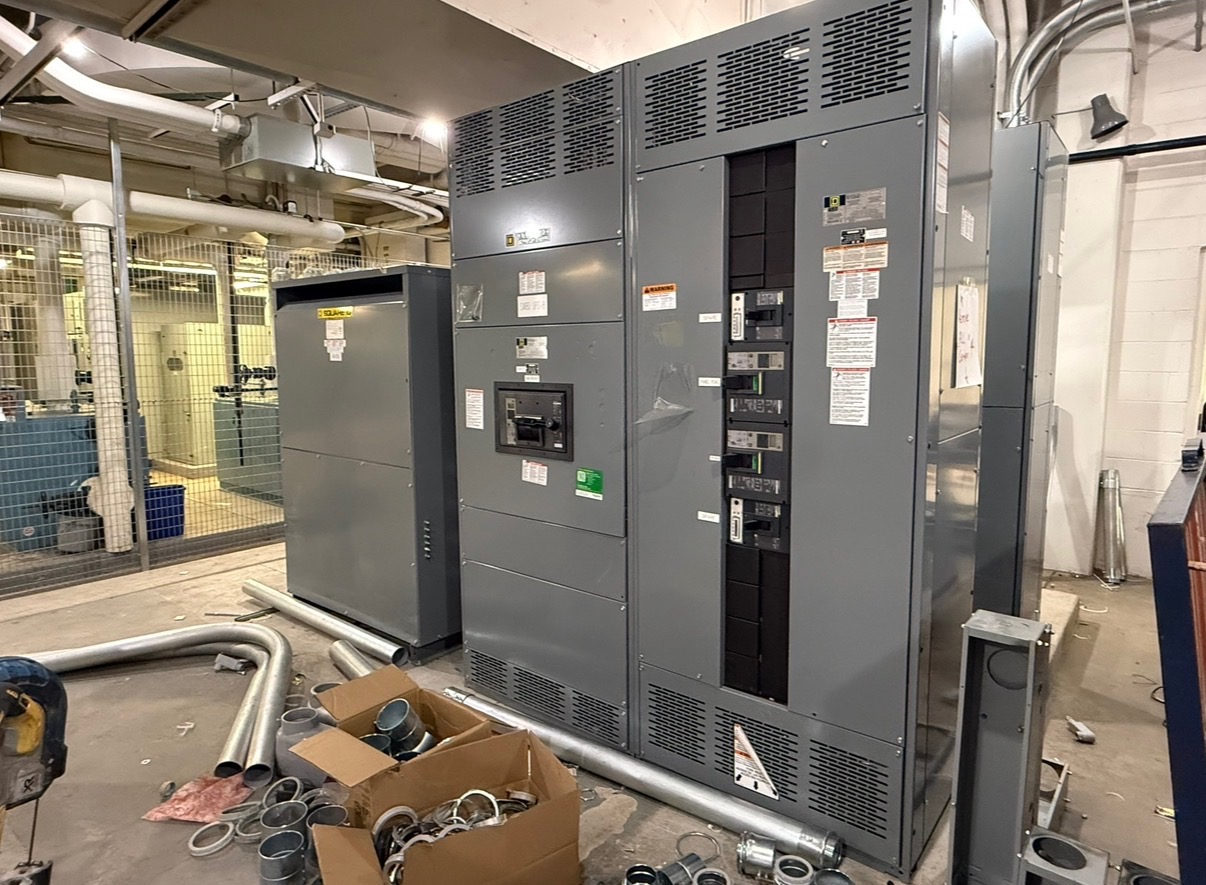
Start with the Equipment’s Actual Function
UL 891 is a standard for switchboards, but a project’s use of the word “switchgear” does not establish that the standard applies. First define what the assembly is intended to do: receive and distribute power, provide overcurrent protection, control or isolate circuits, or perform another function. The specified equipment category and construction matter, not just its location in a one-line diagram or its commercial name.
For a new switchboard, the design team should compare the intended assembly with the applicable standard’s scope and the project specification. If the equipment is medium-voltage, high-voltage, or a different type of assembly, UL 891 should not be presumed applicable. The appropriate standards and evaluation path depend on the design and project. Qualified electrical professionals should resolve scope questions before procurement documents are finalized.
Define the Assembly Boundary
A useful scope review identifies exactly what the proposed switchboard includes. Record the incoming source arrangement, bus and distribution sections, protective devices, metering or control components, and any barriers or compartments required by the design. Establish whether specified accessories are part of the assembly or supplied separately, since that distinction can affect construction, evaluation, and responsibility for interfaces.
Then identify what lies outside the boundary: upstream equipment, downstream panels or loads, transformers, generator connections, transfer equipment, and field-installed conductors or controls. Note where physical, electrical, and control interfaces occur. A component’s individual marking or rating does not, by itself, establish that the complete assembly is evaluated to UL 891. Confirm the status of the assembled equipment and its documented configuration with the responsible manufacturer and project team.
Gather Inputs That Determine Applicability
The review needs more than a requested standard name. Provide the one-line diagram, equipment schedule, project specification, load and protection information, available fault-current assumptions, grounding approach, source details, and intended operating conditions. Identify the nominal voltage, current requirements, and short-circuit duty as project values to be verified, not as generic product capabilities. The required enclosure and environmental conditions also need project confirmation.
Include the governing electrical code and jurisdictional requirements, owner or engineer criteria, and any utility or facility interface requirements that apply. These inputs help determine the equipment category, construction, ratings, and evaluation expectations. If documents conflict—for example, if a specification calls the equipment a switchboard but the drawings describe a different assembly—resolve that discrepancy in writing. A qualified electrical professional should verify design assumptions and coordinate questions with relevant authorities.
Separate Standard Scope from Ratings
UL 891 applicability is not a shortcut for selecting electrical ratings. A project must separately establish voltage, continuous current, short-circuit withstand or interrupting requirements as applicable to the design, and the characteristics of connected protective devices. Those values depend on the system and equipment configuration. They cannot be inferred from the standard’s name or treated as universally available or acceptable.
Likewise, enclosure construction, access, environmental exposure, and internal arrangement require project-specific decisions. Confirm that the proposed assembly and its components are suitable for the intended use and that required documentation addresses the complete configuration. UL 891 concerns suitable switchboard assemblies; it does not automatically apply to every product sold as switchgear. Other designs may follow different standards. Do not assume a listing or certification: require confirmation for the specific new assembly and its stated configuration.
Coordinate Interfaces and Changes
Before release, compare the switchboard design with connected equipment and installation documents. Check bus or cable connection points, phase arrangement, grounding and bonding, control wiring, metering signals, protective-device coordination responsibilities, and space or access constraints shown in the project documents. Confirm who supplies and verifies each interface, especially when equipment is divided among multiple manufacturers or packages.
Design changes can alter the assembly boundary or the basis for evaluation. A revised device, bus arrangement, compartment, accessory, or field connection may require review rather than an assumption that the original standard determination remains unchanged. Keep the approved one-line diagram, equipment schedule, and submittal configuration aligned. Have qualified professionals review protection and system coordination; resolve discrepancies before fabrication. Installation, inspection, and acceptance requirements remain subject to the project and relevant authorities.
Confirm Documentation and Verification
Ask the manufacturer to state whether the proposed assembly is intended to meet UL 891 and to identify the scope of that statement. Request documentation appropriate to the project, including the applicable product identification and evidence for the assembled configuration. If UL 891 is not applicable, ask which standard or evaluation basis is proposed and how that choice addresses the specified equipment category. Avoid relying on a component label as proof for an entire lineup.
Clarify what inspections, production checks, or project-specific tests are included and what records will be available. The required verification depends on the design, specification, and applicable standards; do not assume a particular test or certification. Compare the proposed documentation with contract requirements and ask questions before approving submittals. The engineer, manufacturer, owner, and relevant authorities should align on acceptance criteria before equipment is released for production.
Make the Applicability Decision Before Procurement
For procurement, submit a coordinated package that identifies the equipment function, system inputs, assembly boundary, interfaces, required ratings, governing documents, and requested compliance evidence. Ask the manufacturer to review whether UL 891 is relevant to the specified new switchboard and to list assumptions or exclusions that need resolution. Where requirements are uncertain, record the question and obtain a decision from the engineer or authority responsible for the project.
Once the scope is settled, compare the approved design basis with the quotation and submittals, including configuration, documentation, testing expectations, and any project-specific options. Confirm that schedule expectations are tied to the defined design and review process; lead times depend on project requirements. A manufacturer building in the USA with all-American components can provide custom assemblies to specification and ship nationwide, subject to project review. Final acceptance still depends on verified design and applicable requirements.
Project specification checklist
Use this checklist to organize the details for a project-specific review. Final ratings, applicable standards and equipment selections depend on the approved design.
| Item | What to confirm |
|---|---|
| Equipment category | Confirm whether the specified assembly is a switchboard within UL 891 scope or another equipment type with different applicable standards. |
| System design inputs | Provide verified one-line diagram, source and grounding details, load and protection criteria, and project operating conditions. |
| Assembly boundary | Identify included sections, devices, accessories, field connections, and interfaces with separately supplied equipment. |
| Ratings and enclosure | Establish project-specific electrical ratings and enclosure requirements; verify suitability against system conditions and design. |
| Compliance evidence | Request documentation addressing the complete proposed assembly, its configuration, applicable standard, and specified verification. |
| Review and release | Resolve specification conflicts and obtain qualified professional and authority review before approving submittals for production. |