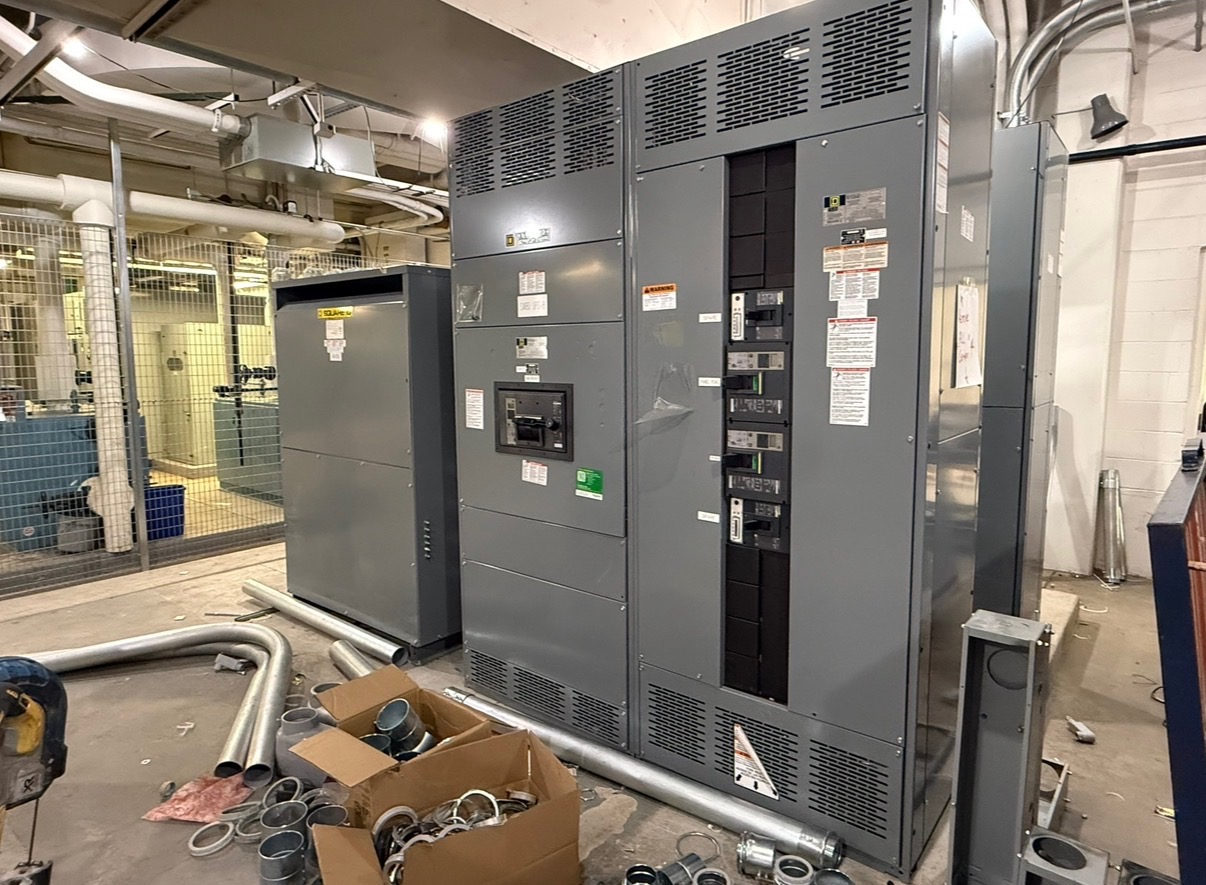
Keep Critical Loads Supplied When a Source Changes
An automatic transfer switch (ATS) monitors designated power sources and changes the connected load from a preferred source to an alternate source when control logic identifies a qualifying condition. In a new switchgear project, that function can support loads that need a planned continuity strategy, such as selected building systems or process equipment. An ATS does not create backup power: the alternate source, its capacity, and its availability must be established separately. The switching arrangement also determines which loads transfer and whether the transition is open, delayed, or another permitted approach. Define the operational objective first: which loads matter, what interruption they can tolerate, and what conditions should initiate a transfer.
Map Sources, Loads, and Operating Priorities
Start selection by documenting the normal and alternate sources, their electrical characteristics, and how each is controlled. Identify whether the alternate source is a generator, a second utility source, or another project-defined supply; do not assume two sources can be paralleled or interconnected. List loads served by the transfer equipment, including any loads that should remain excluded, and record expected operating sequences and restart needs. This information helps determine whether one ATS or multiple transfer points fit the distribution plan. Source availability, grounding arrangement, neutral switching requirements, and system configuration can affect the design. Have the electrical design team verify those conditions against drawings and applicable requirements before equipment is specified.
Select Ratings and Transition Behavior by Design
ATS ratings cannot be selected from a general product description alone. Confirm system voltage, continuous current, available fault current, withstand or closing performance as applicable, pole configuration, and installation environment against the specific design and governing requirements. These values must be verified for the actual assembly and system; no rating or enclosure choice is universal. Decide how the switch should behave during source loss and restoration, including transfer delays, retransfer logic, and any cooldown or return sequence required by the alternate source. Open-transition operation briefly disconnects the load during transfer; other transition methods require careful compatibility review. Qualified electrical professionals should confirm load tolerance, source behavior, and applicable standards before finalizing the specification.
Coordinate Controls With the Complete Distribution System
The ATS is one element of a coordinated electrical system, not a stand-alone guarantee of continuity. Its sensing and control settings must align with source protection, generator controls where present, upstream and downstream protective devices, and the facility’s operating sequence. Review how undervoltage or other monitored conditions are recognized, what signal starts or enables the alternate source, and how alarms or status indications are handled. Consider whether priority loads require staged restoration to avoid an abrupt demand increase, subject to engineering review. Confirm control interfaces, communications expectations, and safe maintenance provisions in the project documents. The applicable product standards and any listing depend on the equipment design and use; verify them rather than assuming UL 891 applies to an ATS.
Plan Testing Around the Intended Sequence
Before procurement, define how the completed system will be inspected and tested, and which parties will witness or document the required steps. A useful test plan follows the intended sequence: normal-source availability, response to a simulated qualifying condition, alternate-source readiness, transfer, load response, source restoration, and retransfer where specified. The project team should establish acceptable interruption, timing, alarm behavior, and load-restoration expectations in advance. Testing must follow approved procedures and be performed by qualified personnel; it is not a reason to work on energized equipment without appropriate controls. Confirm how factory documentation, equipment submittals, field verification, and commissioning responsibilities fit together. The final approach depends on the project design, applicable standards, and authority requirements.
Prepare a Clear Package for New Equipment Procurement
For a new switchgear package serving a Central Texas project, provide a one-line diagram, load list, source details, sequence of operation, environmental requirements, and applicable project specifications. Include known fault-current information, protection coordination requirements, control-interface needs, and the required submittal and testing scope. A manufacturer can then review the application and identify open design questions before the equipment is configured. The company builds new equipment in the USA using all-American components, can develop custom assemblies to specification, and can ship nationwide; project-specific design review determines suitability and lead time. For a practical next step, ask the engineer of record to confirm the source arrangement and transfer sequence, then share the approved documents for equipment review.
Project specification checklist
Use this checklist to organize the details for a project-specific review. Final ratings, applicable standards and equipment selections depend on the approved design.
| Item | What to confirm |
|---|---|
| Source arrangement | Confirm normal and alternate sources, their characteristics, availability, and whether any interconnection or paralleling is permitted. |
| Loads served | Identify connected loads, priority groups, tolerated interruption, and any staged restart requirements. |
| Electrical ratings | Verify voltage, current, fault-current conditions, poles, and other ratings against the actual system and applicable requirements. |
| Transfer sequence | Specify initiation conditions, transition method, transfer and retransfer logic, delays, and alternate-source coordination. |
| Installation and standards | Confirm environment, enclosure needs, applicable standards, listing requirements if applicable, and authority review. |
| Submittals and testing | Define required drawings, control interfaces, inspection, functional tests, witnesses, and documentation responsibilities. |