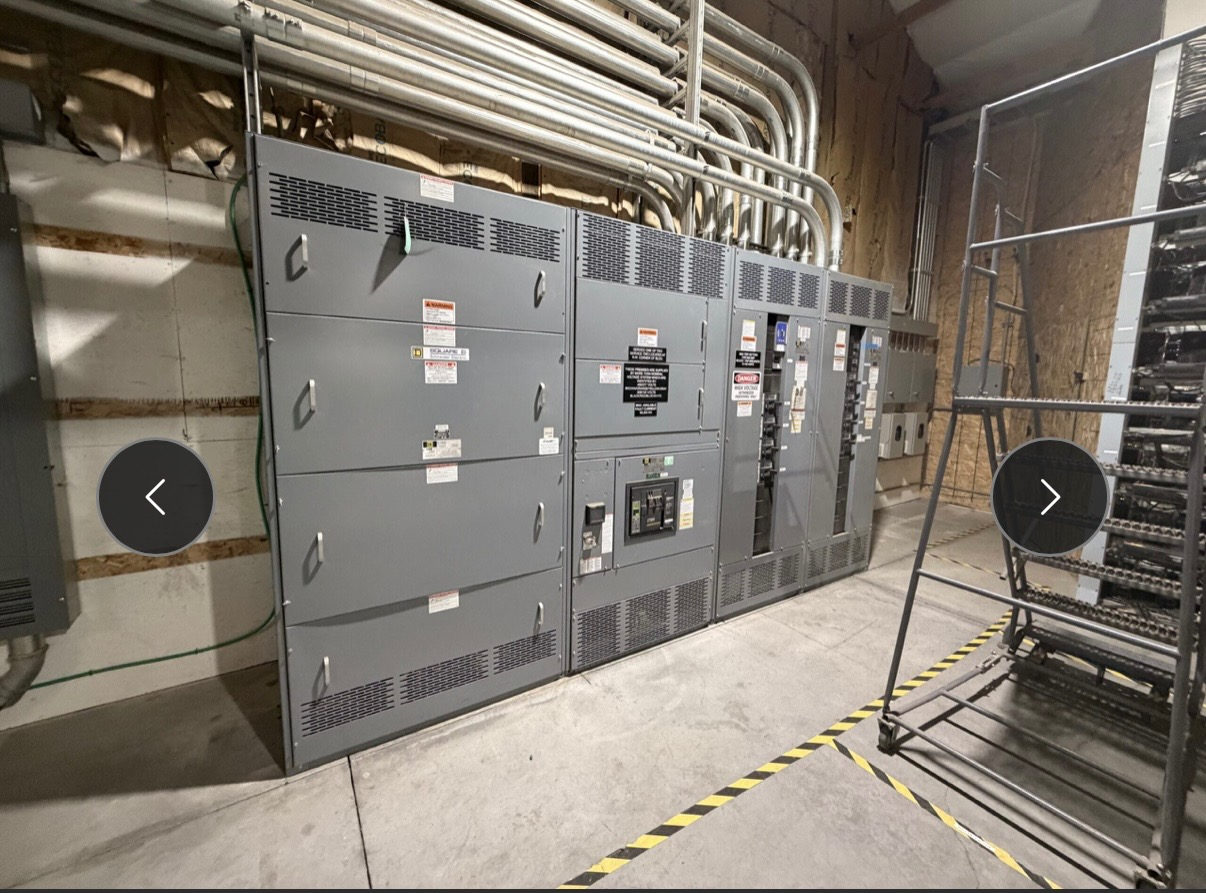
Plan Capacity Around the Expansion, Not Just Today
Facility expansion changes more than the amount of electrical load. New production lines, HVAC equipment, building areas, or charging infrastructure can affect demand, distribution paths, and the need to isolate portions of the system. Low-voltage switchgear for facility expansion should therefore be selected around a documented view of existing and planned loads, rather than a simple estimate of spare capacity. Define the expansion phases and identify which loads must operate together. A qualified electrical professional can use that information to develop a project-specific basis for equipment capacity and determine whether the proposed arrangement supports the intended operating plan.
Build a Reliable Load and Source Picture
Gather one-line diagrams, available load data, equipment schedules, and the facility’s planned additions before requesting a design. Confirm the system voltage, number and type of sources, grounding arrangement, and expected operating modes with the project’s electrical team. Where existing records are incomplete, mark assumptions clearly for review instead of treating them as verified site conditions. Utility or generator characteristics, transformer information, and any transfer or parallel-source arrangement can influence equipment selection and coordination. Final ratings and configuration depend on engineering review, fault-current information, applicable requirements, and approval by relevant authorities.
Choose a Future-Ready Arrangement Deliberately
A future allowance can mean reserved physical space, provisions for additional feeder sections, or a defined path for later equipment—not a guarantee that any future circuit can be added without redesign. Decide which expansion scenario matters, when it may occur, and what loads or functions it must support. Confirm how future sections would connect to buses and sources, and whether the lineup arrangement leaves practical room for the planned work. Capacity, bus design, protective devices, and interrupting requirements must be reviewed together. No spare-space label alone establishes electrical capacity or suitability for a later addition.
Coordinate Interfaces Before Equipment Is Finalized
New switchgear must fit into a larger electrical and building design. Confirm incoming and outgoing conductor routing, termination requirements, cable or bus connections, control wiring, metering needs, and interfaces with protective relays or building systems. Check room dimensions, access and maintenance clearances, environmental conditions, and the intended installation sequence with the responsible design and construction teams. These are project inputs, not assumptions about a particular enclosure or site. If the expansion will connect to existing equipment, document its verified ratings and interface details; compatibility and any required modifications need review by qualified professionals.
Resolve Protection, Operation, and Applicable Standards
Protection and operating choices should reflect the system study, source configuration, load characteristics, and desired isolation or continuity strategy. The project team should establish protective-device functions, coordination objectives, control requirements, and any interlocking or metering needs. Evaluate how expansion affects fault-current levels and protection across both new and existing sections. Standards and listing requirements depend on the equipment design and project; UL 891 applies to suitable switchboard assemblies and should not be presumed for every low-voltage switchgear configuration. Verify applicable requirements, ratings, and approvals for the specific design with the responsible electrical professionals and relevant authorities.
Plan Review, Testing, and Delivery Coordination
Before release, reconcile the equipment proposal with approved drawings, schedules, interface requirements, and the expansion sequence. Review dimensions, section arrangement, connection locations, device functions, labels, and control documentation for consistency. Define what design or production testing and records are required for the particular assembly, and coordinate any site acceptance activities with the parties responsible for the project. Testing scope depends on the design and contract documents; it should not be assumed from a product category alone. Confirm shipment constraints, receiving arrangements, and the date the equipment is needed, since lead time is determined by project requirements.
Turn Expansion Plans into a Procurement Package
A useful request for quotation states the current and projected loads, source details, one-line diagram, expansion phases, desired future provisions, and known room and connection constraints. Include applicable project specifications, required submittals, interface information, and the decision date for equipment release. Ask the manufacturer to identify assumptions and items needing confirmation so unresolved inputs do not become hidden design decisions. A US-built new assembly using all-American components can be custom developed to specification, with nationwide shipping; configuration and lead time depend on the project. Next, have the electrical design team review the proposal and resolve open ratings, interfaces, and approval requirements before authorization.
Project specification checklist
Use this checklist to organize the details for a project-specific review. Final ratings, applicable standards and equipment selections depend on the approved design.
| Item | What to confirm |
|---|---|
| Load basis | Confirm existing demand, planned additions, operating modes, and documented assumptions with the project electrical team. |
| Sources and system data | Provide verified voltage, grounding, transformer, utility or generator, and fault-current information as available. |
| Expansion allowance | Define future loads, phases, reserved space, and connection provisions; verify that later additions remain within reviewed design limits. |
| Interfaces and site constraints | Confirm conductor routes, controls, existing-equipment connections, room conditions, access, and installation sequence. |
| Protection and compliance | Set project-specific protection objectives and verify applicable ratings, standards, listings, and authority requirements. |
| Submittals and schedule | Identify drawing, testing, documentation, shipping, and release milestones; confirm lead time against the project schedule. |