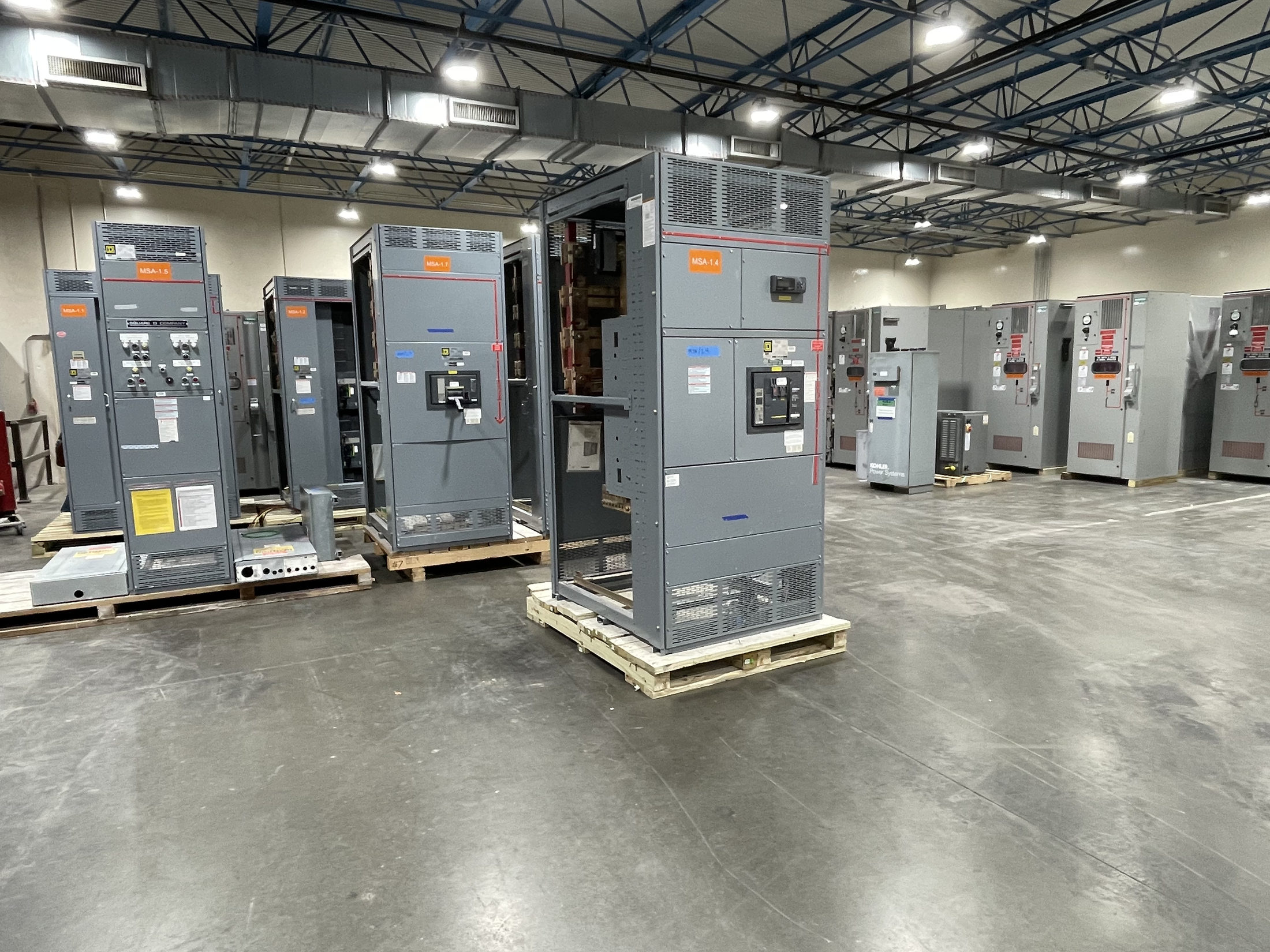
Start with the switching duty
Selecting a medium-voltage breaker begins with the job it must perform, not with a technology label. A breaker may be required to interrupt fault current, switch transformers or motors, sectionalize a bus, or support a utility or facility protection scheme. These duties place different demands on the interrupter and operating mechanism. For an Austin or Central Texas project, provide the equipment designer with the one-line diagram, intended operating sequence, and available system data so proposed new switchgear can be evaluated against the actual application rather than a presumed standard arrangement.
Also identify whether the installation is new construction, an expansion, or replacement equipment, and explain what existing gear must interface with it. A replacement does not make the old lineup’s dimensions, connections, or ratings suitable for reuse. Confirm the system voltage and grounding approach, source configuration, load characteristics, fault-study basis, and expected switching frequency with qualified electrical professionals. The selected breaker technology must fit the complete assembly and operating scheme; a device choice alone does not establish that the switchgear is appropriate.
Compare interrupter technologies by application
Vacuum and gas-insulated interrupter approaches are common topics in medium-voltage breaker selection, but neither should be treated as universally preferable. Vacuum breakers interrupt current in sealed vacuum interrupters and are used across many medium-voltage applications. Gas-insulated designs use an insulating gas in specified equipment arrangements. Their suitability depends on the design, operating duty, environmental conditions, maintenance approach, and applicable requirements. Ask for the proposed equipment configuration and the manufacturer’s documentation rather than inferring performance from the technology name.
Compare the complete breaker and switchgear design, including insulation system, operating mechanism, access and isolation provisions, control power, and any monitoring or maintenance needs relevant to the project. Confirm environmental constraints and any owner requirements for materials, handling, or end-of-life management. Technology selection should account for the facility’s operating practices and qualified maintenance resources, without assuming a particular device offers lower maintenance or longer life in every installation. Applicable standards and test evidence depend on the specific design and project.
Establish ratings and protection inputs
Specify the required voltage class and continuous-current, interrupting, and short-time withstand requirements from the project’s engineering studies and governing specifications. These are distinct values: an interrupting rating does not by itself establish bus withstand capability or suitability for a particular duty. Confirm system frequency, insulation requirements, grounding, and the fault-current assumptions used by the protection study. Do not select ratings from a generic table or assume a value is acceptable before reviewing the actual system and assembly.
Protection inputs should include relay functions, instrument-transformer requirements, trip and close logic, control voltage, and coordination with upstream and downstream devices. For motor, transformer, or capacitor applications, provide equipment data and switching requirements to the design team; switching transients or inrush considerations may affect the scheme. Qualified electrical professionals should review coordination and interrupting duties, and relevant authorities’ requirements must be addressed. Ratings and standards are project-specific, so a proposal should identify its design basis and exceptions for review.
Resolve lineup and site interfaces
A breaker must fit its switchgear lineup mechanically and electrically. Define lineup arrangement, bus configuration, incoming and outgoing cable or bus connections, compartment requirements, access direction, and any drawout or fixed-device preference. Provide available room dimensions, entry and routing constraints, clearances, and installation conditions for evaluation; do not assume a particular enclosure or indoor/outdoor configuration is available or suitable. Confirm how the new assembly will connect to existing equipment, including phase arrangement, grounding, control wiring, and any required transition sections.
Document the facility’s operating sequence, interlocking needs, remote-control interfaces, alarms, communications, and auxiliary contacts. Identify the source and limits of control power and the intended relationship to relays, supervisory systems, and other equipment. These interfaces can affect panel layouts and wiring schedules as well as breaker selection. For a Central Texas project, coordinate drawing reviews, site measurements, access planning, and delivery sequencing with the owner, electrical contractor, and design team. Site logistics should be confirmed for the actual location, not inferred from the region.
Review standards and verification evidence
Ask which standards and editions govern the proposed medium-voltage breaker and complete switchgear assembly, and verify applicability to the design and jurisdiction. UL 891 applies to suitable switchboards; it should not be presumed to cover medium-voltage switchgear or a breaker assembly. Other equipment may follow different applicable standards. A manufacturer’s statement should distinguish the breaker’s characteristics from those of the assembled lineup and identify any project-specific deviations. Do not infer a listing, certification, or utility acceptance from a product category or technology.
Define required design documentation and test evidence during specification review. Depending on the project and applicable requirements, submittals may address ratings, schematics, wiring, protection interfaces, and routine or other specified tests. Confirm what the owner, engineer, and authorities require, who reviews the documents, and how comments are resolved before release. Factory verification does not replace site-specific engineering or approval. Any acceptance testing or commissioning scope should be assigned through the project team; do not assume equipment supply includes field installation or site service.
Make procurement decisions on a complete basis
For a meaningful proposal, issue the one-line diagram, equipment schedule, fault and coordination study inputs, applicable specifications, and interface drawings available at the time of inquiry. Flag unresolved data rather than silently assuming it. Request a clearly defined breaker technology, lineup scope, ratings basis, control scheme, included accessories, exclusions, and submittal requirements. Compare proposals on the same technical basis, including any exceptions and dependencies. This makes it easier to distinguish a genuine design difference from a price or schedule comparison based on incomplete scope.
New switchgear can be custom assembled to specification, built in the USA with all-American components, and shipped nationwide. Lead time is determined by the project and should be reviewed against design completeness, approval cycles, component requirements, and shipping coordination; no fixed schedule should be assumed. Confirm commercial and technical milestones with the supplier, including when approved drawings are needed and how changes are managed. Equipment selection and procurement remain subject to engineering review and relevant authority requirements.
Prepare a decision-ready specification
Before requesting final pricing or approving a design, assemble a concise decision package: application and switching duty; system voltage and verified fault-study basis; required breaker and assembly ratings; preferred interrupter approach, if established; relay, control, and communications interfaces; lineup and connection details; environmental and access conditions; and governing standards. Mark each item as confirmed, pending, or subject to engineer review. This exposes missing inputs early and gives the manufacturer a defined basis for proposing new equipment without treating assumptions as approved requirements.
Then arrange a technical review among the owner, engineer, supplier, and electrical contractor to resolve open points, document accepted deviations, and confirm drawing and test submittals. Check that the selected breaker, bus, protection scheme, and complete lineup work together for the specified duty. Verify logistics and delivery conditions for the actual site, and update the design if system studies or interface information changes. A decision-ready specification supports a sound technology choice while leaving final acceptance to qualified professionals and the relevant authorities.
Project specification checklist
Use this checklist to organize the details for a project-specific review. Final ratings, applicable standards and equipment selections depend on the approved design.
| Item | What to confirm |
|---|---|
| Application and duty | Confirm switching purpose, load characteristics, operating sequence, and expected switching frequency. |
| System and ratings basis | Provide verified voltage, grounding, fault-study assumptions, and required breaker and assembly ratings for engineering review. |
| Technology and design | Identify proposed interrupter approach and confirm insulation, mechanism, access, maintenance, and environmental considerations. |
| Protection and controls | Define relays, instrument transformers, trip/close logic, control power, interlocks, alarms, and communications interfaces. |
| Assembly, standards, and tests | Confirm lineup connections, installation conditions, applicable standards, required submittals, and project-specified verification evidence. |
| Procurement and logistics | Align scope, drawing approvals, change management, project-dependent lead time, and shipment requirements with the actual site. |