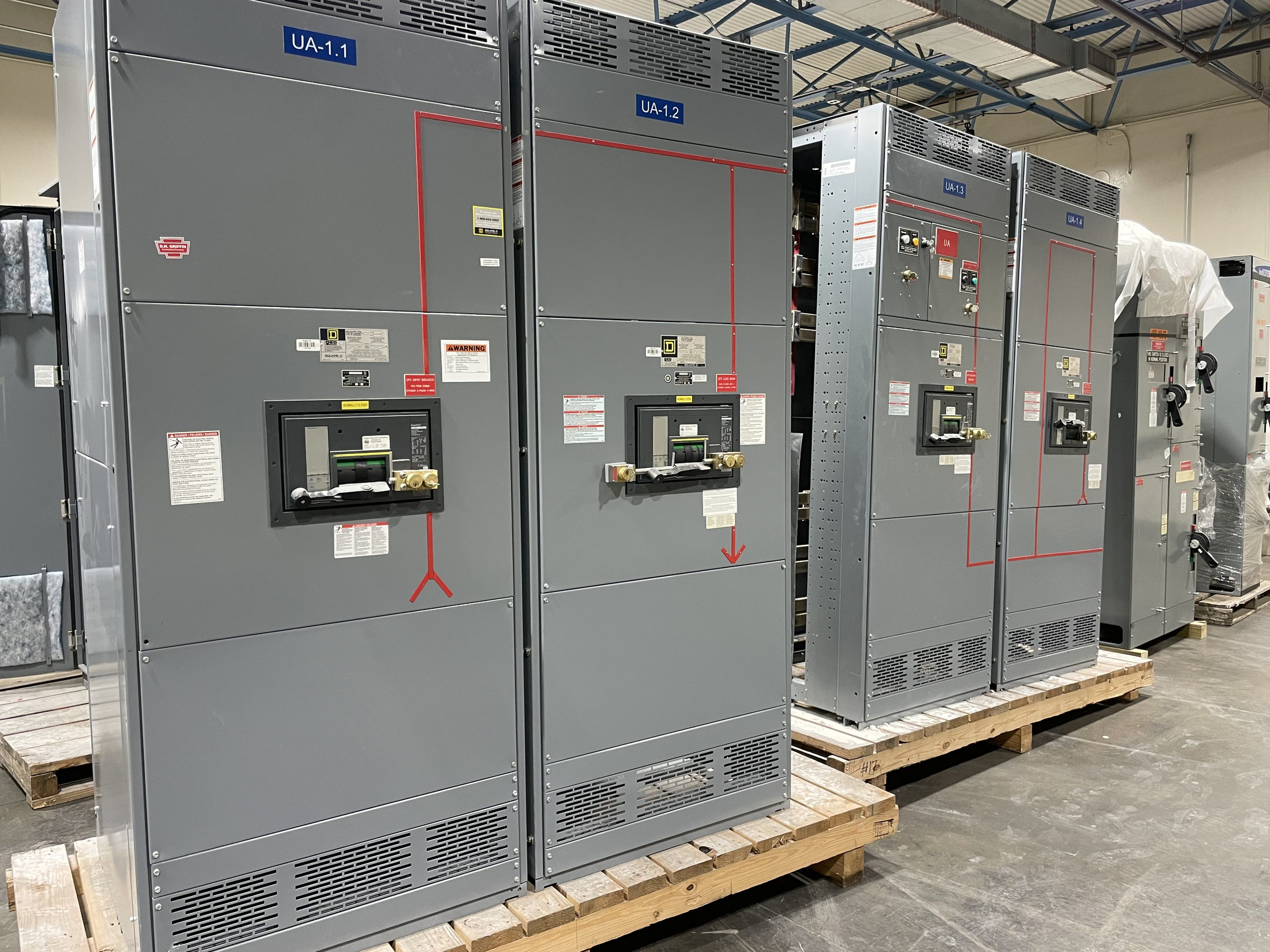
Make Service Entrance Identification Part of the Design
Service entrance labeling and documentation help electrical professionals identify how new switchgear is intended to function at the point where a facility’s electrical service begins. Clear, consistent information supports design review, installation coordination, inspection, and future maintenance. The exact markings depend on the equipment design, its role in the service, and applicable project requirements; a label should not imply a capability or approval that has not been established.
Begin by confirming whether the proposed assembly is intended for service entrance use and how it interfaces with the serving utility, service conductors, metering arrangement, and downstream distribution. Provide the manufacturer with current one-line diagrams and project specifications. These inputs help align equipment identification and submitted documentation with the actual electrical arrangement, rather than relying on generic labels or assumptions.
Confirm Suitability Before Specifying Markings
A service entrance designation is not a substitute for verifying that the complete assembly is suitable for the intended application. Review the specified voltage, continuous current, available fault current, protective-device characteristics, grounding and bonding arrangement, and environmental conditions against the project design. Values and construction details must be confirmed for the particular equipment; none should be treated as a universal capability of new switchgear.
The design team should identify the governing codes, standards, and specification requirements for the project and jurisdiction. Applicable standards and evaluation paths depend on equipment type and design. UL 891 applies to suitable switchboard assemblies where appropriate; it should not be assumed to apply to every service entrance product or to medium- or high-voltage equipment. Document the required basis for acceptance before finalizing the equipment description or labeling schedule.
Define What Labels and Submittals Must Communicate
Create a project-specific schedule of required nameplate data, warnings, circuit and compartment identifiers, and any service-related markings. Confirm the exact wording, location, durability, language, and responsibility for each item with the design professional and relevant authority. Markings should correspond to the approved drawings and equipment configuration. For example, service identification, source information, disconnect descriptions, and cautionary statements may be required, but their applicability and content need project review.
The documentation package can include equipment drawings, a one-line representation, component information, wiring or control diagrams where applicable, and a clear record of design assumptions. Align document names and revision identifiers across the submittal set. This makes it easier for the engineer, contractor, inspector, and utility representative to review the same design basis and reduces the risk of a label describing a configuration that changed during coordination.
Coordinate Utility, Contractor, and Authority Interfaces
Service entrance equipment sits at an interface between the facility distribution design and the serving utility’s requirements. Identify who will provide or approve metering provisions, service conductor terminations, seals, access, and other interface details. Utility requirements vary by provider and project; do not treat a utility practice from another location as controlling. The electrical engineer or project lead should obtain the current requirements and record relevant decisions in the design documents.
Also clarify responsibilities among the equipment manufacturer, engineer, electrical contractor, and authority having jurisdiction. Confirm who reviews service entrance designation, grounding and bonding details, field-applied labels, and final as-built records. For an Austin or Central Texas project, the customer’s project team should coordinate applicable local and utility review directly; the equipment design should reflect confirmed requirements rather than assumed local conditions.
Review Configuration and Verification Records
Before release for manufacture, compare the approved equipment schedule, drawings, labeling schedule, and one-line diagram for consistent identifiers and ratings. Resolve discrepancies in protective-device descriptions, source and load designations, compartment names, and service-related notes. A change to the lineup or electrical arrangement can affect markings and documents, so establish a revision-control process and identify which party approves changes.
Define the records needed at completion, such as final drawings, equipment identification data, and any applicable test or inspection documentation required by the project specification. Factory testing and acceptance criteria should be established for the actual design and contract requirements; do not presume a particular test scope or result. Field inspection and energization planning belong to qualified professionals and the relevant authorities. No labeling document replaces safe work practices or required technical review.
Prepare a Complete Procurement and Review Package
For a useful quote and submittal review, provide the service entrance function, current one-line diagram, equipment schedule, required ratings, fault-current basis, enclosure and installation conditions, utility interface criteria, and jurisdictional requirements. Include the requested marking schedule and document deliverables, plus a named point of contact for design questions. Identify open items explicitly so the manufacturer can distinguish confirmed requirements from assumptions requiring engineer or utility direction.
When evaluating new switchgear, ask how proposed markings will be tied to the approved configuration, which documents will be supplied, and what information is needed to resolve outstanding suitability questions. Custom assemblies can be developed to project specifications, with lead time dependent on the design and project scope. A focused review before order release helps keep equipment identification, interface details, and records aligned from submittal through inspection and future service.
Project specification checklist
Use this checklist to organize the details for a project-specific review. Final ratings, applicable standards and equipment selections depend on the approved design.
| Item | What to confirm |
|---|---|
| Service function | Confirm intended service entrance use and the exact equipment role in the approved one-line diagram. |
| Electrical design basis | Provide project-specific voltage, current, fault-current, protective-device, grounding, and bonding requirements for qualified review. |
| Marking schedule | Identify required labels, wording, locations, durability, and responsibility for field-applied markings. |
| Utility interface | Verify service, metering, termination, access, and other requirements directly with the serving utility. |
| Jurisdictional review | Confirm applicable codes, standards, submittal expectations, and acceptance requirements with the design team and authority having jurisdiction. |
| Documentation and testing | Specify drawing revisions, final records, and applicable factory or acceptance testing required for this design and project. |