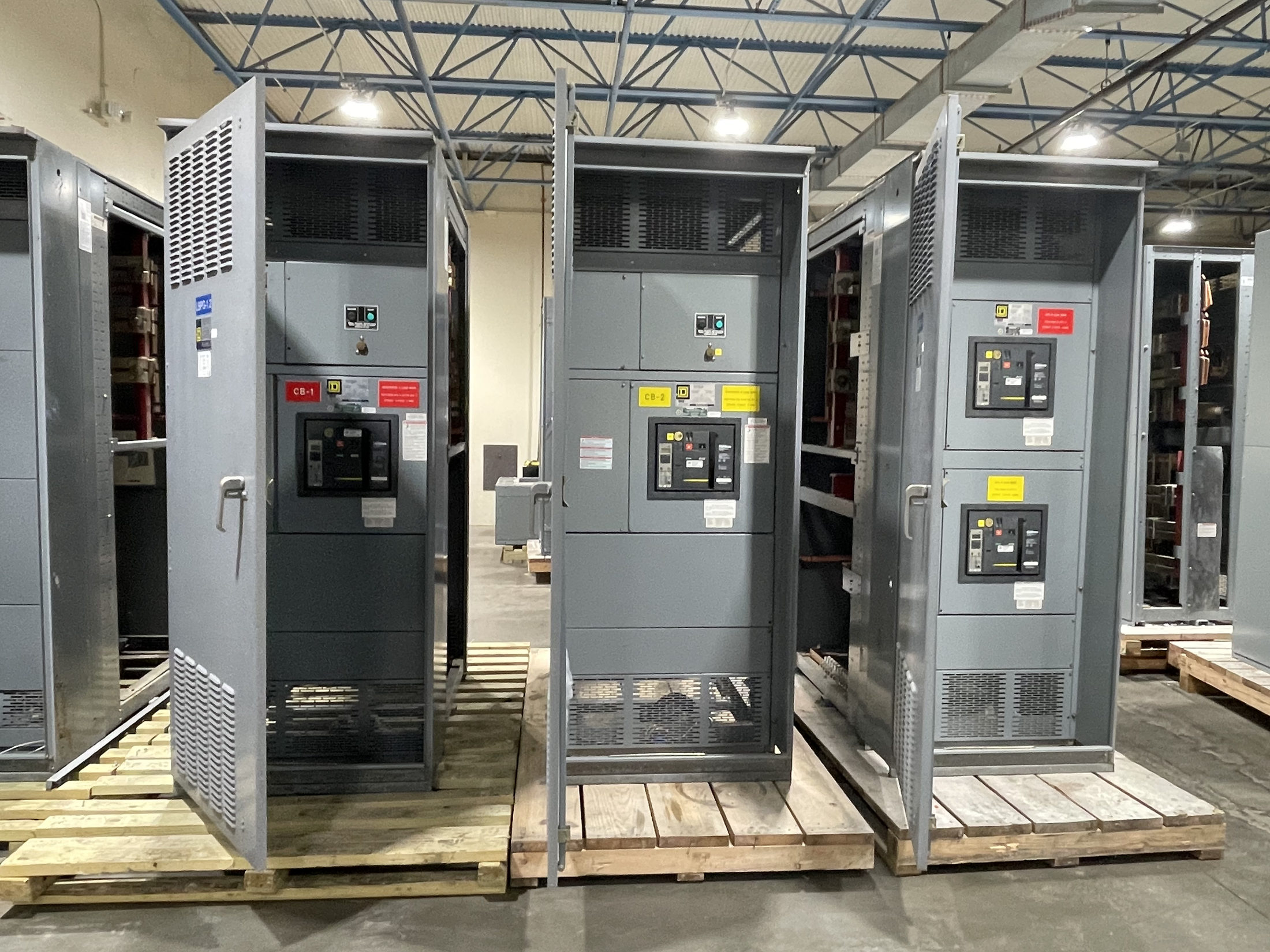
Start with the utility’s service requirements
Service entrance equipment must fit both the facility’s electrical design and the serving utility’s requirements. For owners, engineers and contractors planning new switchgear in Austin or Central Texas, utility service coordination begins by confirming the proposed service arrangement with the utility—not by assuming a standard configuration will be accepted. Request current service guidance and identify the utility contact responsible for reviewing the project. Clarify required drawings, submittals, review milestones and any utility-furnished components or work. Approval responsibilities can vary by service and project, so define who submits information and who resolves comments. Early coordination helps align equipment design, procurement and site planning before decisions become difficult or costly to revise.
Document supply characteristics before equipment selection
The electrical supply determines key service entrance equipment requirements. Gather the nominal system voltage and frequency, phase and wire arrangement, grounding method, available fault-current information, and the utility’s planned service configuration. Confirm the point of delivery and whether the utility specifies transformer details, service conductors, metering provisions or other interface conditions. Available fault current and operating conditions must be established for the actual installation; do not infer them from a nearby facility or a general service description. Qualified electrical professionals should use verified utility information and applicable project calculations to evaluate equipment ratings and design. If supply data are preliminary, record assumptions and identify what must be resolved before the design is released.
Resolve utility approval and metering interfaces
Utility approval may address more than the equipment’s electrical ratings. The review can involve service layout, meter location and access, compartment or barrier arrangements, conductor landing provisions, utility-owned equipment interfaces, and clearances or working space required by the utility. Confirm which party provides, installs and maintains each component, and whether inspection or approval is needed before energization. Metering requirements and acceptable arrangements are utility- and project-specific; they should be documented rather than presumed. Coordinate the equipment drawings with the utility’s current criteria and the project’s electrical plans, then track review comments to closure. A design accepted for one service or utility should not be treated as automatically suitable for another.
Design installation interfaces around the site
Translate the approved service concept into practical installation inputs. Confirm equipment location, access route, handling constraints, indoor or outdoor conditions, enclosure requirements, mounting surface, cable entry direction and available conductor routing. Establish conduit or busway entry points, incoming and outgoing terminations, grounding connections, and clearances with the electrical engineer and installation contractor. Verify these details against architectural and structural plans, the utility’s interface requirements and the equipment drawings. Enclosure type, environmental suitability, dimensions and construction must be selected for the actual site and design; none should be assumed from a general product description. Resolving these interfaces before fabrication can reduce field conflicts, while any site changes should prompt a coordinated design review.
Coordinate review, testing and project records
Before releasing new switchgear for production, assemble the utility criteria, approved supply data, one-line diagram, equipment schedules, physical layout and connection details into a coordinated submittal. Identify open items, responsible reviewers and the dates needed for decisions. The manufacturer can build custom assemblies to specification, and UL 891 assemblies are available where applicable; the project team must verify that the selected design and intended application meet the relevant requirements. Testing and documentation should be defined for the actual equipment and contract, including what is performed by the manufacturer and what remains part of site acceptance or commissioning. Applicable standards and approvals depend on design and project. Qualified professionals and relevant authorities must review the final installation.
Prepare a clear procurement and handoff package
For a useful equipment quotation and schedule discussion, provide the current utility service letter or criteria, verified electrical data, one-line diagram, equipment location and dimensions, connection details, metering requirements, and required submittal milestones. Flag information still awaiting utility confirmation instead of presenting it as final. Ask the project team to identify the decision owner for each unresolved interface and agree when changes require drawing resubmission or schedule review. Lead times depend on the project and the completeness of its requirements, so confirm timing against the actual scope rather than relying on a general promise. A US-built, all-American-component assembly can be custom designed to the project specification and shipped nationwide; coordinate delivery planning with the site team without assuming installation services.
Project specification checklist
Use this checklist to organize the details for a project-specific review. Final ratings, applicable standards and equipment selections depend on the approved design.
| Item | What to confirm |
|---|---|
| Utility service criteria | Confirm the serving utility’s current requirements, approval process, service arrangement and review milestones. |
| Supply characteristics | Verify voltage, frequency, phase and wire arrangement, grounding method, and available fault-current data for the project. |
| Metering and ownership | Document meter provisions, utility-furnished components, equipment boundaries, access needs and responsibility for each interface. |
| Installation conditions | Confirm location, environmental conditions, enclosure needs, access route, mounting, clearances and conductor entry points. |
| Submittals and verification | Identify required drawings, applicable standards, review parties, testing scope and unresolved assumptions before design release. |