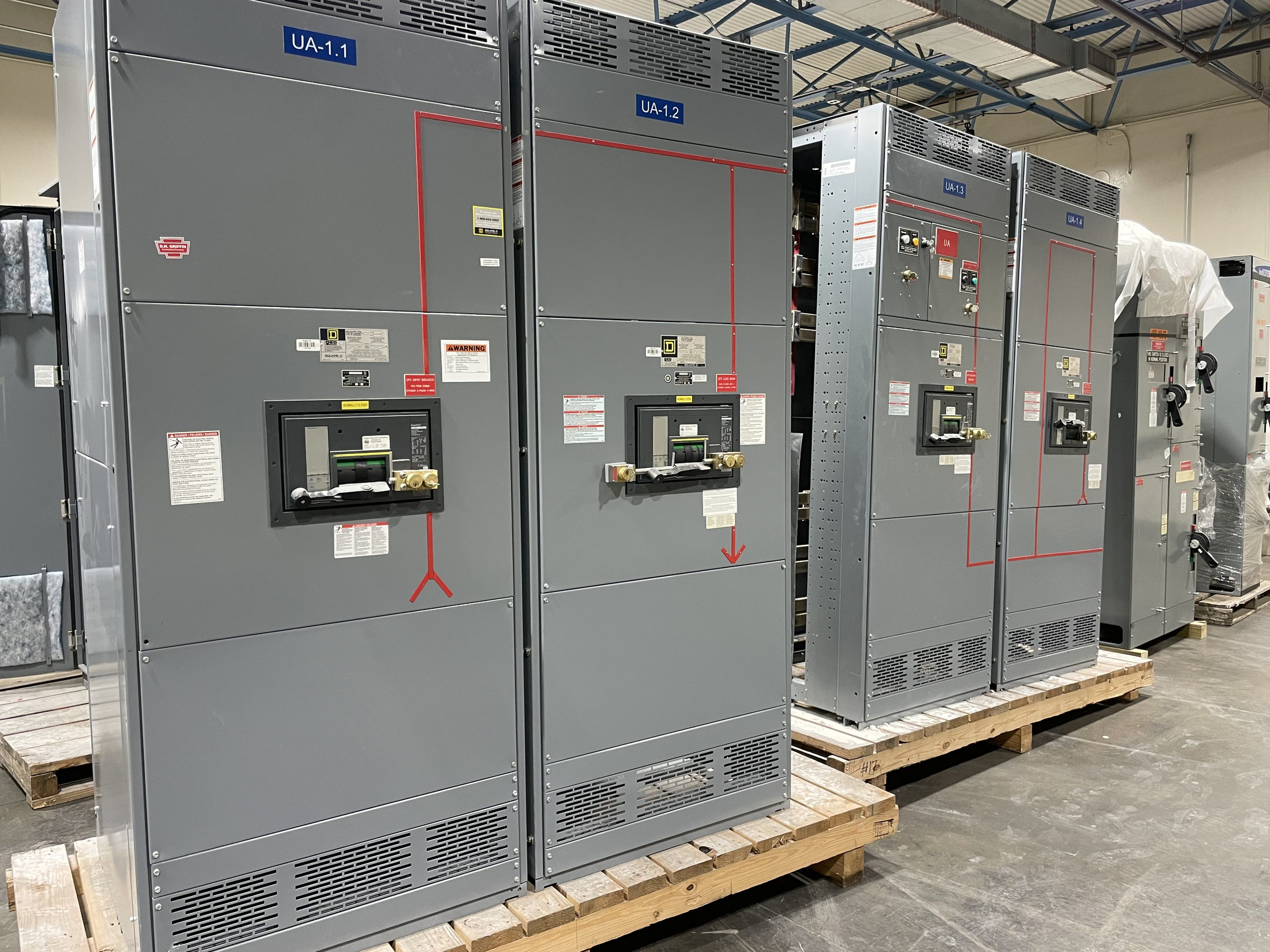
Identification That Connects Equipment to Documents
Nameplates and device tags make new switchgear identifiable to the people reviewing drawings, coordinating controls, and operating or maintaining the system. Their value depends on consistent information: an equipment designation on the assembly should correspond to the one used in the one-line diagram, schedules, control documents, and project records. Inconsistent labels can complicate review and make it harder to determine which device a drawing describes.
Define the identification scheme early, before drawings and assembly details are finalized. The project team should establish equipment names, lineup and section identifiers, device references, and any required text or language conventions. The manufacturer can then apply the approved scheme to the equipment documents and, where specified, the new assembly. Confirm responsibility for assigning identifiers so duplicated or conflicting designations do not carry through procurement.
Choose What Each Nameplate and Tag Must Communicate
A nameplate typically identifies an assembly or a major section, while a device tag distinguishes a breaker, switch, meter, control, or other component. The exact content is project-specific. Inputs may include the equipment designation, circuit or feeder reference, source and load descriptions, device function, and information needed to distinguish similar components. Required electrical characteristics must come from the approved design and applicable equipment documentation, not from a generic label template.
Decide which information belongs on a permanent equipment nameplate, which belongs on a device tag, and which should remain in drawings or schedules. Consider legibility, available mounting area, viewing direction, and whether the label must remain understandable when adjacent doors or covers are open. Confirm material, attachment method, character format, and any environmental or language requirements with the project documents. Suitability depends on the equipment design and installation conditions.
Set Conventions for Controls and Metering
Control and metering identifiers need to align with the circuit and functional descriptions used by the electrical and controls teams. A meter designation, for example, should match its reference in metering schedules and communications or monitoring documents where those interfaces are part of the project. Control devices should use a consistent tag across wiring diagrams, terminal plans, schematics, and point lists. Confirm the exact documents and interfaces required; not every assembly includes the same controls or metering features.
Provide the approved naming rules, abbreviations, device tags, and signal or point references before document development reaches final review. Identify which party owns each interface and who resolves conflicts between electrical drawings, controls documentation, and owner conventions. If tags change during design, use a controlled revision process and distribute updated references to affected parties. This reduces the risk of equipment labels and project records describing different devices or functions.
Coordinate Drawings, Revisions, and Approval
Identification is only useful when the drawings represent the delivered configuration. Review equipment schedules, one-line diagrams, schematics, wiring diagrams, and nameplate schedules together for matching designations and device references. Confirm how lineup sections, compartments, feeders, and control devices are named, while avoiding assumptions about a particular arrangement before the design is established. Specify the document format and review milestones required by the project.
Assign reviewers for electrical design, controls, metering, operations, and any other disciplines that use the identifiers. Record decisions and resolve comments against a common drawing revision. Changes to circuit names, device functions, or metering scope may affect more than one document and the physical labels. Before approval, check that the latest schedules and drawings use the same identifiers and that unresolved naming questions are clearly assigned rather than left to interpretation during manufacturing.
Verify Identification Before Release and Delivery
Include identification requirements in the equipment specification and submittal review, not only in a late-stage label list. Provide the current one-line diagram, equipment and device schedules, approved abbreviations, controls and metering references, and any owner documentation conventions. State which details are preliminary and which are approved for production. The manufacturer builds new switchgear to project requirements, so early, coordinated inputs help align the assembly documentation and identification plan.
During document review, verify spelling, equipment and feeder designations, device references, and consistency between drawings and schedules. Confirm who approves label text and how revisions are communicated after approval. Inspection and testing requirements should be defined by the project and applicable design; do not infer a particular listing, standard, or test procedure from a nameplate convention. Qualified electrical professionals and relevant authorities should review the complete equipment design and project documents.
Prepare a Clear Identification Package
For procurement, submit a concise identification package with the preferred equipment naming scheme, required nameplate content, device-tag list, drawing references, and the person or role authorized to approve changes. Include project-specific requirements for readability, language, labeling materials, and document formats where applicable. Mark uncertain circuit names or functions as pending, with an owner and resolution date, instead of allowing provisional text to appear final.
Before release, compare the approved tag list against the latest equipment schedule and controls and metering documents. After revisions, circulate a single controlled record showing what changed and which drawings or labels are affected. For a Central Texas project, coordinate review and delivery documentation with the project team’s procurement and site-planning schedule; shipment can be arranged nationwide, with timing determined by project requirements. Final identification should follow the verified design and approved records.
Project specification checklist
Use this checklist to organize the details for a project-specific review. Final ratings, applicable standards and equipment selections depend on the approved design.
| Item | What to confirm |
|---|---|
| Equipment and device identifiers | Confirm naming rules, section and circuit references, abbreviations, and assignment responsibility. |
| Nameplate and tag content | Specify required text, languages, legibility, placement, material, and attachment expectations. |
| Controls and metering references | Align device tags with approved schematics, wiring documents, schedules, and interface records. |
| Document coordination | Identify required drawings, formats, review roles, revision controls, and approval milestones. |
| Release and verification | Provide an approved tag list and confirm consistency against current project documents before release. |