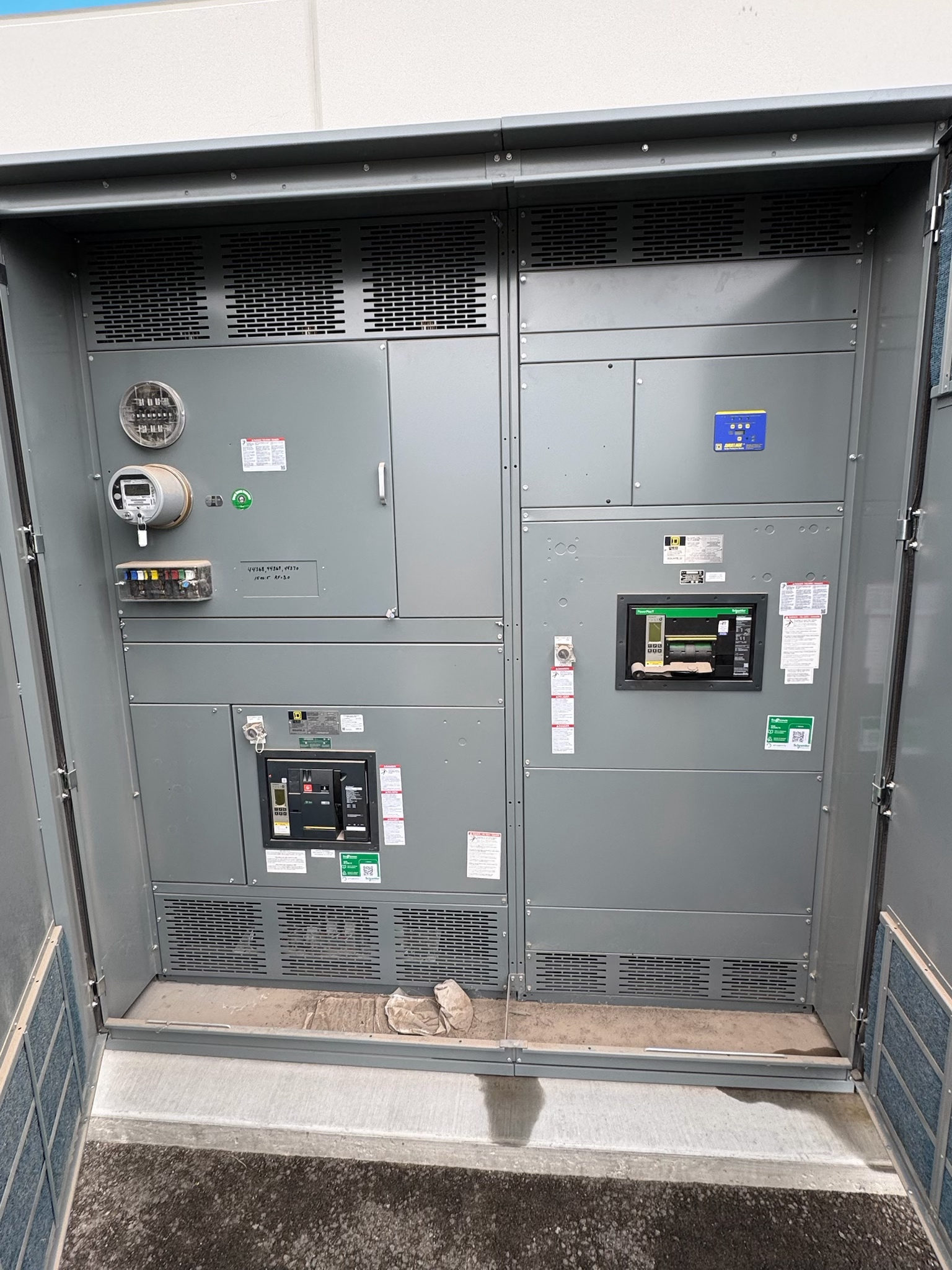
What a Continuous Current Rating Describes
A switchgear current rating identifies the current an assembly or component is designed to carry continuously under defined conditions. It is a starting point for selecting new switchgear, not a standalone measure of whether equipment suits a project. The appropriate rating depends on the equipment type, its design, installation conditions, and the applicable project requirements. For a Central Texas facility, the same disciplined review applies whether the work involves a new service, an expansion, or replacement equipment: establish the actual electrical duty and verify that the proposed assembly matches it.
Do not treat a rating printed on one component as proof that every part of an assembly has the same continuous-current capability. Bus, protective devices, connections, and other elements may have distinct requirements and limitations. The design documentation should identify what the rating applies to and the conditions under which it is valid. A qualified electrical professional should review the complete configuration and applicable standards before equipment is specified or ordered.
Start with the Load and Operating Profile
Selection begins with the project’s expected load, not an assumed standard size. Review the load study and one-line diagram, including existing and planned loads, operating modes, demand assumptions, and foreseeable expansion. Consider whether large loads operate together, whether the facility has distinct operating schedules, and whether temporary or standby arrangements change current flow through particular sections. These details help the design team establish a defensible continuous-current requirement for each relevant part of the switchgear.
A nameplate value or a snapshot of present demand may not capture future operating conditions. Ask the engineer of record to reconcile calculations with the intended use and governing requirements, and identify assumptions that could materially affect equipment selection. Avoid selecting a rating solely because it appears to provide a convenient margin. Any allowance for growth or contingency should be grounded in the project’s documented needs and checked against the rest of the electrical design.
Verify the Complete Assembly and Conditions
Continuous-current capability must be checked against the proposed assembly, not inferred from a general product description. Confirm the equipment type, bus arrangement, protective-device configuration, connections, and any sections that carry the relevant current. Also review the design conditions that may affect the rating, such as the specified enclosure arrangement, ambient conditions, installation location, and ventilation assumptions. The acceptable combination is project-specific; an individual rating cannot establish suitability when these details are unknown.
Request clear submittal information showing the rating basis and how it applies to the configuration being offered. Compare it with the project specification and resolve differences before release for manufacture. Where requirements call for a particular standard or listing, confirm its applicability to the exact equipment and assembly. UL 891 applies to suitable switchboard assemblies; it should not be assumed to cover every switchgear product or every voltage class. Applicable standards and conformity requirements depend on design and project review.
Coordinate Current Rating with Protection
A continuous-current rating is only one part of equipment coordination. The project team should also review protective-device ratings and settings, available fault current, interrupting or withstand requirements, and the system’s voltage and grounding arrangement. These are related but distinct checks: a continuous rating does not establish short-circuit capability, and a short-circuit rating does not by itself establish acceptable continuous operation. Verify that the specified equipment and protective scheme work together for the intended system conditions.
Coordinate the one-line diagram, equipment schedule, protection study, and switchgear submittals so they describe the same design. If loads, upstream sources, protective devices, or the equipment arrangement change, determine whether the current-rating review and related studies need revision. Qualified electrical professionals should perform and approve these evaluations, with relevant authorities involved as required. Do not rely on a generic rating table as a substitute for a project-specific engineering review.
Plan Submittals, Testing, and Procurement
Before ordering new switchgear, provide the manufacturer with the project specification, current one-line diagram, load information, required equipment arrangement, and applicable standards or listing requirements. Identify the continuous-current rating needed for each relevant section and state the conditions or assumptions behind it. A useful submittal review checks that the offered design, drawings, and component schedule align with the approved project documents. Resolve open questions about rating scope, configuration, and design conditions before authorizing production.
Ask what design verification or testing documentation applies to the specified assembly and what review materials will be supplied. Do not assume a test, certification, or listing applies merely because a similar product has one; confirmation must match the proposed design and project requirements. Lead time is determined by project scope and configuration, so discuss schedule expectations when submitting complete requirements. For Central Texas projects, coordinate equipment information and delivery planning with the project team and site schedule without assuming a local manufacturing facility or a fixed delivery date.
A Practical Review Before Specifying
A focused rating review can prevent avoidable revisions. Have the responsible engineer confirm the load basis, identify where current flows in the proposed arrangement, and verify the rating for the complete equipment configuration under documented conditions. Then reconcile the result with protective-device selection, fault-duty requirements, applicable standards, and the project’s future-load assumptions. Keep decisions traceable in the specification and submittal comments, especially when revised drawings or changed operating plans affect the design.
For a new equipment inquiry, assemble the latest one-line diagram, load calculations, equipment schedule, and installation requirements before requesting a proposal. Mark unresolved choices, including section arrangement, enclosure requirements, and any required conformity documentation, rather than treating them as settled. Custom assemblies can be developed to project specifications, but each design remains subject to technical review. This information gives the manufacturer and engineering team a concrete basis to evaluate the requested continuous-current ratings and identify what must be confirmed before procurement proceeds.
Project specification checklist
Use this checklist to organize the details for a project-specific review. Final ratings, applicable standards and equipment selections depend on the approved design.
| Item | What to confirm |
|---|---|
| Load basis | Confirm calculated loads, operating modes, demand assumptions, and documented future-load needs. |
| Rating scope | Identify which assembly sections and components the specified continuous-current rating applies to. |
| Design conditions | Verify installation, enclosure, ambient, and configuration assumptions against project requirements. |
| Protection and fault duty | Coordinate continuous-current selection with protective devices and separately verified fault requirements. |
| Standards and documentation | Confirm applicable standards, listing requirements, and supporting submittal or test documentation for the exact design. |