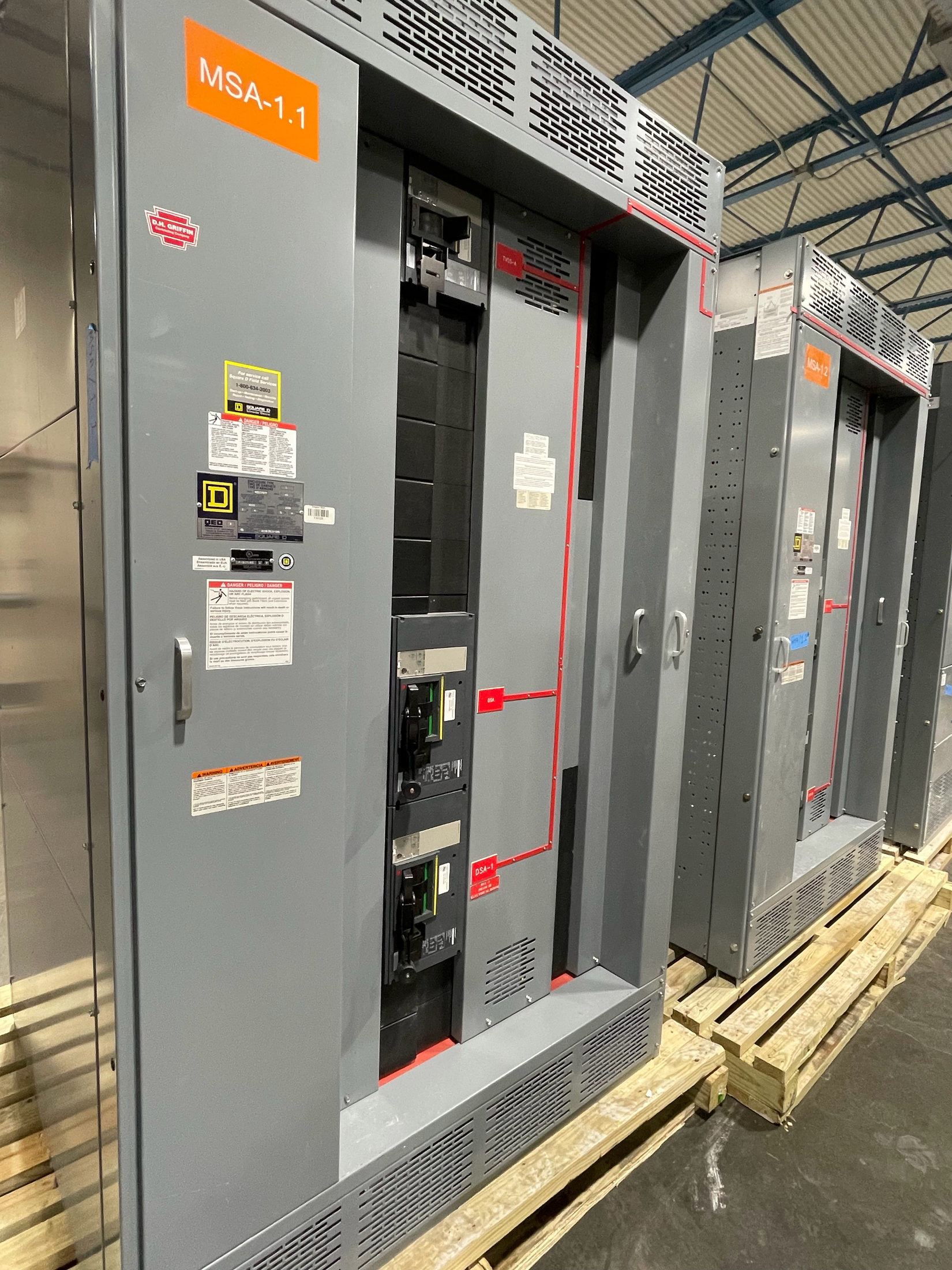
Start with the application and operating context
A useful set of switchgear specifications begins with the job the equipment must perform. Document whether the project involves a new installation, replacement, service expansion, or a change in connected loads. Identify the facility type, operating schedule, critical loads, planned growth, and consequences of an interruption. These details help qualified electrical professionals determine the appropriate equipment category and configuration rather than selecting from a generic rating alone.
For a Central Texas project, also record site conditions and coordination constraints that affect design and delivery: the installation location, access route, available working space, indoor or outdoor placement, and the planned installation sequence. Share these details with the design team and equipment supplier early. They inform enclosure and layout decisions, shipping considerations, and the information needed for a project-specific proposal, without presuming a particular design or capability.
Establish electrical ratings from project studies
Specify system voltage, frequency, phase, and the required continuous current only after they have been checked against the one-line diagram, load information, and system design. Available fault current and required withstand or interrupting performance must be evaluated for the actual point of installation. Do not treat example values, existing nameplates, or a rating from a different location as approval for new equipment; source changes and system modifications can alter the conditions.
Request the studies and assumptions that support the required ratings, including short-circuit and coordination analyses where applicable. Confirm how the proposed equipment interfaces with upstream and downstream devices, transformers, generators, or other sources. The design professional should reconcile study results with equipment documentation and applicable requirements. A manufacturer can build custom assemblies to specification, but final selection depends on a complete, reviewed project basis—not a general statement that a particular amperage or voltage is suitable.
Define construction, arrangement, and interfaces
Describe the intended lineup arrangement and how the equipment connects to the rest of the electrical system. Provide the one-line diagram, available plans, conductor entry and exit preferences, and any known constraints on dimensions, clearances, access, or future extensions. Identify required metering, protective devices, control power, communications, and interlocks only where the design calls for them. Each feature affects layout and interfaces, so state functional requirements rather than assuming a standard arrangement.
Enclosure type, environmental protection, bus configuration, and compartmentation must suit the actual installation and applicable design requirements. Confirm these choices with the responsible electrical professional; an enclosure designation or construction detail is not universally appropriate. Submit the latest drawings and clearly mark unresolved items. Early clarification helps keep a custom assembly aligned with site conditions and reduces the risk of late revisions to connections, access, or equipment placement.
Name standards and documentation requirements
The specification should identify applicable codes, standards, and project requirements, while leaving their interpretation and application to qualified professionals and relevant authorities. The appropriate requirements depend on equipment type, design, installation, and jurisdiction. UL 891 applies to suitable switchboard assemblies; it should not be assumed to cover every switchgear product or medium- and high-voltage equipment. State any required listing or conformance explicitly, then confirm that it applies to the proposed assembly.
List the submittals needed to evaluate the design, such as arrangement drawings, equipment data, wiring information, and applicable test or compliance documentation. Request documentation that corresponds to the actual proposed configuration and ratings. Review exceptions and assumptions against the project specification before approval. Clear documentation requirements help the engineering team, owner, supplier, and installing parties work from the same design basis and identify decisions that must be resolved before release for manufacture.
Coordinate testing, review, and release
Set out how drawings, technical deviations, and design changes will be reviewed, and identify the project contacts responsible for decisions. Before manufacture, qualified reviewers should verify ratings, connections, protective-device requirements, physical fit, interfaces, and applicable standards against the approved design. Agree on the tests and records required for the assembly, based on its design and project specification. Testing should be performed under an appropriate documented process; it does not replace system studies, installation checks, or review by the responsible professionals.
Coordinate the equipment schedule with construction milestones, site readiness, and shipping access. Lead times depend on project scope and design details, so request a project-specific schedule rather than relying on a general estimate. For a Central Texas site, confirm the delivery destination, receiving arrangements, route and access limitations, and sequence for moving equipment into position. Nationwide shipping is available, but practical logistics still need to be planned for the actual site.
Prepare a complete request for new switchgear
To begin a useful specification review, assemble the one-line diagram, load information, relevant study results, site plans, equipment schedule, governing project requirements, and target milestone dates. Add a concise list of required functions, known constraints, preferred interfaces, and open questions. Identify which values are established by the design team and which remain subject to study or authority review. This makes it easier to distinguish confirmed requirements from assumptions and to develop a custom assembly proposal that fits the project.
Ask the manufacturer to identify the proposed equipment scope, applicable documentation, design assumptions, exceptions, and information still needed. Review those items with the project engineer before approving drawings or releasing the equipment. US-built assemblies using all-American components and nationwide shipment can support projects in Central Texas and beyond, but the final design, applicable standards, and schedule remain project-specific. A complete, coordinated specification is the practical next step toward selecting new switchgear responsibly.
Project specification checklist
Use this checklist to organize the details for a project-specific review. Final ratings, applicable standards and equipment selections depend on the approved design.
| Item | What to confirm |
|---|---|
| System and load basis | Confirm system characteristics, load requirements, operating conditions, and the design documents used to establish them. |
| Fault performance | Use project-specific study results to establish required withstand or interrupting performance at the installation point. |
| Physical arrangement | Provide plans, connection preferences, access constraints, enclosure requirements, and any future expansion needs for review. |
| Standards and documentation | Identify applicable requirements and requested submittals; verify any listing or conformance claim for the exact assembly. |
| Interfaces and functions | Define protection, metering, controls, communications, and interlocks required by the approved system design. |
| Schedule and logistics | Confirm design milestones, drawing review, site readiness, receiving access, shipping destination, and project-specific lead time. |