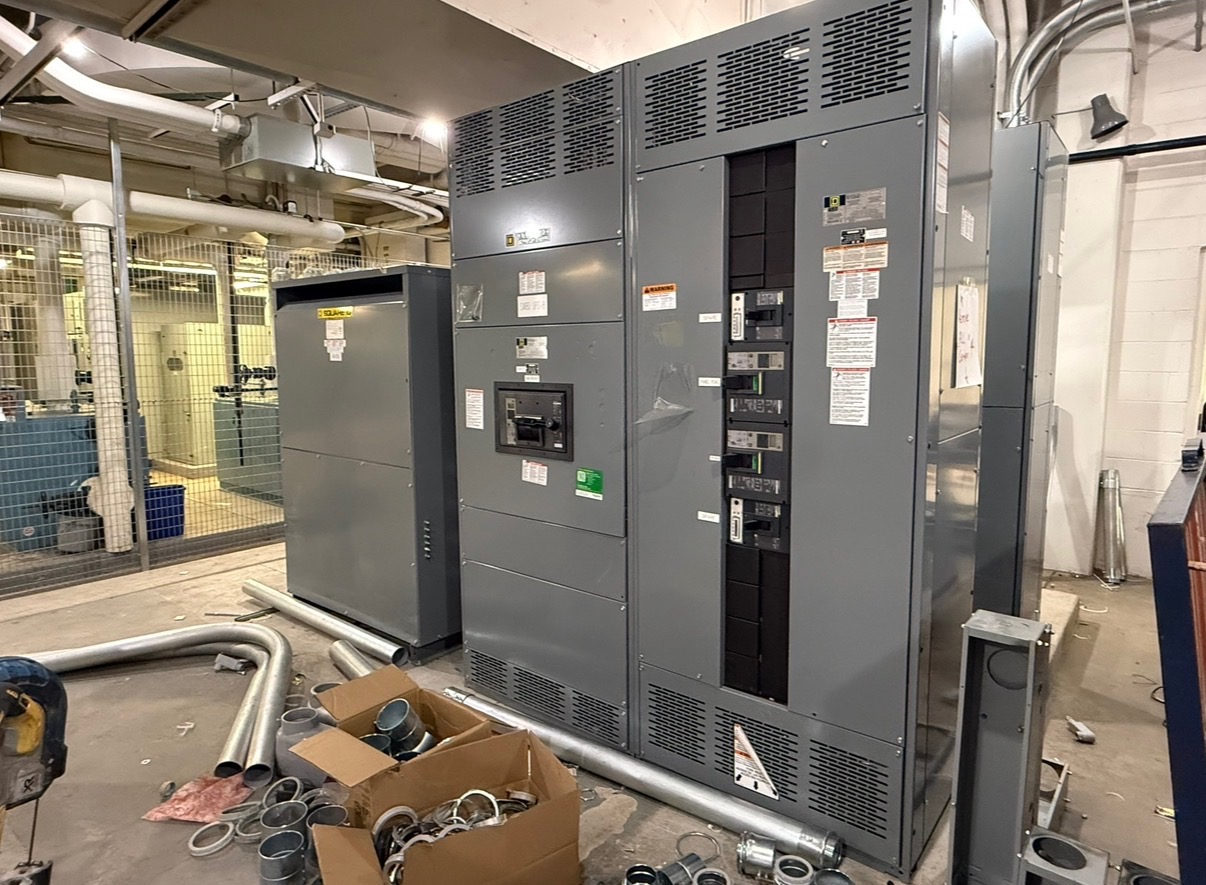
Define What 1600 A Means for the Application
A 1600 A continuous current inquiry is a starting point for selecting new switchgear, not a complete equipment specification. The required assembly depends on where it sits in the distribution system, what it supplies and how the installation will operate. Identify whether the equipment is a service entrance, main distribution assembly, tie or other arrangement, and document the system voltage, phase, frequency and grounding method. Confirm whether 1600 A applies to the main device, bus, or both; these are related but distinct design decisions. The project team should also establish whether the stated current is an expected operating load, a design requirement or a preliminary target.
Evaluate Load Profile and Future Demand
Provide a load schedule that distinguishes continuous loads from intermittent or noncoincident demand, and identify major motors, electronic loads, heating, cooling, charging or other significant equipment. Include expected operating patterns, starting or inrush demands where relevant, and planned additions that may affect the assembly’s configuration. Qualified electrical professionals should determine how applicable codes and design criteria affect load calculations and equipment selection; a nominal 1600 A figure alone does not establish suitability. Discuss how feeders will be divided, which loads require dedicated protection, and whether the design needs spare provisions. These inputs help align the current rating, protective devices and distribution layout with actual use rather than assumptions.
Check Ambient and Installation Conditions
Ambient temperature and the physical installation can influence equipment selection and operating limits. Document the expected temperature range around the assembly, indoor or outdoor placement, elevation, ventilation, exposure to dust or moisture, and any corrosive or unusual environmental conditions. Provide available room dimensions, access paths, working clearances and the intended mounting or support arrangement for review by the project team. Do not assume a particular enclosure type or derating approach from the 1600 A inquiry alone: acceptable construction and ratings must be verified for the design and location. If the equipment will be adjacent to other heat-producing gear or installed in a constrained room, identify that early so the design review can account for it.
Coordinate Fault Duty, Protection and Interfaces
Current rating does not establish the assembly’s short-circuit withstand or interrupting capability. Supply available fault-current information, upstream protective-device details and the intended coordination objectives so qualified professionals can evaluate compatible equipment and protection. Confirm the number and arrangement of incoming sources, generators or ties, transfer schemes, metering needs, control power and monitoring interfaces. Identify conductor material and termination requirements, cable entry direction, feeder quantities, and connections to transformers or downstream panels. These choices affect layout and interfaces as well as component selection. Applicable standards and any listing requirements depend on the equipment design and project; UL 891 applies to suitable switchboard assemblies, not automatically to every switchgear configuration.
Set Design, Review and Verification Milestones
Before design proceeds, reconcile the one-line diagram, load schedule, equipment specifications and site conditions. Resolve open items such as main and feeder arrangements, protective-device functions, metering, control interfaces, enclosure requirements and future provisions. Request that proposed ratings and applicable standards be reviewed against the complete project documentation by qualified electrical professionals and relevant authorities. Establish what documentation and factory verification are required for the particular assembly, and clarify acceptance criteria before procurement. Testing scope should be tied to the design and purchase documents rather than inferred from a current rating. New assemblies can be custom configured to specification; the feasible design, applicable UL 891 status where relevant, and lead time require project-specific confirmation.
Prepare a Useful 1600 A RFQ
For a practical quotation request, send the latest one-line diagram, system voltage and grounding details, load schedule, available fault-current data, and upstream and downstream device information. Include the proposed 1600 A basis, expected ambient and installation conditions, room or lineup constraints, cable entry and termination needs, metering and controls, and any required standards or listing criteria. Mark unresolved information clearly instead of treating assumptions as final ratings. Ask the manufacturer to identify exceptions, required clarifications and design choices that need engineering review. US-built equipment using all-American components and nationwide shipping are available as project considerations, but configuration, schedule and transport coordination should be confirmed for the specific order. This preparation helps the team assess fit before committing to a design.
Project specification checklist
Use this checklist to organize the details for a project-specific review. Final ratings, applicable standards and equipment selections depend on the approved design.
| Item | What to confirm |
|---|---|
| Current-rating basis | Confirm whether 1600 A applies to the main device, bus, or both, and document the load calculation and operating profile. |
| System and load data | Provide voltage, phase, frequency, grounding method, load schedule, feeder arrangement and anticipated additions. |
| Ambient and installation | Document environmental conditions, enclosure needs, room constraints, access and ventilation for project review. |
| Fault duty and protection | Provide available fault-current information and upstream protection details; verify required ratings and coordination. |
| Interfaces and standards | Specify sources, ties, terminations, metering, controls, applicable standards and any listing criteria for the design. |