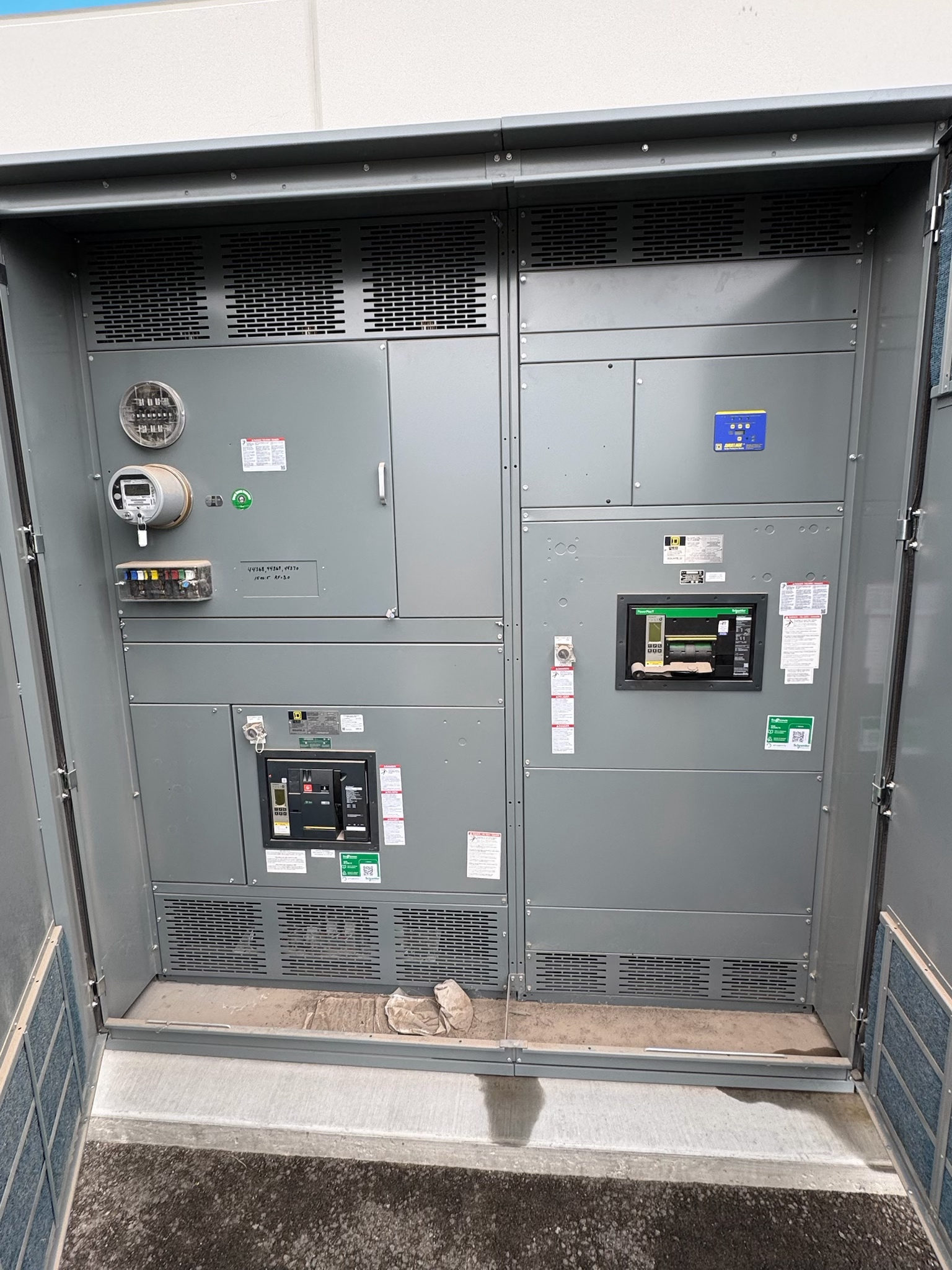
Start With the System Voltage
Switchgear voltage ratings begin with the electrical system the equipment will serve. A project may identify a nominal system voltage, but the designer must also confirm the system configuration, grounding method, frequency, and expected operating conditions. Nominal voltage is a description of the system, not a complete equipment specification. Selecting new switchgear for a Central Texas facility therefore starts with current design documents and coordination with the project’s qualified electrical professionals—not a catalog label or a voltage copied from an unrelated installation.
Gather the one-line diagram, utility or upstream-source information where available, and details for the connected loads. Confirm whether the equipment is part of a service entrance, distribution lineup, generator connection, or another application. These facts help establish the applicable equipment type and rating requirements. Local project conditions and authority requirements may affect the design; they should be verified for the specific site rather than assumed from another Central Texas job.
Separate Nominal Voltage From Equipment Rating
A system’s nominal voltage and an assembly’s rated voltage are related, but they are not interchangeable terms. The equipment rating must be suitable for the system and its operating conditions, with design review accounting for the relevant standard and the complete assembly. A voltage class is a useful way to group equipment by its intended range of application, but class names alone do not establish that a particular lineup is appropriate for a project.
When reviewing proposals or specifications, compare the stated system voltage with the equipment’s marked or specified voltage rating and the project’s required configuration. Confirm how the rating is expressed in the governing documents and whether the switchgear is intended for the system’s nominal voltage and maximum operating conditions. Do not infer acceptable use from a similar-looking product description. Final suitability depends on the complete design and review by qualified electrical professionals.
Choose the Equipment Category and Class
Voltage classes help distinguish equipment applications, including lower-voltage distribution from medium- or high-voltage systems. The boundary and terminology can vary by standard and product category, so a class label should be read in context. The selected equipment category determines which design rules and evaluation criteria apply; a switchboard standard, for example, should not be assumed to cover medium- or high-voltage switchgear. Applicable standards depend on the design and project requirements.
Identify the intended function and voltage range before comparing assemblies. Confirm whether the specification calls for a switchboard or another form of switchgear, and whether the design is indoor or outdoor, metal-enclosed, or configured for a particular switching and protection scheme. These characteristics are project choices, not universal capabilities. UL 891 may apply to suitable switchboard assemblies, but it does not automatically apply to every product or voltage class. Request clarification whenever the equipment category or standard is ambiguous.
Coordinate Voltage With Protection and Insulation
Voltage selection is only one part of a complete electrical rating review. The design may also need to address insulation and clearances, switching devices, protective relays, grounding, and coordination with upstream and downstream equipment. Available fault current and required short-circuit performance must be evaluated separately; they cannot be determined from nominal voltage alone. Similarly, an enclosure designation or environmental requirement must be specified for the actual installation rather than inferred from the voltage class.
Ask the design team to align the one-line diagram, equipment schedule, protection study, and procurement specification. Confirm that stated ratings and accessories work together in the intended assembly and operating arrangement. Factory tests and other verification should be defined according to the selected equipment and applicable requirements. Testing scope, listing, and performance claims must be established for the specific design; a general product description is not evidence that a project’s complete requirements have been met.
Specify a New Assembly for the Project
A useful request for quotation identifies the nominal system voltage, required equipment category, applicable design standards, and the ratings and features established by the engineering documents. Include the one-line diagram, connection points, incoming and outgoing arrangements, protection requirements, and any project-specific environmental or space constraints. If a requirement is pending, label it as open for confirmation instead of silently selecting a value. This gives the manufacturer a basis to review the assembly and identify questions before design decisions become procurement assumptions.
Custom assemblies can be built to specification, and US manufacturing with all-American components may be relevant to a project’s procurement criteria. Neither fact substitutes for confirming voltage suitability, applicable standards, or other ratings. UL 891 should be requested only where appropriate to the assembly. Lead time is project-dependent, so ask for a schedule review after the scope and design inputs are sufficiently defined. Nationwide shipping is available, with shipment planning coordinated to the project’s destination and receiving requirements.
Resolve Open Items Before Release
Before approving drawings or releasing an order, compare the proposed equipment documentation against the latest project specifications. Check the system voltage and equipment rating together, verify the voltage class and equipment category, and identify any differences in standards, protection, or configuration. Confirm that the project’s qualified electrical professionals and relevant authorities have reviewed the design as required. For Central Texas projects, coordinate submittal reviews, shipment timing, site access, and receiving arrangements with the project team; location alone does not establish a voltage requirement or delivery schedule.
A practical next step is to send the current one-line diagram, equipment schedule, and list of unresolved questions for specification review. Ask which rating statements require confirmation, which project inputs are missing, and what documentation will be provided for the proposed assembly. Keep decisions traceable in the approved documents so that voltage assumptions do not carry unnoticed into procurement or installation. Do not treat a preliminary selection as authorization to install or operate equipment; final application and field work require appropriate professional review.
Project specification checklist
Use this checklist to organize the details for a project-specific review. Final ratings, applicable standards and equipment selections depend on the approved design.
| Item | What to confirm |
|---|---|
| System voltage | Confirm nominal voltage, system configuration, grounding method, and operating conditions from current project documents. |
| Equipment rating and class | Verify the specified equipment rating and voltage class suit the system and intended application. |
| Equipment category and standards | Identify switchboard or switchgear type and confirm which standards apply to the specific design. |
| Protection and fault performance | Obtain project-defined protection, coordination, and short-circuit requirements from qualified design professionals. |
| Assembly and delivery inputs | Confirm configuration, project documentation, shipment destination, receiving constraints, and schedule after scope review. |