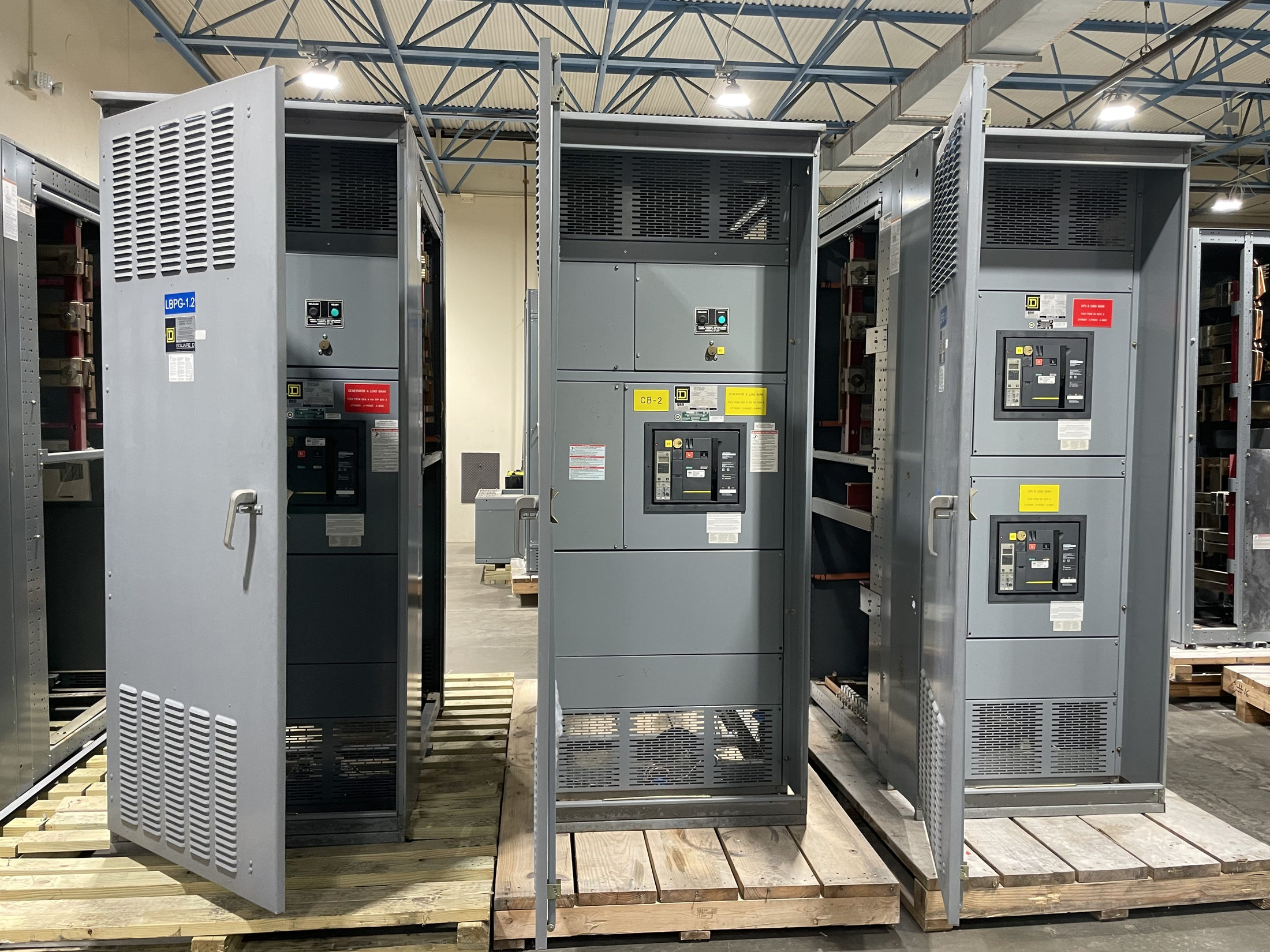
Plan Around Components That Set the Schedule
Long-lead component planning starts by identifying which specified parts could govern design release, assembly, testing, or shipment of new switchgear. Depending on the equipment and project, schedule-sensitive items may include breakers, protective relays, metering devices, control-power components, bus materials, or custom-fabricated sections. These are possibilities to investigate, not a fixed list or guarantee of availability. Switchgear lead times and scheduling depend on the final design, supplier conditions, and when complete technical information is approved.
For owners, engineers, and contractors, the practical objective is to distinguish essential requirements from preferences before procurement decisions become urgent. A component substitution can affect protection, control interfaces, dimensions, fault performance, maintenance access, or applicable compliance requirements. Review candidate alternatives with qualified electrical professionals and the equipment manufacturer; do not treat a nominally similar catalog item as interchangeable without design review.
Provide the Inputs Needed for Early Review
A useful schedule assessment needs more than a requested ship date. Provide the one-line diagram, equipment scope, system voltage, required continuous and short-circuit ratings, operating sequence, and protection or metering requirements, as applicable. Include the project specification, governing codes and standards, environmental conditions, enclosure requirements, and any required listing or labeling. Each rating and construction detail must be verified for the actual application; no value should be assumed suitable across all switchgear.
Identify the decision-makers and the dates when drawings, settings, submittals, and substitutions can be reviewed. Note which requirements are mandatory, which are preferred, and who can authorize a change. Incomplete or conflicting documents can delay design approval and ordering even when a component appears readily obtainable. Qualified electrical professionals should resolve technical questions, with relevant authorities involved where required.
Evaluate Alternatives by Function, Not Name
When a preferred component has an uncertain procurement window, compare alternatives against its job in the complete assembly. For a breaker, that review may cover interrupting and continuous ratings, trip functions, operating mechanism, drawout or fixed construction, control voltage, and physical fit. For relays or meters, examine sensing inputs, communication protocols, protection functions, accuracy needs, and connection details. These examples are project-dependent; the design team must determine which criteria apply.
An alternative is acceptable only when documented review confirms the required electrical performance, interfaces, coordination, and compliance path. Revisions may require updated drawings, protection studies, settings, wiring diagrams, labels, or testing plans. A different manufacturer or model can also change dimensions and service access. Record the basis for approval and retain the final selected part information in the project documents rather than relying on an informal verbal substitution.
Resolve Interfaces Before Releasing Design
Component choices connect to equipment and systems beyond the switchgear lineup. Confirm incoming and outgoing conductor arrangements, bus connections, transformer or generator interfaces, control wiring, auxiliary power, communications, and signals exchanged with building or plant systems. Establish physical constraints such as room access, lineup arrangement, cable entry, and required working clearances from the project documents. Verify these details with the responsible designers; do not infer site conditions or assume a replacement component will fit.
For custom assemblies, early interface decisions reduce the chance that a late component change forces enclosure, bus, or control redesign. Clarify who supplies external devices and wiring, which party provides final settings, and how interface changes are communicated. If applicable, determine whether a proposed change affects an UL 891 switchboard assembly or another applicable standard. UL 891 applies only to suitable assemblies, not automatically to every switchgear product. Confirm the compliance approach for the actual design.
Build a Schedule With Decision Gates
Request a project-specific schedule that separates engineering review, drawing approval, component procurement, assembly, required testing, and shipment. Identify the assumptions behind each milestone, including when complete specifications and approved submittals are needed. Component lead times can change, so treat early estimates as planning inputs rather than delivery commitments. New equipment built in the USA with all-American components may be considered where it fits the project, but component origin alone does not establish availability or shorten a particular schedule.
Set dates for selecting preferred components and approving any proposed alternatives, then assign a responsible reviewer for each decision. Consider whether partial information can support preliminary review without authorizing manufacture prematurely. Confirm how schedule updates, substitutions, and approval delays will be documented. Testing requirements should be agreed during design coordination; the applicable tests depend on equipment design, specifications, and standards, and should not be presumed from a general product description.
Turn Planning Into a Procurement Checklist
Before requesting a firm proposal for new switchgear, assemble current drawings and specifications, required ratings, protection and control functions, interface details, compliance requirements, and the target project milestones. Mark unresolved choices and state whether alternatives may be evaluated. Ask the manufacturer to identify schedule assumptions, information needed for design release, and any component decisions that could materially affect the proposed timeline. Short lead times may be a project goal, but actual timing depends on the completed scope and review.
Use the response to hold a focused technical meeting with the engineer, owner, contractor, and other responsible parties. Close open items in a decision log: requirement, proposed component or option, technical reviewer, approval status, and date needed. Then update drawings, procurement documents, and the integrated project schedule consistently. This gives the team a practical basis for ordering and coordination while leaving final equipment selection and code or standards determinations with qualified professionals and relevant authorities.
Project specification checklist
Use this checklist to organize the details for a project-specific review. Final ratings, applicable standards and equipment selections depend on the approved design.
| Item | What to confirm |
|---|---|
| Schedule basis | Confirm scope, drawing status, approval milestones, procurement assumptions, assembly, testing, and shipment stages. |
| Critical components | Identify parts that may constrain timing for this design and verify current project-specific procurement information. |
| Ratings and functions | Document required electrical ratings, protection, metering, controls, and operating sequence for qualified review. |
| Interfaces | Confirm bus, conductor, auxiliary power, communications, external devices, and physical constraints. |
| Alternatives | Define acceptable substitution criteria, technical approvers, documentation updates, and compliance review. |
| Applicable standards | Verify which standards and any listing requirements apply to the specific assembly and project. |