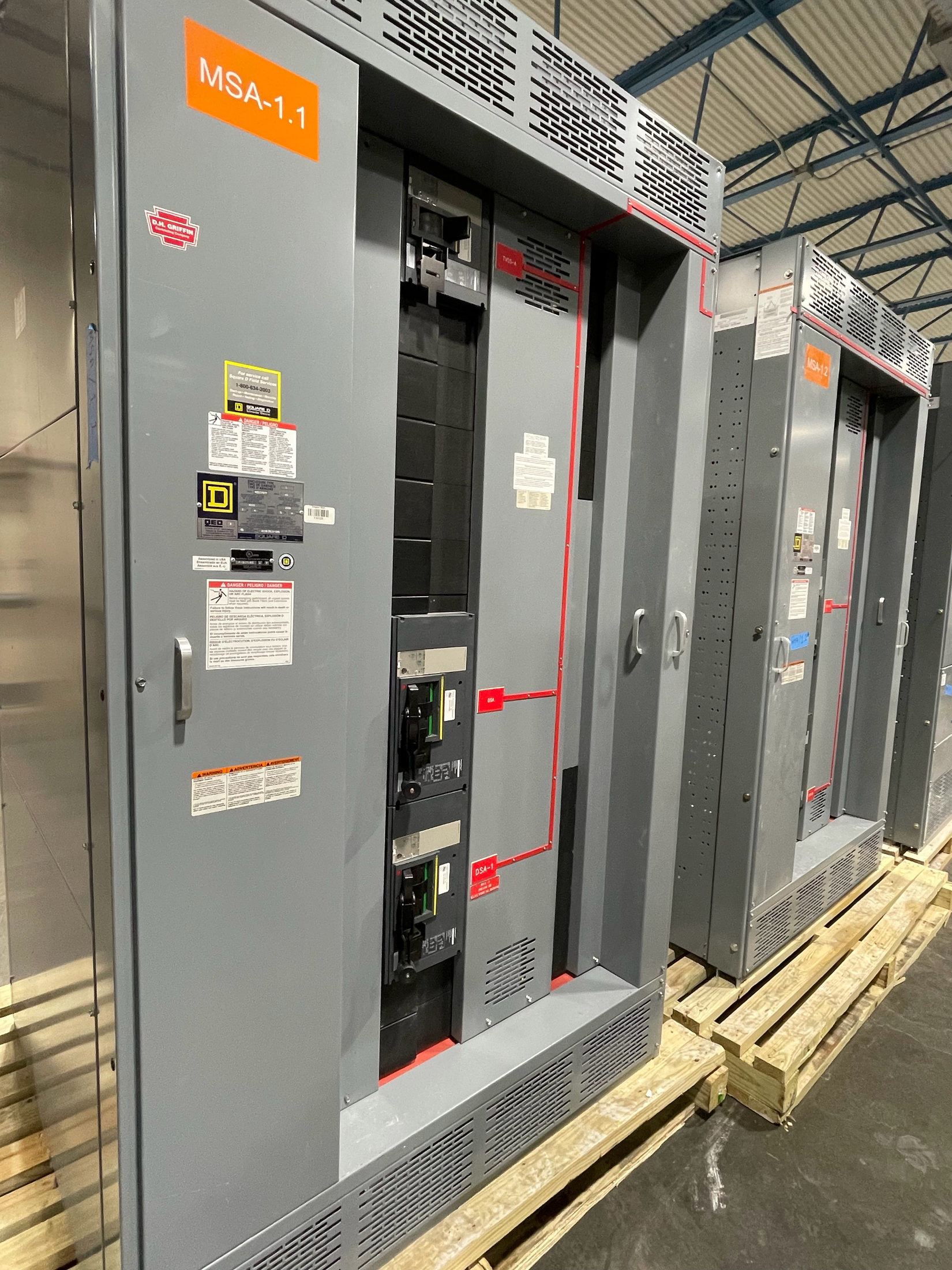
Start the Schedule with the Project Milestones
Planning switchgear lead times and scheduling means working backward from the date the equipment must be ready for its role in the project—not treating delivery as an isolated date. For a new installation, identify when approved equipment information is needed, when the electrical room or site will accept delivery, and when the equipment must be available for planned installation and commissioning. These milestones help the project team distinguish a target date from a confirmed schedule.
For Central Texas projects, account for the customer’s receiving arrangements, site access, storage conditions, and coordination with other construction activities. Share these constraints early with the manufacturer and project team. Lead time depends on the equipment design, scope, approvals, and current project requirements, so request a project-specific schedule rather than relying on a general estimate.
Define the Electrical Application Before Requesting Timing
A useful schedule starts with a clear description of what the equipment must do. Establish whether the project calls for a switchboard, low-voltage switchgear, or equipment for a medium- or high-voltage application. Document the system voltage, required continuous current, available fault current, service conditions, and any planned future capacity. These values must come from project engineering; they are not interchangeable assumptions or universal product capabilities.
Also identify the equipment’s role in the distribution system, such as service entrance, distribution, or a dedicated process load. Confirm applicable codes, standards, utility requirements, and authority review with qualified electrical professionals. The equipment type and ratings affect design, documentation, and production planning. Early clarification can reduce schedule disruption caused by revising an incomplete or mismatched specification after design work has begun.
Resolve Custom Design Choices Early
Custom assemblies can be built to project specification, but each design choice may affect drawings, components, assembly, and review. Confirm the lineup arrangement, incoming and outgoing connections, feeder quantities, metering, protective devices, control interfaces, and any required provisions for future expansion. Identify cable entry direction, room clearances, access needs, and interface points with adjacent equipment. Provide one coordinated source of design requirements and make ownership of decisions clear.
Do not select an enclosure, bus arrangement, interrupting or short-circuit rating, or other performance value by assumption. Qualified project professionals must verify suitability against the installation and governing requirements. UL 891 may apply to suitable switchboard assemblies; it is not an automatic designation for every assembly or for medium- and high-voltage equipment. Ask which standards and documentation apply to the specific design, and include that review in the project schedule.
Coordinate Submittals, Reviews, and Changes
Submittal review is a key scheduling checkpoint. Establish who will review drawings and technical documents, how comments will be consolidated, and when decisions are needed to maintain the project’s target sequence. Compare the submittal with the one-line diagram, equipment schedule, physical layout, control requirements, and interface details. Resolve discrepancies through the responsible design professionals before approval rather than allowing conflicting documents to circulate.
Track revisions and communicate changes promptly. A revised feeder count, metering requirement, connection detail, or site constraint can require design and production updates; the schedule impact depends on the change and project status. Ask the manufacturer to clarify which approvals or open decisions remain and whether a proposed revision affects the current schedule. Treat dates as project-specific planning information, not a delivery commitment until scope, review status, and schedule assumptions are confirmed.
Plan Production, Testing, and Delivery Together
Production timing should be discussed alongside inspection and delivery needs. Confirm what factory documentation or testing is appropriate for the specified equipment, who must witness or review it, and how results will be shared. Testing scope depends on design and project requirements; do not assume a particular test, certification, or approval applies to every assembly. Include review and documentation time in the sequence so that equipment readiness is not confused with site readiness.
For delivery to Central Texas, coordinate the receiving date with site access, unloading arrangements, storage, and the installation team’s plan. Confirm the destination and delivery constraints before finalizing logistics, and allow the project team to assess protection from weather, damage, and unauthorized access while equipment awaits installation. The manufacturer builds in the USA using all-American components and can ship nationwide; the applicable project schedule and delivery arrangements still need confirmation for the specific order.
Request a Project-Specific Schedule and Next Steps
To request a useful schedule, provide the current one-line diagram, equipment specification, target delivery window, project location, and known review or receiving milestones. Identify unresolved engineering decisions rather than presenting assumptions as final requirements. Ask for the expected sequence of design review, approvals, production planning, testing or documentation, and shipment, including the information needed from your team at each checkpoint. Short lead times may be possible depending on project scope and timing, but no specific duration should be assumed before review.
Assign a project contact to maintain a decision log and confirm changes with the manufacturer and electrical design team. Revisit the schedule when approvals, scope, or site conditions change, and verify the delivery plan before coordinating installation resources. These steps give the project team a practical basis for comparing options and managing dependencies while keeping equipment selection, applicable standards, and final dates tied to the actual design.
Project specification checklist
Use this checklist to organize the details for a project-specific review. Final ratings, applicable standards and equipment selections depend on the approved design.
| Item | What to confirm |
|---|---|
| Target milestones | Confirm required dates for approved documents, equipment readiness, site receipt, and installation coordination. |
| Application and ratings | Provide the engineered equipment type, system conditions, and verified ratings required for the project. |
| Design decisions | Resolve lineup configuration, connections, devices, controls, metering, and physical interface requirements. |
| Review responsibilities | Name reviewers, establish comment and approval steps, and track revisions against coordinated documents. |
| Testing and documentation | Confirm applicable standards, required testing, witnesses, and documentation for the specific assembly. |
| Receiving and logistics | Verify delivery destination, access, unloading, storage, and site readiness before scheduling shipment. |