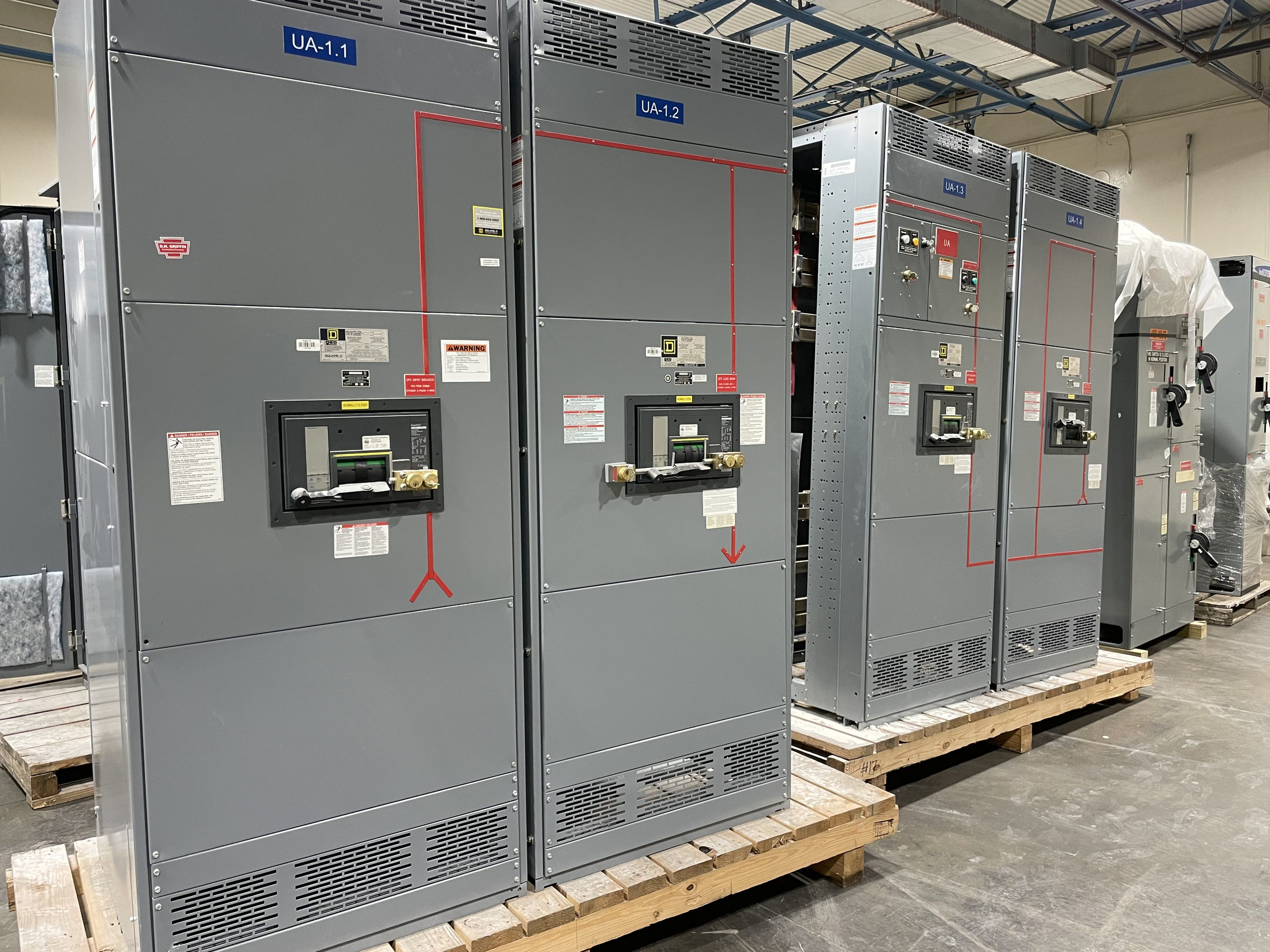
Start with a Common Scope Baseline
Comparing switchgear quotes is meaningful only when each supplier is pricing the same application and boundary of work. Begin with the project specification, one-line diagram, load information, and equipment schedule, then identify the gear included in each proposal. Confirm whether the quote covers a complete assembly or only specified sections, and whether feeders, metering, protective devices, control power, and accessories are included as required by the design.
Record the assumed source and load connections, number and arrangement of sections, and any interface with transformers, generators, transfer equipment, or downstream distribution. Note who provides and connects conductors, grounding, communications, and external control wiring. If a proposal makes assumptions where the documents are silent, list them for resolution rather than treating them as equivalent scope. A written common baseline helps reveal whether a price difference reflects a real design choice or simply an omission.
Normalize Ratings and Design Choices
Review the electrical characteristics line by line: system voltage and frequency, continuous current requirements, available fault current, withstand or interrupting requirements as applicable, and protective-device functions. Confirm that proposed ratings fit the project study and specification; do not infer suitability from a product family name or a single headline rating. The applicable standards and any required listing depend on the equipment design and project conditions. UL 891 applies to suitable switchboard assemblies, not automatically to every type of switchgear.
Compare project-specific choices such as bus arrangement, incoming configuration, breaker or fuse selection, metering, control schemes, enclosure requirements, and access or cable-entry provisions. Ask each supplier to identify deviations and the documents used to establish compliance. Changes to fault-duty assumptions, protective coordination, or operating sequence can affect both design and cost. Have qualified electrical professionals review technical differences against the current project requirements before judging price.
Make Exclusions and Interfaces Visible
A low quote may exclude items another supplier has included. Check for exclusions covering engineering, drawings, protective-device settings, special testing, shipping, taxes, unloading, storage, and site work; applicability varies by project, so require each bidder to state its boundary clearly. Distinguish items included in the equipment price from options, allowances, or work assigned to the customer or another contractor. Avoid assuming that installation, commissioning, field wiring, or utility coordination is part of a manufacturer’s offer unless the proposal expressly says so.
Map interfaces to adjacent systems and responsible parties. Identify who supplies upstream protection, external relays, communication gateways, cable terminations, and field connections, as applicable. Confirm what connection data and interface drawings each supplier needs and when those inputs are due. If site constraints affect section dimensions, access, routing, or handling, document them for every bidder. Resolving these boundaries early reduces change-order exposure and gives the project team a practical basis for comparing complete, coordinated scopes.
Compare Documentation and Verification
Treat documentation as part of the quoted deliverable, not an afterthought. Confirm what submittals are included, such as arrangement drawings, elementary diagrams, wiring information, device schedules, and equipment data, and whether revisions are expected after review. Ask how the proposed assembly will be identified against the project specification and which deviations require approval. Verify that any requested certification, listing, or standard compliance is stated for the specific proposed equipment rather than assumed from a general product description.
Compare factory verification and testing by scope: what inspections or tests are included, what records are furnished, and whether witness testing is offered or priced separately. The appropriate requirements depend on equipment type, design, and contract documents. Also establish who reviews submittals and resolves comments, and how approved changes are reflected in the final documentation. Qualified project personnel should confirm that the offered verification meets the specification and applicable requirements; a quote should not substitute for that technical review.
Read Commercial Terms Alongside Price
Normalize the commercial basis before comparing totals. Check currency, quotation validity, payment milestones, freight assumptions, taxes, packaging, and the named shipping destination or delivery point. Confirm whether delivery timing is an estimate, what event starts the schedule, and which customer approvals or design inputs affect it. Lead times are project-dependent; compare stated assumptions rather than treating an unqualified date as a guarantee. For a Central Texas project, coordinate the destination, receiving hours, unloading responsibility, and any storage constraints with the project team and carrier arrangements.
Review how revisions, expedited requests, cancellation, and scope changes are handled, along with any stated warranty terms and their limits. Do not infer terms that are absent from the quotation. If one supplier offers options and another includes them in its base price, separate the base scope from the selected add-ons and recalculate on the same basis. Ask for clarifications in writing so procurement, engineering, and construction teams are evaluating the same commercial and technical offer.
Build a Decision Record Before Award
Create a comparison matrix with one row per requirement and columns for each quote: compliant, deviation, excluded, optional, or clarification needed. Include ratings, configuration, interfaces, documentation, testing, shipping basis, and schedule assumptions. Record the source document or written answer behind each conclusion, then assign unresolved technical questions to the responsible qualified reviewer. This makes the decision auditable and prevents a favorable price from obscuring a scope gap that could become a later procurement or coordination problem.
Before placing an order for new switchgear, issue a consolidated clarification list and request a revised quotation when answers change scope or terms. Confirm the final equipment description, approved deviations, deliverables, responsibilities, and commercial basis in the purchase documents. A US manufacturer can build custom assemblies to specification using American components and ship nationwide, but the proposed design, applicable standards, and schedule still require project-specific review. Align submittal milestones with the construction schedule and do not release design-dependent details until the necessary project inputs are confirmed.
Project specification checklist
Use this checklist to organize the details for a project-specific review. Final ratings, applicable standards and equipment selections depend on the approved design.
| Item | What to confirm |
|---|---|
| Electrical basis | Confirm system characteristics, load requirements, available fault current, and required protective functions against project studies and specifications. |
| Included scope | Document assembly boundaries, devices, accessories, engineering deliverables, and items priced separately or excluded. |
| Interfaces | Assign responsibility for connections, controls, communications, adjacent equipment coordination, and required interface information. |
| Verification and records | Confirm applicable standards, any required listing for the specific design, test scope, witness options, and furnished records. |
| Commercial basis | Compare quotation validity, payment terms, freight destination, taxes, delivery assumptions, and treatment of changes. |
| Schedule inputs | Clarify schedule basis, customer approvals, design information needed, and dependencies affecting project-specific lead time. |