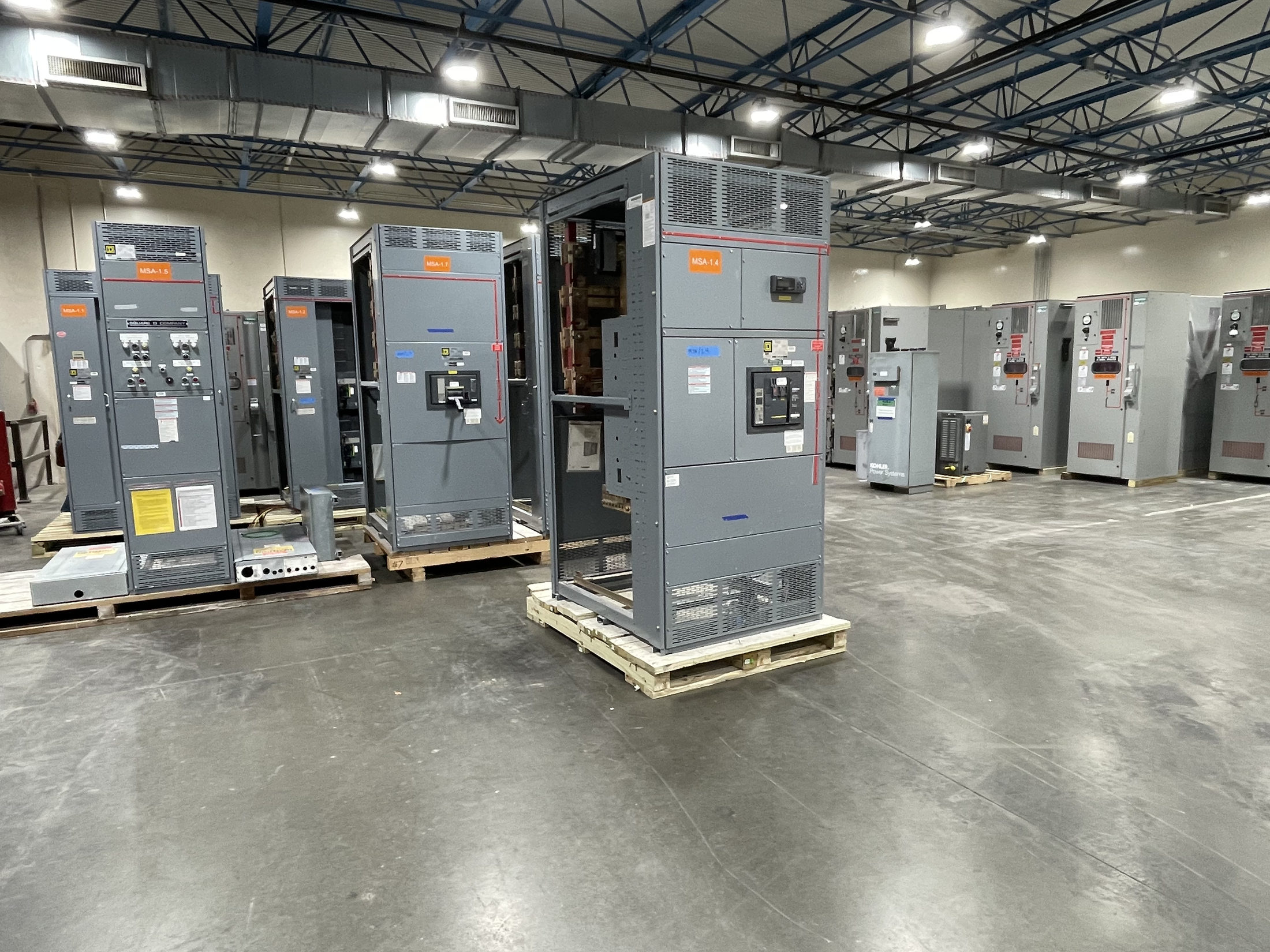
Treat a Change as a Controlled Design Revision
In the switchgear purchasing process, a change order records an agreed revision to the equipment scope after the original requirements or quotation have been established. It is not simply a request to “make it fit”: even a small change can affect electrical design, component selection, fabrication documents, coordination, or testing. For new switchgear, first identify what changed, why it changed, and which drawings, specifications, and quoted assumptions are affected. Common triggers include revised load information, a new feeder, updated utility requirements, room-layout changes, or a different control interface. A written, traceable change helps the manufacturer and project team evaluate the same scope before revised work proceeds.
Establish a baseline by collecting the latest approved one-line diagram, equipment schedule, specifications, control schematics, interface requirements, and relevant layout information. Note document dates and revision numbers; conflicting versions can lead to incompatible decisions. Identify the equipment sections and affected connections, but do not assume that a physically local revision has only local consequences. A revised feeder, for example, may affect bus arrangements, protection coordination, terminations, and upstream or downstream interfaces. Qualified electrical professionals should review the proposed design impact, and applicable requirements should be confirmed for the particular assembly and project.
Assess Electrical and Physical Consequences
The technical review should translate the requested change into specific design questions. Confirm system voltage, phase and wire configuration, operating conditions, load characteristics, available fault-current information, protection requirements, and the functions expected of the revised equipment. These inputs help determine whether the change affects the proposed arrangement or requires a broader design review. Do not infer that an existing amperage, interrupting capability, short-circuit rating, or configuration remains suitable after a revision; each must be verified against project data and the applicable design basis.
Check the physical and operational interfaces as carefully as the electrical ones. A change may alter section dimensions, cable entry or exit, conductor termination space, access, lifting or handling constraints, room clearances, or connections to adjacent equipment. Confirm who owns each interface, including control wiring, communications, metering, protection settings, and external devices. If a change affects an enclosure or environmental requirement, document the required conditions rather than assuming a particular construction is available or appropriate. The final design depends on the complete application and review by qualified professionals, not on the change description alone.
Make Project-Specific Design Choices Explicit
Some revisions require a choice among design approaches rather than a simple substitution. The project team may need to decide whether to retain the original arrangement, revise the section layout, change a device or control function, or defer a nonessential feature. Compare options against the operating sequence, maintainability, space constraints, interfaces, and documented performance requirements. Record the selected option and any assumptions so the revised scope can be checked against the one-line diagram, schedules, and control documents.
Standards and listing questions also require project-specific review. UL 891 applies to suitable switchboard assemblies; it should not be presumed to cover every switchgear product or every revised configuration. Other equipment types and ratings follow their applicable requirements. Ask which standards, evaluation, or listing requirements apply to the proposed assembly and whether the revision affects them. Do not treat a change order as proof that a revised design retains a prior status. Confirm applicable requirements with the manufacturer and responsible project professionals before authorizing the revision.
Separate Added Scope from Price Assumptions
A change-order price should describe the changed scope and its basis, not just provide a single unexplained amount. Request a written breakdown of affected equipment, engineering or documentation revisions, changed materials, and any related review or testing scope. The price may also account for work already completed or parts and documents that must be revised; ask the manufacturer to identify those effects rather than assuming the change is cost-neutral. Confirm whether the quoted amount is firm for the stated revision and what assumptions or exclusions remain.
Compare the proposal with the original quotation and contract documents. Check quantities, affected sections, interfaces, deliverables, and any unchanged requirements that must remain in force. Resolve ambiguity about who supplies external devices, wiring, settings, or updated project information. If the requested change is still being developed, ask whether the proposal is conditional and what additional inputs are needed for a complete evaluation. A revised price should correspond to a clearly defined technical scope; avoid approving a cost while the design basis or responsibilities are unsettled.
Reforecast Schedule and Coordination
A technical revision can affect engineering release, drawing review, procurement, fabrication sequence, inspection, and planned testing. Ask for the schedule impact in writing, including the activities affected and the assumptions behind any revised milestone. Lead times depend on the project and the confirmed design; do not treat an earlier estimate as unchanged after scope, approvals, or required components shift. Identify which decisions or customer inputs are on the critical path, and coordinate the proposed revision with the project manager, electrical designer, contractor, and other interface owners as applicable.
Where testing or documentation is part of the contract, clarify whether the change requires updated procedures, records, drawings, or witness coordination. Determine whether previously reviewed documents need resubmission and whether related equipment or interface checks are affected. Confirm how revisions will be identified in drawings and final documentation, and who will distribute the current versions. Any testing scope should match the approved design and contract requirements; do not infer a particular test, certification, or site service from a change request.
Authorize Before Revised Work Proceeds
Before approving, assemble the change description, revised drawings or marked-up documents, technical disposition, price, schedule effect, assumptions, and open questions in one review package. Confirm that the person authorizing the change has the required contractual authority and that the appropriate electrical professionals have accepted the design implications. Specify which document revision governs and whether the change replaces or supplements earlier requirements. Written authorization creates a clear record of what is approved; a meeting note or informal email may not resolve scope, cost, or schedule responsibility.
A practical next step is to submit the proposed change with its reason, affected equipment identifiers, current one-line and specification revisions, relevant interface details, and the date the decision is needed. Ask the manufacturer to identify missing inputs and return a documented technical, commercial, and schedule response for review. Do not release a revision based on an unverified rating or unresolved interface. Once approved, update the project document register and notify everyone relying on the prior design. This disciplined process helps keep new switchgear aligned with the authorized scope while making remaining decisions visible.
Project specification checklist
Use this checklist to organize the details for a project-specific review. Final ratings, applicable standards and equipment selections depend on the approved design.
| Item | What to confirm |
|---|---|
| Change baseline | Identify the governing contract, quotation, specification, drawing revisions, and assumptions the requested revision may replace or supplement. |
| Electrical design inputs | Confirm system data, load and protection requirements, available fault-current information, operating conditions, and the qualified professionals responsible for review. |
| Interfaces and layout | Document affected connections, control and communications responsibilities, cable entry, space constraints, adjacent equipment, and ownership of external devices. |
| Commercial effect | Request the revised scope, price basis, assumptions, exclusions, and treatment of completed or previously released work. |
| Schedule and deliverables | Confirm affected milestones, decision deadlines, drawing resubmittals, documentation updates, and any contractually required testing coordination. |
| Authorization record | Identify the authorized approver, governing revision, written approval method, and distribution plan for the updated project documents. |