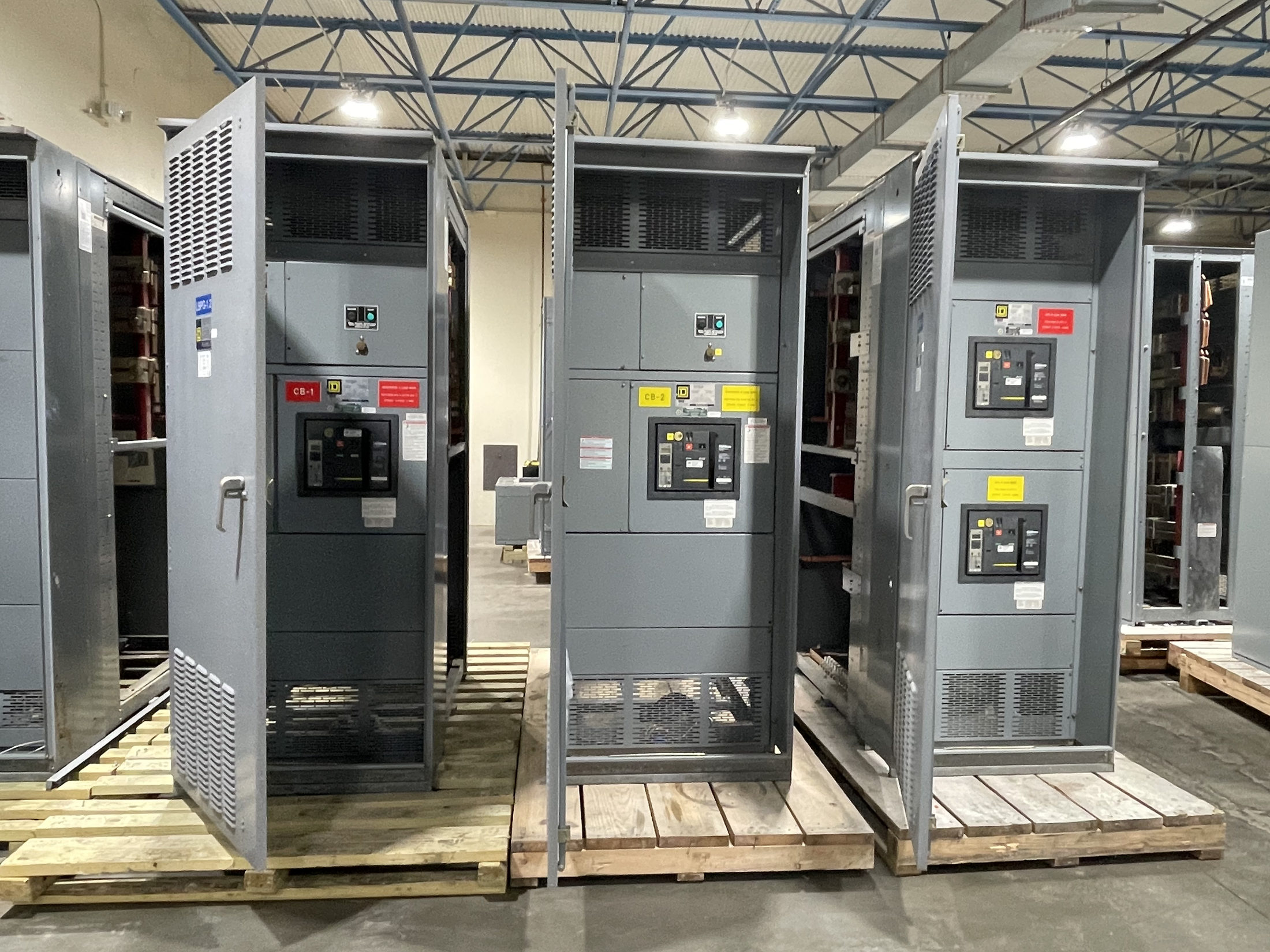
Turn Exclusions into Explicit Boundaries
In the switchgear purchasing process, an exclusion is not a minor footnote: it identifies work or information that may remain with the owner, engineer, installer, or another supplier. For new switchgear, clarify whether the quoted scope covers equipment design and manufacture only, or also drawings, accessories, testing, documentation, and coordination. Ask for each exclusion to be stated in plain language and tied to a responsible party. This helps prevent an assumption that the equipment supplier will perform site work or engineering studies when those tasks are outside the equipment order. Compare proposals against the same written scope, not just the equipment description or price.
Start with the project’s one-line diagram, equipment specifications, load and operational requirements, and procurement schedule. Record unresolved items as decisions, identify who will provide each input, and assign a due date. A scope matrix is useful when several parties share responsibility: list the deliverable, provider, reviewer, and interface. Where information is incomplete, request clarification rather than treating silence as inclusion. Qualified electrical professionals should review the project requirements and applicable authorities’ requirements before the order is finalized.
Separate Equipment Supply from Installation
Installation commonly involves activities beyond manufacturing and shipment: receiving and inspection, offloading, rigging, placement, anchoring, joining sections, grounding, cable termination, and connection to existing systems. Confirm which tasks are included in the equipment purchase and which are assigned to the electrical contractor or owner. Also establish who provides access, lifting equipment, staging, storage, and protection from site conditions. Do not infer that a manufacturer’s equipment quote includes labor, permits, site supervision, or installation merely because the assembly is custom-built.
The installing team needs project-specific information such as room dimensions, access routes, floor and anchorage requirements, cable entry locations, conduit plans, and the planned sequence for setting and connecting equipment. Confirm the interfaces between shipping configuration and site assembly, including any sections or components handled separately. Resolve who checks field dimensions and who reports discrepancies before release for manufacture. Final installation details must be reviewed by qualified professionals against the actual site and equipment documentation; no generic enclosure, clearance, or installation assumption should substitute for that review.
Assign Studies and Engineering Inputs
Power-system studies are frequently separate from equipment supply. Determine whether the project requires short-circuit, coordination, arc-flash, load-flow, grounding, or other analyses, and identify the engineer responsible for each. The required studies depend on the system, project scope, governing requirements, and available data. Do not assume that a switchgear supplier performs them or that equipment selection alone establishes acceptable system performance. Confirm whether study results must inform protective-device choices, settings, labels, or design revisions, and specify who will incorporate approved results into the final documents.
Provide the study team with current source and system information, including utility or upstream data when available, transformer and conductor details, connected loads, operating configurations, and existing protective-device information. Identify assumptions and missing inputs so they are visible to reviewers. Establish when preliminary and final results are needed relative to equipment design and release. If study findings change device requirements or project documents, define the approval and change process before procurement proceeds. Applicable standards, ratings, and compliance requirements must be confirmed for the actual design and project rather than presumed from a general product description.
Define Field Work and Existing-System Interfaces
Field work may include site surveys, measurements, demolition, modifications to existing equipment, cable tracing, outage planning, testing, commissioning, and startup support. List each anticipated activity and name the party responsible; verify separately whether any requested site visit or field service is actually part of the proposal. For replacement or expansion projects, document the boundary between new equipment and existing switchgear, feeders, controls, communications, and protection systems. Confirm who owns compatibility checks and who has authority to approve changes to the existing installation.
Useful interface documents include updated one-line diagrams, connection and control schematics, terminal or cable schedules, communications requirements, and physical layout information. Agree on who supplies, reviews, and approves these documents, and how revisions are controlled. The site team should coordinate access, outage windows, safety procedures, and operational constraints through the responsible project parties. Never treat field measurements or site work as included without written confirmation. Qualified personnel should plan and perform work under applicable procedures; this article does not replace project-specific safety planning or authorization.
Make Testing and Documentation Responsibilities Clear
Clarify the distinction between factory activities, field testing, and commissioning. Ask what routine inspections or tests are included for the proposed assembly, what records will be provided, and whether witness testing is requested. Factory testing does not automatically include site acceptance testing, relay or control-system testing, commissioning, or verification of installed connections. Identify who writes test procedures, supplies test equipment, witnesses results, resolves deficiencies, and approves completion. Any UL 891 applicability should be confirmed for a suitable switchboard assembly and its actual design; it should not be assumed for every form of switchgear.
Set documentation expectations before design begins. Confirm drawing types, submittal stages, review periods, final record documents, operation and maintenance materials, and required formats. Determine who supplies protection settings, equipment labels, network information, and final configuration records where applicable. Review comments should identify a decision or correction and be returned within an agreed project schedule so that unresolved interfaces do not delay release. Testing, documentation, and standards depend on the specified equipment and project; request written confirmation instead of relying on customary practice or an informal statement.
Close Exclusions Before Releasing the Order
Before ordering new switchgear, consolidate inclusions, exclusions, assumptions, and open decisions into one reviewed scope record. Check that it aligns with the specification, drawings, commercial proposal, and schedule. Confirm who approves design submittals, who may authorize changes, and how cost or schedule impacts will be handled when requirements change. Review project-specific selections—including system configuration, ratings, protective devices, enclosure requirements, control interfaces, and shipping details—with qualified electrical professionals. These characteristics must be established for the application; they are not universal capabilities or safe defaults.
A practical final review asks: Is installation assigned? Are studies and field work assigned? Are existing-system interfaces documented? Are factory and site testing distinguished? Are required inputs, reviewers, and dates named? Resolve unanswered questions in writing before release for manufacture, then circulate the approved scope to the engineer, owner, installer, and other affected parties. For custom assemblies, provide complete project requirements early and confirm the agreed design and deliverables. Lead times depend on the project and should be confirmed during procurement; do not build an unverified schedule assumption into the order.
Project specification checklist
Use this checklist to organize the details for a project-specific review. Final ratings, applicable standards and equipment selections depend on the approved design.
| Item | What to confirm |
|---|---|
| Installation boundary | Confirm included equipment and accessories versus receiving, rigging, placement, anchoring, connections, and site labor. |
| Studies and design inputs | Name required analyses, responsible professionals, input data providers, review dates, and how results affect design. |
| Field work and interfaces | Assign surveys, existing-system modifications, outage coordination, cable and control interfaces, and any site visits. |
| Testing and records | Distinguish factory tests from field testing and commissioning; confirm procedures, witnesses, reports, and documentation. |
| Scope control | Document assumptions, exclusions, approvals, change authorization, applicable requirements, and project-specific schedule decisions. |