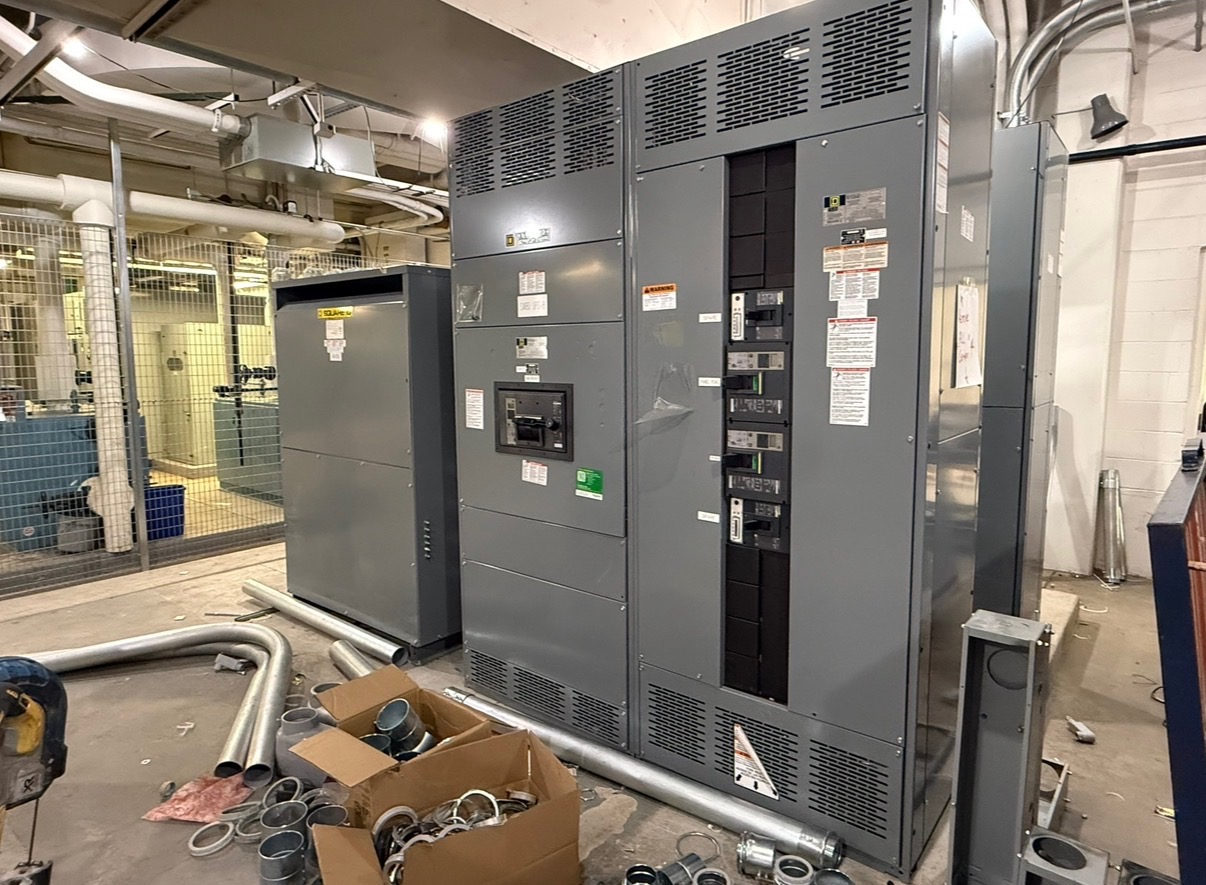
Start with the Site, Not an Assumed Utility
In Central Texas, the serving electric utility is not determined by a city name alone. Service territory, site boundaries, existing electrical accounts, and the planned point of connection can all affect which organization reviews a project. Confirm the exact service address and parcel, then check available utility records or contact the provider identified on an existing bill, service document, or meter. For a new development or a site without active service, ask the property owner, developer, electrical engineer, or local permitting office what utility has jurisdiction.
This early identification matters when specifying new switchgear because utility requirements may govern the service entrance interface, metering arrangement, available fault-current information, and approval sequence. Treat preliminary information as provisional until the utility confirms it for the project.
Separate Utility Territory from Permitting Jurisdiction
The serving utility and the authority having jurisdiction are not necessarily the same organization. A site may receive electric service from one utility while electrical permits, plan review, and inspections are administered by a city, county, or other applicable authority. Confirm jurisdiction using the project location and scope; do not assume that a mailing address or nearby city identifies the permitting authority. The owner or design team should establish which entity reviews each part of the work.
For a Central Texas service project, record the utility contact and the permitting authority separately, along with any applicable fire or building review participants. Ask who must review the service equipment, metering, and installation documents, and whether separate submissions or approvals are required. These confirmations help keep utility-facing design decisions distinct from code and permit requirements, which must also be evaluated by qualified project professionals.
Gather Inputs Before Selecting Equipment
A useful coordination package begins with the service request and the electrical design basis. Gather the site plan, one-line diagram, load information, proposed service voltage and phase, requested service capacity, and the intended point of connection. Obtain utility-provided service characteristics, including available fault-current data and any requirements for metering, service conductors, disconnecting means, or access. Confirm whether the project is new construction, a service change, or an addition, since the existing infrastructure and review path can differ.
These inputs guide selection of new switchgear or switchboard equipment, but no rating or configuration should be presumed suitable before engineering review. Voltage, continuous-current needs, short-circuit withstand or interrupting requirements, enclosure conditions, environmental exposure, and working clearances depend on the actual design and location. Applicable standards and any listing requirements must be established for the particular assembly and use.
Define the Utility-to-Customer Interface
Document exactly where utility responsibility ends and customer-owned equipment begins. The one-line diagram and utility service documents should identify the point of delivery, ownership boundaries, metering location, service disconnect arrangement, and any required separation or access provisions. Clarify who supplies and installs each interface component, including service conductors, metering provisions, and associated enclosures. Do not infer these details from a neighboring property or a previous project; requirements can vary by utility, service type, and site conditions.
That interface influences switchgear layout, termination space, bus arrangement, compartment access, and coordination with downstream distribution equipment. Provide the equipment manufacturer with the current utility requirements and design documents, and route proposed deviations or unresolved questions through the electrical engineer and utility reviewer. Custom assemblies can be developed to project specifications, but the final design must reflect verified interface criteria and the applicable review requirements.
Coordinate Reviews, Testing, and Procurement
Coordinate utility review, permitting, equipment submittals, and construction sequencing rather than treating them as unrelated steps. Confirm which drawings the utility needs and when it must review them, then align those submittals with the engineer’s equipment specifications and the authority’s permit process. Before release for manufacture, resolve comments that affect the service entrance, metering, ratings, dimensions, or connections. Identify any required factory documentation or tests in the project specifications and confirm responsibilities for witnessing, records, and acceptance.
For new switchgear, lead time is project-dependent and can be affected by design complexity, component selection, and approval timing. Request a schedule based on a sufficiently complete specification, and keep the utility’s current requirements attached to the procurement package. UL 891 applies to suitable switchboard assemblies where applicable; it should not be assumed for every type of switchgear. Confirm the applicable standards and conformity requirements for the particular design.
Use a Practical Confirmation Checklist
Before requesting a final equipment proposal, assemble a concise coordination record: verified service address and parcel, named serving utility, permitting authority, utility service documents, current one-line diagram, load and fault-current data, and documented ownership and metering boundaries. List open decisions with the person or organization responsible for resolving each one. This record helps the engineer specify the equipment accurately and gives the manufacturer a consistent basis for preparing a custom assembly to the project requirements.
If the utility or jurisdiction has not yet confirmed a critical interface, flag it rather than filling the gap with an assumption. Ask the utility for written service criteria, ask the authority which approvals apply, and have qualified electrical professionals review the resulting design. A US-built assembly using all-American components may be considered for a project, with nationwide shipment available, but suitability, schedule, ratings, and applicable standards must be verified for the specific application before procurement.
Project specification checklist
Use this checklist to organize the details for a project-specific review. Final ratings, applicable standards and equipment selections depend on the approved design.
| Item | What to confirm |
|---|---|
| Serving utility | Confirm the provider for the exact parcel and planned point of connection; do not rely on city boundaries alone. |
| Project jurisdiction | Identify the authority responsible for permits, plan review, and inspections, separately from the utility. |
| Service design inputs | Verify voltage, phase, load, available fault-current data, and service characteristics with the utility and design team. |
| Ownership and metering | Document the point of delivery, equipment ownership, metering location, and installation responsibilities. |
| Equipment requirements | Confirm ratings, enclosure conditions, applicable standards, and any listing or testing requirements for the specific assembly. |