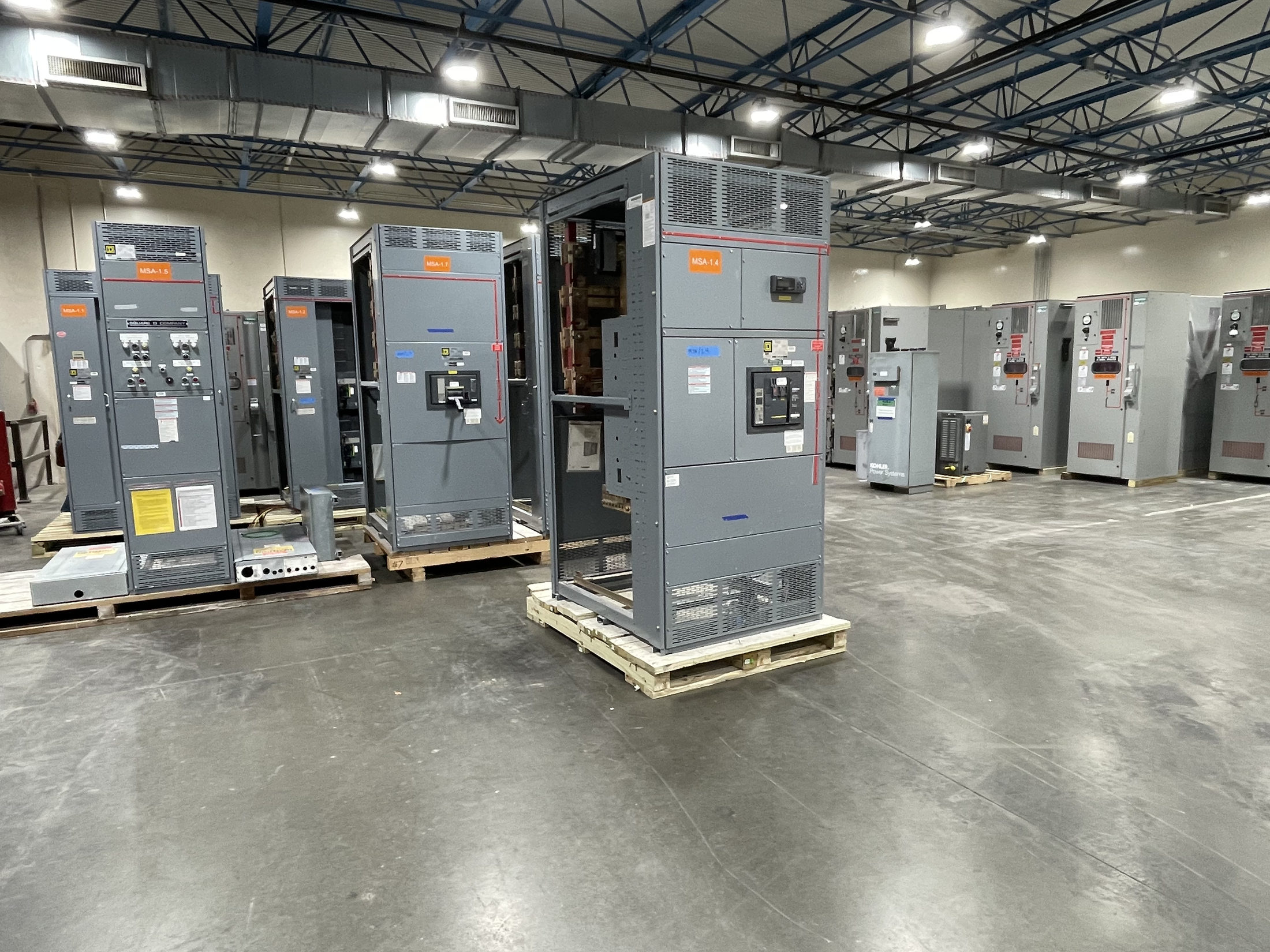
Start with the job the equipment must do
Choosing an equipment family for a new electrical project starts with its role in the distribution system—not a product label alone. Determine whether the project needs a switchboard for distributing power at lower-voltage levels, switchgear for a particular distribution or protection arrangement, or another assembly suited to the system. The right choice depends on how power enters, branches, and serves loads, as well as the operating and maintenance approach. For facility owners, engineers, contractors, and purchasing teams in Central Texas, this equipment selection FAQ is a starting point for a coordinated specification, not a substitute for engineering review.
Gather the one-line diagram, project specifications, load information, and any existing-system constraints before comparing families. Identify whether the work is a new service, an expansion, or replacement within a larger project, and note interfaces with transformers, downstream panels, generators, or other equipment. These details help a qualified electrical professional determine the appropriate family and applicable design criteria. The detailed topic pages can help explain individual equipment types, but the project documents should govern the final selection.
Distinguish switchboards from switchgear
Switchboards and switchgear are not interchangeable names for every distribution assembly. Their construction, protective devices, arrangement, operating requirements, and applicable standards can differ. A switchboard may suit a distribution application where its design and ratings meet the project requirements; a switchgear arrangement may be appropriate where the system calls for a different configuration or protection approach. The terms alone do not establish voltage, current, fault capability, or suitability for a specific facility.
Ask the design team to identify the required equipment type and explain the basis in the one-line diagram and specifications. Confirm which functions must be included, such as incoming and feeder arrangements, metering provisions, or protective-device coordination, without assuming every family includes them. UL 891 applies to suitable switchboard assemblies; it should not be treated as a universal listing for switchgear or all products. Applicable standards and any required listing depend on the equipment design and project.
Confirm system ratings and site conditions
Electrical ratings must be selected for the actual system and installation. The project team should confirm nominal system voltage, required current capacity, available fault current, and the protection and coordination requirements. These values are not universal product capabilities, and a rating that appears adequate in isolation may not satisfy the system design or applicable code requirements. A qualified electrical professional should review calculations and assumptions using project-specific information.
Also document the installation environment and physical constraints. Indoor or outdoor placement, enclosure requirements, available working and access space, conductor entry, cable routing, and connection interfaces can affect the design. Temperature, contamination, moisture, or other environmental considerations may also matter where relevant. Do not infer enclosure suitability from an equipment-family name. Provide drawings and site constraints for review, and have the responsible professionals and authorities confirm that the selected design meets applicable requirements.
Choose a configuration that fits the project
Once the equipment family and system criteria are established, define the assembly around the required functions and interfaces. Record the number and purpose of incoming and outgoing circuits, protective-device requirements, metering or control needs, and connections to adjacent equipment. Note operational preferences that influence access or arrangement, while keeping them consistent with electrical and safety requirements. A custom assembly can be developed to specification, but customization does not remove the need to verify design limits, applicable standards, and compatibility with the overall system.
For a new switchgear project, clear documentation reduces avoidable assumptions. Include the latest one-line diagram, equipment schedules, relevant specifications, connection details, and known space limitations in the review package. Identify open decisions explicitly—for example, who supplies a connected device or which party confirms a field interface. The manufacturer can use defined requirements to develop an assembly proposal for review; final acceptance should follow the project’s engineering and procurement process.
Coordinate review, testing, and procurement
Before releasing an order, align the equipment specification with the electrical design, project schedule, and installation plan. Review drawings and submittals for ratings, device functions, dimensions, conductor access, interfaces, and required documentation. Resolve discrepancies through the responsible project professionals rather than relying on informal assumptions. Testing requirements should also be identified in the project documents: confirm what factory checks, inspection records, or other verification are applicable to the specified assembly, and distinguish them from field activities performed by others.
Procurement timing depends on the approved design, selected components, scope, and project requirements. Lead times are determined by project, so request a schedule based on the actual specification rather than assuming availability or a delivery date. A US-built assembly using all-American components may be specified where that sourcing approach fits the project. UL 891 should be requested only for a suitable switchboard assembly when applicable; verify any listing or standard requirement against the exact design and procurement documents.
Prepare a useful equipment inquiry
A focused inquiry helps the manufacturer assess the right equipment family and identify what remains to be decided. Send the project location, one-line diagram, equipment specifications, required functions, known system ratings, site and enclosure conditions, connection interfaces, and target procurement milestones. For a facility in Central Texas, also share coordination constraints such as delivery access, receiving arrangements, and the sequence for reviewing submittals; location alone does not establish a product design or delivery commitment. Do not send unverified assumptions as final ratings.
Ask for clarification on family selection, applicable standards, design options, submittal requirements, and project-specific lead time. Have the engineer of record or other qualified electrical professionals review technical selections, and confirm code and authority requirements through the appropriate project channels. The detailed equipment topic pages can help narrow questions before that review. A complete, current document set—and a clear list of unresolved decisions—provides a practical next step toward specifying new equipment that fits the intended electrical system.
Project specification checklist
Use this checklist to organize the details for a project-specific review. Final ratings, applicable standards and equipment selections depend on the approved design.
| Item | What to confirm |
|---|---|
| Equipment family | Confirm the required assembly type and its role in the one-line diagram. |
| Electrical system | Have qualified professionals establish voltage, current, fault, and coordination requirements for the project. |
| Configuration | Document circuit functions, protective devices, metering or control needs, and equipment interfaces. |
| Installation conditions | Confirm location, enclosure needs, space, access, conductor entry, and relevant environmental conditions. |
| Standards and verification | Identify applicable standards, any required listing for the specific assembly, and project testing or documentation. |
| Procurement planning | Provide the approved scope and milestones to obtain project-specific submittal and lead-time information. |