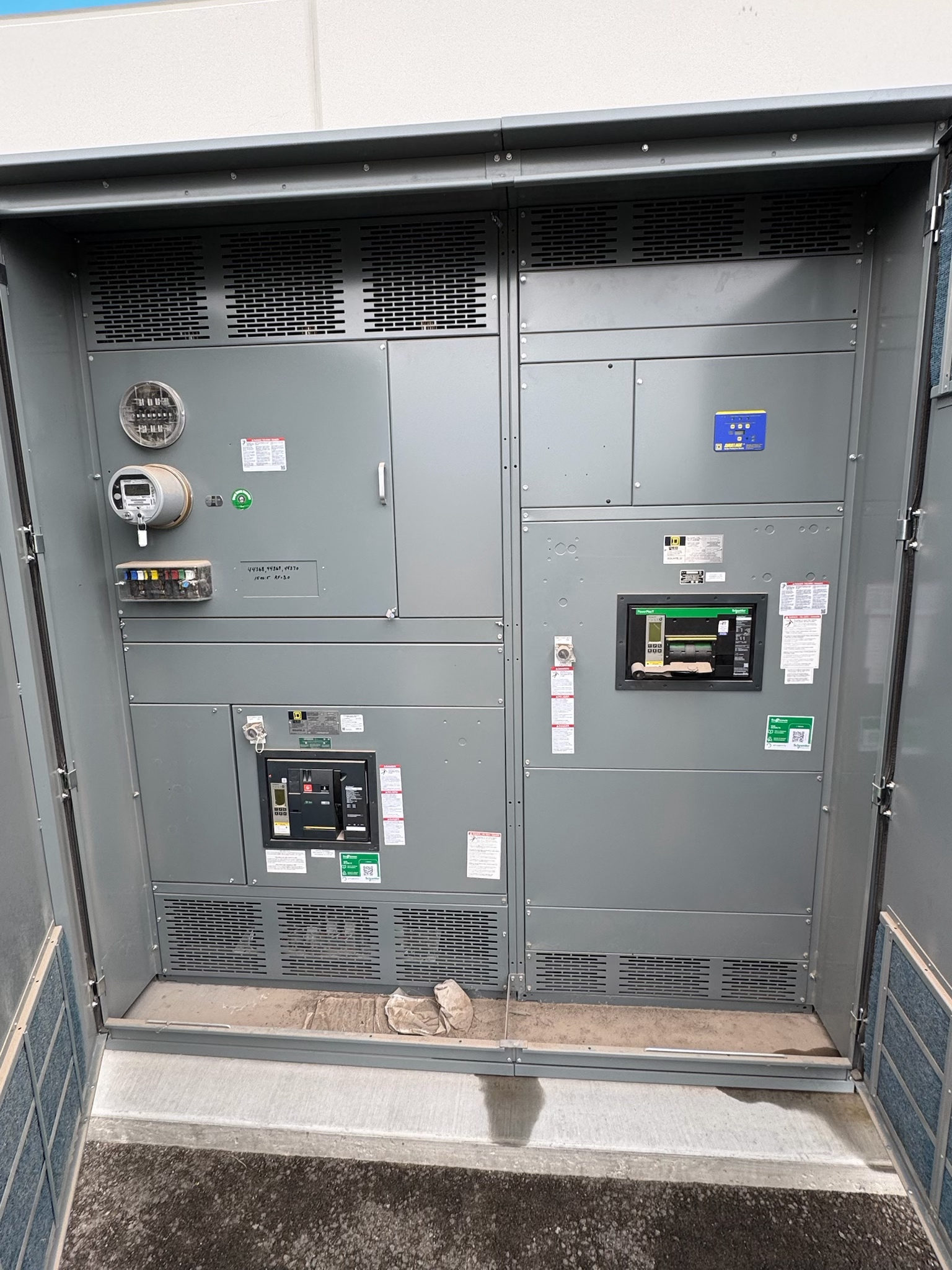
What the assembly rating tells you
A short-circuit current rating (SCCR) identifies the maximum short-circuit current an assembly is designed to withstand or interrupt under stated conditions. It is not a general measure of equipment quality, nor does it tell you how much current the system normally carries. For new switchgear, the relevant value must apply to the complete assembly and its intended configuration—not merely to one breaker, fuse, or other component inside it. The rating is meaningful only alongside its stated voltage, protective-device arrangement, and applicable conditions. A catalog value or component marking cannot by itself establish that a proposed lineup is suitable for a particular installation.
The SCCR is also distinct from continuous-current capacity and from the available fault current at the installation point. Those values answer different design questions. Selection requires comparing the assembly’s documented rating with the fault-current conditions established for the project, while accounting for the devices and connections that affect protection. Applicable standards and evaluation methods depend on equipment type and design; do not assume that one standard or listing applies to every product. A qualified electrical professional should determine the project requirements and review the proposed assembly documentation before equipment is specified or ordered.
Establish the available fault current
Start with the electrical system information at the switchgear connection point. Relevant inputs can include nominal system voltage, transformer data and impedance, utility or source contribution, conductor characteristics, and the arrangement of parallel sources or generators. Changes in system configuration can change available fault current, so a value calculated for one operating condition may not represent every condition. The project team should identify the assumptions, calculation location, and operating modes behind the available-fault-current study rather than provide a single unexplained number.
Also confirm whether the equipment will connect to a service, feeder, or other part of the distribution system, and identify upstream protective devices and their settings or specified characteristics. The source of each input matters: utility data, design calculations, and existing system records may have different limits or assumptions. If information is incomplete, flag it for resolution with the responsible engineer and relevant parties. Do not select an SCCR based on a typical value or an assumed utility contribution; the final comparison must use project-specific, reviewed inputs.
Match voltage, protection, and configuration
A valid rating check considers how the assembly is built and protected. Confirm the equipment type, system voltage, incoming arrangement, bus configuration, installed protective devices, and any specified current-limiting components. A rating established for a particular combination of devices or construction should not be carried over to a different combination without documentation. Even where an individual breaker or fuse has a suitable interrupting rating, that fact alone does not prove the entire switchgear assembly has an adequate SCCR.
Project decisions may include selecting an assembly rating, choosing an allowable protective-device arrangement, or revising the system design to address a fault-current mismatch. Any such change can affect coordination, operation, available fault current, and equipment interfaces. Confirm that the proposed configuration matches the one described in the manufacturer’s documentation, including relevant options and connection details. The responsible design professional should assess whether the selected approach meets the project’s requirements and applicable codes and standards; the manufacturer should not be asked to infer missing system conditions.
Verify the documented assembly rating
Request documentation that identifies the SCCR for the actual proposed assembly and states the conditions under which it applies. Review the equipment identification, voltage, configuration, protective devices, and any limitations or required upstream components. Where a standard or certification is relevant, verify that it applies to this equipment type and assembly—not simply to a separate component or a different product family. UL 891 concerns suitable switchboard assemblies and does not automatically establish a rating or listing for every type of switchgear.
Compare the documented value and conditions with the reviewed available-fault-current information at the equipment location. Check that the protective devices and system arrangement in the design match those used to establish the assembly rating. If the documentation does not clearly cover the proposed configuration, request clarification before procurement. Keep the calculation or study, equipment submittal, device information, and review comments together so the project team can trace how the final selection was verified. Acceptance should follow the project’s applicable review process and authority requirements.
Coordinate interfaces, testing, and changes
Short-circuit performance is connected to the wider protection scheme. Coordinate the switchgear rating with upstream and downstream devices, protection settings, selective-coordination requirements where applicable, and the system’s operating modes. Review interfaces such as incoming conductors, bus connections, tie arrangements, and connections to transformers or other sources. A change to a protective device, source, or lineup configuration can affect the assumptions behind the original rating check, so communicate design revisions to the parties responsible for the study and equipment review.
Ask what design verification, testing, or supporting evidence applies to the specific assembly and governing requirements. Do not treat a component test, a calculation, or a label as interchangeable proof of every performance characteristic. The responsible professionals should establish what evidence is needed and confirm that it represents the supplied configuration. If the installation or operating plan changes after approval, reassess fault-current and coordination assumptions before relying on earlier conclusions. Work on electrical equipment and any required field evaluation must be handled through qualified personnel and the applicable safety and approval processes.
Prepare a clear rating review before ordering
For a new switchgear quotation or submittal review, provide the equipment type and intended function, system voltage, one-line diagram, available-fault-current study or documented value, source and transformer information, and the proposed protective-device details. Include known operating configurations, required bus or feeder arrangements, applicable project specifications, and any coordination or certification requirements. Identify unresolved inputs explicitly. This gives the manufacturer a defined basis to review the requested assembly and helps prevent a component rating from being mistaken for an assembly rating.
Before release, have the project’s qualified electrical professional compare the final assembly documentation with the fault-current study and confirm that all stated conditions are met. Record the approved configuration and any rating-dependent restrictions in the project documents. If the design changes, repeat the review rather than assuming the previous selection remains valid. This process turns “what is a short-circuit current rating?” into a practical procurement check: establish the site conditions, verify the complete assembly and its interfaces, resolve gaps, and retain the evidence supporting the final design.
Project specification checklist
Use this checklist to organize the details for a project-specific review. Final ratings, applicable standards and equipment selections depend on the approved design.
| Item | What to confirm |
|---|---|
| Available fault current | Confirm the reviewed value and calculation point for each relevant system operating condition. |
| System voltage and arrangement | Identify nominal voltage, source configuration, and the intended switchgear connection and lineup. |
| Protective-device configuration | Verify device types, settings or specified characteristics, and any required upstream components. |
| Assembly documentation | Confirm the SCCR applies to the proposed complete assembly and its stated conditions. |
| Interfaces and coordination | Review connected sources, conductors, bus arrangements, and project protection requirements. |
| Applicable review requirements | Determine relevant standards, evidence, and authority review based on equipment type and project. |