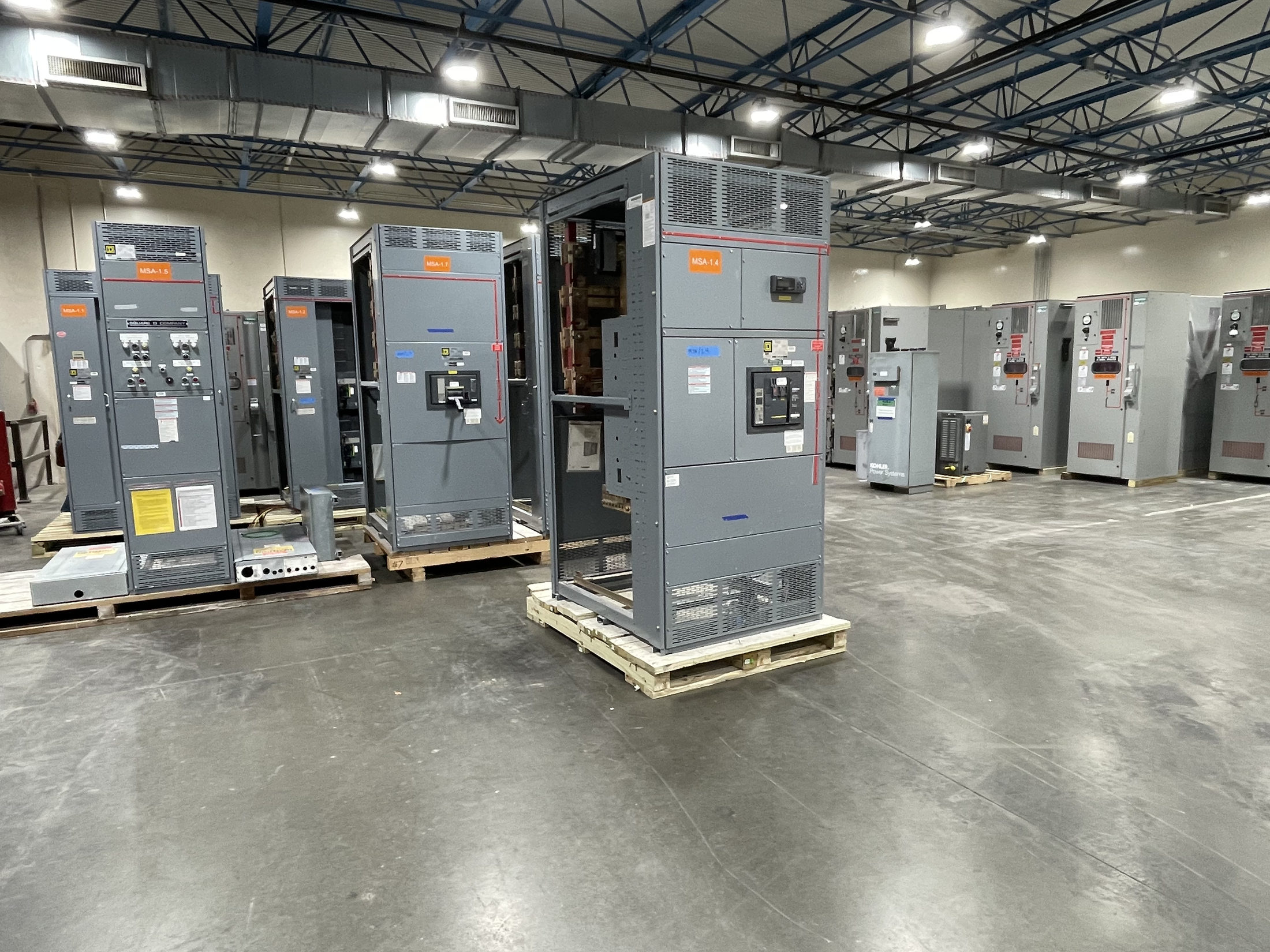
What a Load Schedule Defines
A load schedule is a project record that tabulates electrical loads, their associated circuits, and the equipment that supplies or controls them. Depending on the design, entries may identify motors, HVAC systems, lighting, receptacles, process equipment, or other connected loads. The schedule typically links each load to a panel, switchboard, switchgear lineup, feeder, or circuit designation, giving designers and reviewers a shared view of the distribution system.
It is not simply a list of equipment names, nor does it by itself establish that the system is adequately sized. Its value is in organizing design information so circuit assignments, demand assumptions, and equipment interfaces can be reviewed together. For new switchgear, a clear schedule helps translate building or process requirements into a documented basis for equipment configuration and coordination.
How the Schedule Supports Distribution Design
Designers use the schedule to understand which loads need power, where they connect, and how they relate to upstream and downstream distribution equipment. It can inform feeder and circuit planning, the number and arrangement of protective devices, and space or connection requirements. Whether particular loads are continuous, intermittent, motor-driven, or operationally critical may also affect design decisions, subject to applicable codes and project engineering.
A load schedule is one input among several. One-line diagrams, equipment connection details, utility or source information, grounding requirements, and the project’s operating sequence help establish the full system context. The schedule should agree with these documents or clearly flag unresolved differences. It does not independently establish conductor sizing, protective-device settings, fault-duty adequacy, or compliance; qualified electrical professionals must evaluate those matters for the project.
Information Needed for a Useful Schedule
A useful schedule identifies each load clearly and records the information needed to connect it to the distribution design. Depending on the load and project stage, inputs may include equipment name or tag, location, supply characteristics, connected load, expected operating demand, starting or inrush considerations, and the desired circuit or source. The equipment manufacturer’s documentation can clarify connection needs, while the project team supplies operating assumptions and priorities.
Teams should also identify what is confirmed versus estimated. Early schedules often contain placeholders, pending vendor data, or assumptions about future loads. Marking those items avoids treating preliminary values as final design inputs. For new equipment procurement, unresolved load data should be reviewed before the schedule is used to establish circuit counts, device requirements, or lineup interfaces. Any assumed voltage, current, or fault condition needs project verification rather than inference from a generic schedule.
Design Choices and Equipment Interfaces
The schedule can guide choices such as circuit grouping, feeder destinations, spare or future provisions, and how loads are distributed among equipment sections. These decisions depend on the project’s operating needs, electrical design, physical constraints, and applicable requirements. There is no universal number of circuits, spare capacity, or equipment rating implied by a load schedule; the design team must determine suitable values from verified project conditions.
Interfaces matter as much as the entries themselves. Confirm how scheduled loads connect to upstream sources, transformers, downstream panels, control systems, and any required interlocks or monitoring. Identify responsibility for supplying connection data, controls, and field terminations. Equipment details and ratings must be selected for the actual system and reviewed against applicable standards and authority requirements. UL 891 applies to suitable switchboard assemblies where relevant; it does not automatically apply to every type of switchgear or assembly.
Review, Coordination, and Testing
Before design release, compare the load schedule with the latest one-line diagram, equipment schedules, vendor submittals, and circuit assignments. Resolve duplicate tags, missing loads, mismatched destinations, and changes in demand or operating mode. Coordinate revisions among the electrical engineer, equipment suppliers, other design disciplines, and the owner’s representatives so the distribution design and procurement documents use consistent information.
Testing and verification should reflect the specified equipment and project requirements. A schedule does not substitute for equipment inspection, factory testing where specified, commissioning plans, or field verification by qualified personnel. Confirm what checks are required, who performs them, what documentation is expected, and how changes are recorded. Applicable test methods and acceptance criteria depend on the equipment design and project specifications; they should not be assumed from the schedule alone.
Using the Schedule to Prepare a New Equipment Request
For a new switchgear request, provide the current load schedule alongside the one-line diagram, project specifications, source and grounding information, physical constraints, and known operating requirements. Mark pending values and identify the date or revision of each document. Ask the equipment manufacturer to review the intended interfaces and flag information needed to develop a conforming proposal. Custom assemblies can be developed to specification, but configuration, applicable standards, and lead time depend on project review.
A practical next step is to hold a schedule review before procurement: confirm load ownership and data sources, settle circuit destinations, identify future provisions, and document open questions with responsible parties and due dates. Then issue a coordinated revision for equipment design and submittal review. This process helps prevent avoidable changes without treating preliminary load values as final. Project teams in Austin and Central Texas can coordinate document review and shipment planning with a US manufacturer; nationwide shipment is also available, subject to project requirements.
Project specification checklist
Use this checklist to organize the details for a project-specific review. Final ratings, applicable standards and equipment selections depend on the approved design.
| Item | What to confirm |
|---|---|
| Load identification | Confirm unique equipment tags, descriptions, locations, and responsible data sources. |
| Electrical inputs | Verify required supply characteristics, connected load, demand assumptions, and operating conditions. |
| Circuit and feeder mapping | Reconcile each scheduled load with its circuit, destination, upstream source, and one-line diagram. |
| Future provisions | Document planned additions or spare requirements and the design basis for them. |
| Interfaces and requirements | Confirm controls, terminations, physical constraints, applicable standards, testing, and review responsibilities. |